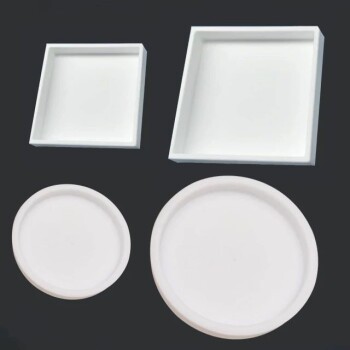
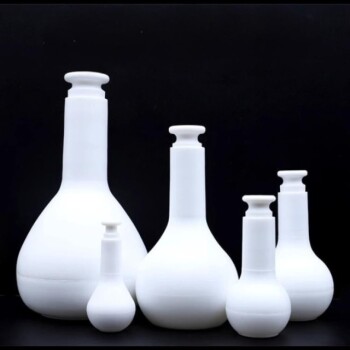
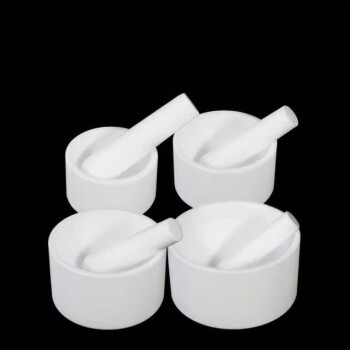
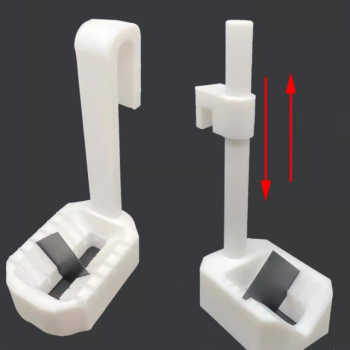
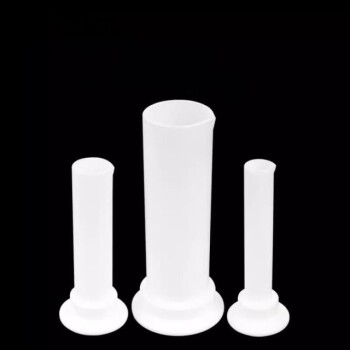
Polytetrafluoroethylene (PTFE) acts as a critical dual-function barrier when handling epoxy resins mixed with strong oxidizing products. Its primary role is to provide exceptional chemical inertness against corrosive agents like nitric acid or ozone, while simultaneously offering a non-stick surface that prevents the adhesive resin from bonding to the container.
By utilizing PTFE consumables, you create a chemically resistant shield that prevents erosion from strong oxidants while ensuring the easy demolding of epoxy resins. This preserves both the physical integrity of your laboratory hardware and the chemical purity of your samples.
Superior Chemical Defense
When working with strong oxidizers, the immediate threat is chemical attack. PTFE serves as the first line of defense against aggressive species.
Withstanding Corrosive Erosion
Strong oxidizing products, such as nitric acid or ozone, can rapidly erode standard laboratory materials. PTFE liners possess the high chemical resistance necessary to withstand this specific type of aggressive acidic and oxidative environment.
Protecting Laboratory Hardware
The protective role extends beyond the sample itself to your equipment. By containing the reactive mixture within a PTFE liner or vessel, you isolate the corrosive agents from the surrounding hardware, preventing damage to expensive autoclaves or reaction vessels.
Physical Handling and Process Integrity
Beyond chemical resistance, the physical properties of PTFE address the specific challenges posed by sticky epoxy resins.
The Non-Stick Advantage
Epoxy resins are inherently adhesive and difficult to manage, particularly during the curing or transfer phases. PTFE helps facilitate the process due to its well-known non-stick properties.
Effortless Demolding and Transfer
Because the resin mixture does not bond to the PTFE surface, samples can be removed or transferred easily. This eliminates the need for aggressive mechanical force, which could otherwise damage the sample or the vessel.
Maintaining Experimental Purity
The combination of chemical inertness and non-stick properties directly contributes to the quality of your results.
Preventing Leaching and Contamination
When a vessel wall erodes or reacts with its contents, it introduces contaminants into the mixture. PTFE’s resistance to erosion ensures that no foreign material leaches into your resin, maintaining absolute sample purity.
Operational Considerations
While PTFE is highly effective, it is important to understand its physical limitations to maintain its protective qualities.
Surface Integrity
Although chemically robust, PTFE is a softer material than glass or metal. You must avoid using abrasive tools during cleaning or mixing, as physical scratches can compromise the non-stick surface and create nucleation sites for adhesion.
Making the Right Choice for Your Experiment
To maximize the benefits of PTFE in your workflow, align your usage with your specific experimental goals.
- If your primary focus is Equipment Longevity: Utilize PTFE liners to strictly isolate corrosive oxidants (like nitric acid) from your stainless steel or glass reactor bodies.
- If your primary focus is Sample Quality: Rely on PTFE vessels to ensure that cured epoxy resins can be demolded intact without contamination from the container walls.
PTFE provides the necessary chemical shield and physical release properties to safely manage complex, reactive resin mixtures.
Summary Table:
| Feature | Protective Role & Benefit |
|---|---|
| Chemical Inertness | Resists erosion from strong oxidants like nitric acid and ozone. |
| Non-Stick Surface | Prevents adhesive epoxy resins from bonding to container walls. |
| Hardware Safety | Shields autoclaves and reactor bodies from corrosive chemical attack. |
| Sample Purity | Eliminates leaching and contamination by preventing vessel wall reactions. |
| Process Efficiency | Enables effortless demolding and transfer without mechanical force. |
Elevate Your Laboratory Precision with KINTEK
Maximize the lifespan of your equipment and the purity of your samples with KINTEK’s premium PTFE products and laboratory consumables. Whether you are handling aggressive oxidants in high-pressure reactors or managing complex epoxy curing processes, our specialized solutions—including high-temperature autoclaves, PTFE liners, and precision crushing systems—are designed to withstand the most demanding environments.
Ready to optimize your workflow? Contact KINTEK today to discover how our high-performance laboratory equipment and consumables can enhance your research outcomes and protect your investment.
References
- Wei-Feng Sun, Zhong Chen. A Reactive Molecular Dynamics Study on Crosslinked Epoxy Resin Decomposition under High Electric Field and Thermal Aging Conditions. DOI: 10.3390/polym15030765
This article is also based on technical information from Kintek Solution Knowledge Base .
Related Products
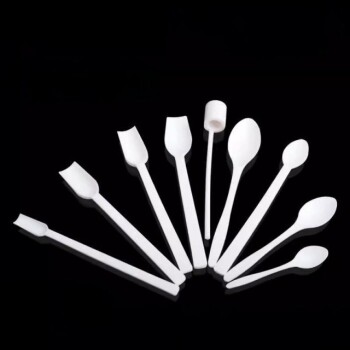
- Custom PTFE Teflon Parts Manufacturer for Sampling Solution Sample and Dry Powder Spoons
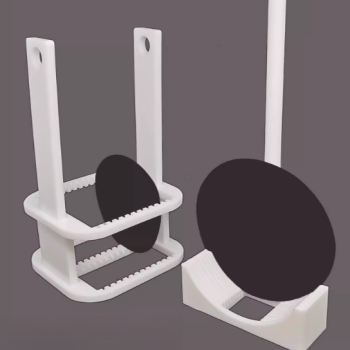
- Custom PTFE Teflon Parts Manufacturer for Hollow Cleaning Basket and Rack Carrier
- Customizable PTFE Wafer Carriers for Semiconductor and Lab Applications
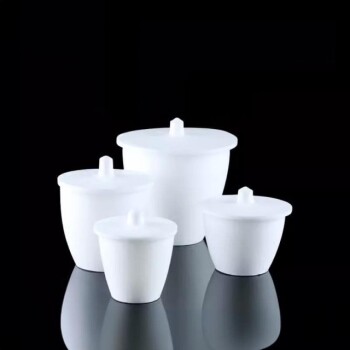
- Custom Machined and Molded PTFE Teflon Parts Manufacturer with PTFE Crucible and Lid
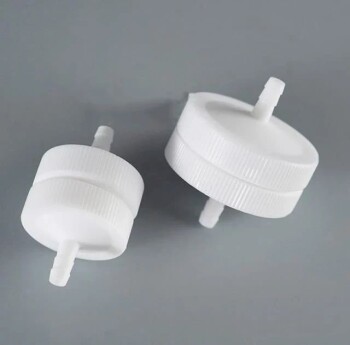
- Custom PTFE Teflon Parts Manufacturer for Sampling Filters
People Also Ask
- Is PTFE corrosion resistant? Discover the Ultimate Chemical Resistance for Your Lab
- What are the specific applications of PTFE in micro-batch slug flow systems? Enhance Your Microfluidic Reaction Purity
- How is PTFE utilized for insulation in Alloy 22 corrosion setups? Ensure Signal Purity & Accuracy
- Why Use PTFE Sample Bottles for Coal Demineralization? Ensure Chemical Stability and Data Integrity
- What is the best solvent for FTIR? Master Solvent Selection for Clear, Accurate Spectra