Knowledge What role do crushing and sieving systems play in corn cob pyrolysis? Optimize Pretreatment for Max Efficiency
Author avatar

Tech Team · Kintek Solution

Updated 2 days ago

What role do crushing and sieving systems play in corn cob pyrolysis? Optimize Pretreatment for Max Efficiency


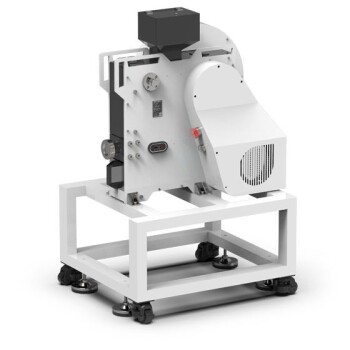
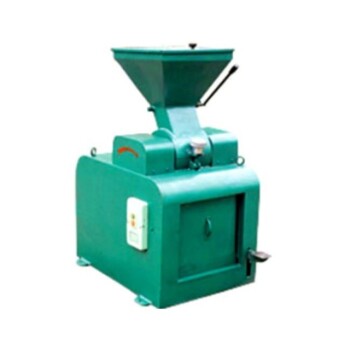
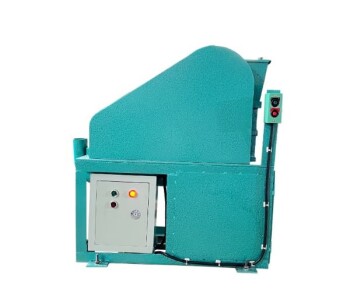
Industrial-grade crushing and sieving systems function as the critical standardization step in corn cob biomass pretreatment, ensuring the feedstock is physically optimized for thermal conversion. Specifically, these systems reduce and unify the raw biomass into a fine powder with a particle size strictly below 0.25 mm (60 mesh).

By standardizing particle size to this specific threshold, crushing and sieving remove the physical barriers to efficient thermochemical conversion. This mechanical refinement ensures that the subsequent pyrolysis reaction is driven by chemical kinetics rather than limited by how fast heat can penetrate the material.

The Mechanics of Physical Refinement

Achieving Precise Particle Dimensions

The primary role of this equipment is to mechanically pulverize the corn cob structure. It transforms irregular, bulk biomass into a homogeneous powder where every particle meets the <0.25 mm specification.

Ensuring Sample Homogeneity

Beyond simple size reduction, the sieving component acts as a quality control filter. It guarantees that the feedstock entering the reactor is uniform, which is essential for predicting reaction behavior and maintaining process stability.

Why Particle Size Drives Pyrolysis Efficiency

Maximizing Surface Area

Reducing the particle size significantly increases the specific surface area of the corn cob biomass. A larger surface area allows for more immediate contact with the heat source, facilitating rapid energy absorption.

Minimizing Heat Transfer Resistance

In larger particles, heat takes time to travel from the surface to the core. By grinding the biomass to below 0.25 mm, you minimize this thermal lag, ensuring the material heats up almost instantaneously.

Reducing Internal Temperature Gradients

Large particles often suffer from "cold cores," where the outside is reacting but the inside is not. Fine grinding eliminates these internal temperature gradients, allowing the entire particle to reach the pyrolysis temperature simultaneously.

Eliminating Mass Transfer Barriers

During pyrolysis, volatile gases must escape the solid particle. Smaller particles provide shorter diffusion paths, effectively removing resistance to mass transfer and allowing volatiles to release efficiently without secondary reactions.

Understanding the Trade-offs

Energy Cost vs. Reaction Efficiency

While finer particles generally yield better reaction kinetics, achieving extreme fineness (e.g., significantly below 0.25 mm) requires exponentially more mechanical energy. You must balance the cost of electricity for the crushing system against the marginal gains in pyrolysis efficiency.

Material Handling Challenges

Biomass reduced to fine powders (60 mesh) can behave like a fluid and creates significant dust. This necessitates robust containment and safety systems to prevent material loss and mitigate explosion hazards associated with organic dust.

Making the Right Choice for Your Goal

To optimize your pretreatment strategy, align the crushing specifications with your specific operational targets:

  • If your primary focus is reaction speed and quality: Ensure your system consistently achieves the <0.25 mm (60 mesh) standard to eliminate heat transfer limitations and maximize bio-oil or gas uniformity.
  • If your primary focus is energy efficiency: Monitor the specific energy consumption of the grinder; if the crushing cost exceeds the efficiency gains in the reactor, slightly coarser particles (within acceptable kinetic limits) may be more economical.

Precision in the physical pretreatment phase is the invisible foundation of high-performance biomass pyrolysis.

Summary Table:

System Feature Parameter Standard Impact on Pyrolysis
Particle Size <0.25 mm (60 mesh) Maximizes specific surface area for rapid heating
Uniformity Homogeneous powder Ensures predictable kinetics and process stability
Thermal Lag Minimal Resistance Eliminates internal temperature gradients (cold cores)
Mass Transfer Short Diffusion Path Facilitates efficient release of volatile gases

Elevate Your Biomass Research with KINTEK Precision

Achieve the perfect particle size for high-performance pyrolysis with KINTEK’s advanced laboratory solutions. Our industrial-grade crushing and milling systems, high-precision sieving equipment, and comprehensive range of high-temperature furnaces are designed to meet the rigorous demands of biomass pretreatment and thermal conversion. Whether you need reliable hydraulic presses, PTFE consumables, or specialized high-pressure reactors, KINTEK provides the tools to ensure your material science breakthroughs are driven by chemistry, not mechanical limitations.

Ready to optimize your feedstock? Contact KINTEK today to discuss your laboratory requirements!

Related Products

People Also Ask

Related Products

Laboratory Micro Horizontal Jar Mill for Precision Sample Preparation in Research and Analysis

Laboratory Micro Horizontal Jar Mill for Precision Sample Preparation in Research and Analysis

Discover the Micro Horizontal Jar Mill for precise sample preparation in research and analysis. Ideal for XRD, geology, chemistry, and more.

Laboratory Single Horizontal Jar Mill

Laboratory Single Horizontal Jar Mill

KT-JM3000 is a mixing and grinding instrument for placing a ball milling tank with a volume of 3000ml or less. It adopts frequency conversion control to realize timing, constant speed, direction change, overload protection and other functions.

Stainless Steel Laboratory Ball Mill for Dry Powder and Liquid with Ceramic Polyurethane Lining

Stainless Steel Laboratory Ball Mill for Dry Powder and Liquid with Ceramic Polyurethane Lining

Discover the versatile stainless steel dry powder/liquid horizontal ball mill with ceramic/polyurethane lining. Ideal for ceramic, chemical, metallurgical, and building materials industries. High grinding efficiency and uniform particle size.

Laboratory Four-Body Horizontal Jar Mill

Laboratory Four-Body Horizontal Jar Mill

The four-body horizontal tank mill ball mill can be used with four horizontal ball mill tanks with a volume of 3000ml. It is mostly used for mixing and grinding laboratory samples.

Laboratory Jar Mill with Agate Grinding Jar and Balls

Laboratory Jar Mill with Agate Grinding Jar and Balls

Grind your materials with ease using Agate Grinding Jars with Balls. Sizes from 50ml to 3000ml, perfect for planetary and vibration mills.

Laboratory Hybrid Tissue Grinding Mill

Laboratory Hybrid Tissue Grinding Mill

KT-MT20 is a versatile laboratory device used for rapid grinding or mixing of small samples, whether dry, wet, or frozen. It comes with two 50ml ball mill jars and various cell wall breaking adapters for biological applications such as DNA/RNA and protein extraction.

Laboratory Ten-Body Horizontal Jar Mill for Lab Use

Laboratory Ten-Body Horizontal Jar Mill for Lab Use

The Ten-body horizontal jar mill is for 10 ball mill pots (3000ml or less). It has frequency conversion control, rubber roller movement, and PE protective cover.

High Energy Planetary Ball Mill for Laboratory Horizontal Tank Type Milling Machine

High Energy Planetary Ball Mill for Laboratory Horizontal Tank Type Milling Machine

KT-P4000H uses the unique Y-axis planetary motion trajectory, and utilizes the collision, friction and gravity between the sample and the grinding ball to have a certain anti-sinking ability, which can obtain better grinding or mixing effects and further improve the sample output.

Vibrating Disc Mill Small Laboratory Grinding Machine

Vibrating Disc Mill Small Laboratory Grinding Machine

Discover the versatile Vibrating Disc Mill for efficient laboratory grinding. Ideal for geology, metallurgy, biology, and more. Explore now!

Mini Planetary Ball Mill Machine for Laboratory Milling

Mini Planetary Ball Mill Machine for Laboratory Milling

Discover the KT-P400 desktop planetary ball mill, ideal for grinding and mixing small samples in the lab. Enjoy stable performance, long service life, and practicality. Functions include timing and overload protection.

Laboratory Planetary Ball Mill Rotating Ball Milling Machine

Laboratory Planetary Ball Mill Rotating Ball Milling Machine

KT-P400E is a desktop multi-directional planetary ball mill with unique grinding and mixing capabilities. It offers continuous and intermittent operation, timing, and overload protection, making it ideal for various applications.

Laboratory Horizontal Planetary Ball Mill Milling Machine

Laboratory Horizontal Planetary Ball Mill Milling Machine

Improve sample uniformity with our Horizontal Planetary Ball Mills. KT-P400H reduces sample deposition and KT-P400E has multi-directional capabilities. Safe, convenient and efficient with overload protection.

High Energy Planetary Ball Mill Milling Machine for Laboratory

High Energy Planetary Ball Mill Milling Machine for Laboratory

Experience fast and effective sample processing with the F-P2000 high-energy planetary ball mill. This versatile equipment offers precise control and excellent grinding capabilities. Perfect for laboratories, it features multiple grinding bowls for simultaneous testing and high output. Achieve optimal results with its ergonomic design, compact structure, and advanced features. Ideal for a wide range of materials, it ensures consistent particle size reduction and low maintenance.

High-Energy Omnidirectional Planetary Ball Mill Machine for Laboratory

High-Energy Omnidirectional Planetary Ball Mill Machine for Laboratory

The KT-P2000E is a new product derived from the vertical high-energy planetary ball mill with a 360°rotation function. The product not only has the characteristics of the vertical high-energy ball mill, but also has a unique 360°rotation function for the planetary body.

High Energy Planetary Ball Mill Milling Machine for Laboratory

High Energy Planetary Ball Mill Milling Machine for Laboratory

The biggest feature is that the high energy planetary ball mill can not only perform fast and effective grinding, but also has good crushing ability

Lab Vibration Mill

Lab Vibration Mill

Vibration Mill for Efficient Sample Preparation, Suitable for Crushing and Grinding a Variety of Materials with Analytical Precision. Supports Dry / Wet / Cryogenic Grinding and Vacuum/Inert Gas Protection.

Disc Cup Vibrating Mill Multi-Platform for Lab

Disc Cup Vibrating Mill Multi-Platform for Lab

The multi-platform vibrating disc mill is suitable for non-destructive crushing and fine grinding of samples with large particle sizes. It is suitable for crushing and grinding applications of medium-hard, high-hard, brittle, fibrous, and elastic materials.

High Energy Vibratory Laboratory Ball Mill Double Tank Type

High Energy Vibratory Laboratory Ball Mill Double Tank Type

High-energy vibration ball mill is a small desktop laboratory grinding instrument. It uses 1700r/min high-frequency three-dimensional vibration to make the sample achieve the result of grinding or mixing.

High Energy Planetary Ball Mill Machine for Laboratory Horizontal Tank Type

High Energy Planetary Ball Mill Machine for Laboratory Horizontal Tank Type

The KT-P2000H uses a unique Y-axis planetary trajectory, and utilizes the collision, friction and gravity between the sample and the grinding ball.

High Energy Vibratory Laboratory Ball Mill Grinding Mill Single Tank Type

High Energy Vibratory Laboratory Ball Mill Grinding Mill Single Tank Type

High-energy vibration ball mill is a small desktop laboratory grinding instrument.It can be ball-milled or mixed with different particle sizes and materials by dry and wet methods.


Leave Your Message