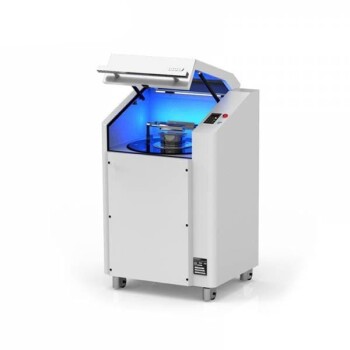
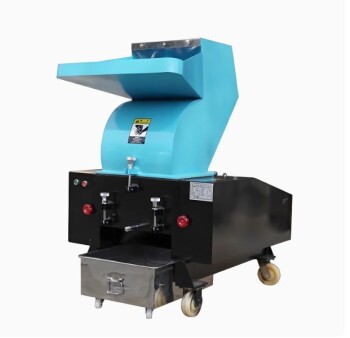
Industrial grinding mills and high-precision sieves serve as the essential first stage in co-pyrolysis by standardizing heterogeneous waste into a uniform, reactive powder. These tools reduce agricultural biomass and face mask waste—materials with vastly different physical properties—into fine particles, typically below 0.5 mm in size. This process maximizes the specific surface area and ensures uniform heat transfer, which is critical for optimizing thermal degradation efficiency and enhancing the final biochar yield.
Core Takeaway: Pretreatment through grinding and precision sieving transforms inconsistent raw materials into a homogenous feedstock, eliminating internal temperature gradients and mass transfer resistance to ensure a stable, predictable, and high-yield co-pyrolysis reaction.
Achieving Feedstock Homogeneity
Standardizing Diverse Material Morphologies
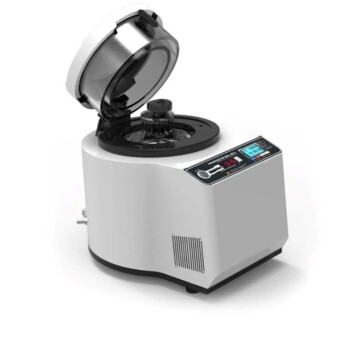
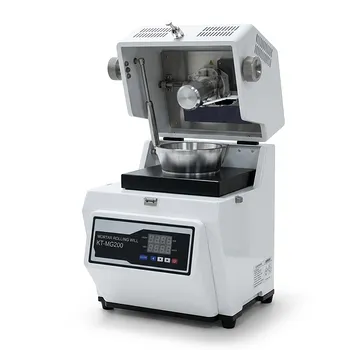
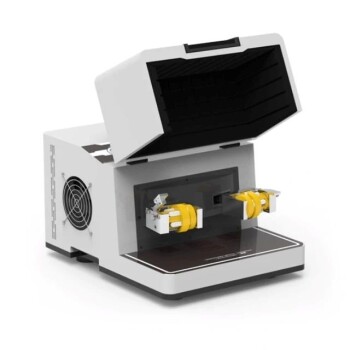
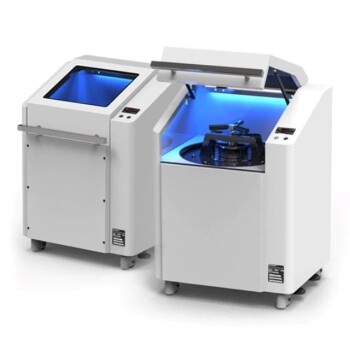
Agricultural biomass (like corn stalks or sawdust) and face mask waste (primarily polymers) have different densities and structural integrity. Industrial grinding mills mechanically break these materials down to a consistent size, ensuring that the plastic and plant matter can be mixed thoroughly.
Increasing Specific Surface Area
Reducing materials to fine particles significantly increases the specific surface area available for chemical reactions. This allows for a larger contact surface between the different material types, which is vital for the synergistic effects required during the co-pyrolysis process.
Isolating Optimal Particle Sizes
High-precision sieves act as a quality control mechanism by isolating specific particle ranges, such as 0.25 mm to 0.5 mm. This precision eliminates the "noise" in experimental data caused by particle size variation, allowing for more accurate predictions of biochar yield and thermal behavior.
Optimizing Thermodynamic Efficiency
Minimizing Internal Temperature Gradients
Large or irregular particles often suffer from uneven heating, where the core remains cool while the surface overcooks. By reducing the material to a fine powder, grinding ensures that heat penetrates the center of every particle almost instantaneously, leading to a more uniform reaction.
Facilitating Consistent Mass and Heat Transfer
Consistent particle size ensures that the flow of heat and the release of gases (mass transfer) occur at a predictable rate throughout the reactor. This uniformity prevents localized "hot spots" or incomplete degradation, which are common issues when processing unrefined biomass.
Improving Thermogravimetric Accuracy
For researchers and industrial operators, sieving equipment is vital for collecting accurate thermogravimetric analysis (TGA) data. By using standardized sizes, such as 710 µm or 60 mesh, operators can ensure that the data reflects the chemical nature of the material rather than physical inconsistencies.
Understanding the Trade-offs and Pitfalls
Energy Consumption vs. Particle Size
While finer particles generally improve reaction efficiency, the energy required for mechanical grinding increases exponentially as the target size decreases. Operators must find the "sweet spot" where the gains in biochar yield outweigh the electrical costs of the milling process.
Risk of Material Loss and Dust Hazards
Processing dry biomass and plastics into fine powders creates significant amounts of combustible dust. Without proper containment and dust extraction systems, industrial grinding can pose safety risks and result in the loss of valuable feedstock.
Potential for Equipment Wear
Face mask waste can contain nose wires or other contaminants that accelerate the wear on grinding blades and hammers. Failing to pre-sort or use hardened industrial components can lead to frequent downtime and inconsistent particle sizing.
How to Apply This to Your Project
When preparing for a co-pyrolysis project, your choice of grinding and sieving parameters should be dictated by your end-product goals and the scale of your operation.
- If your primary focus is maximizing biochar yield: Utilize high-precision sieves to restrict particle size to below 0.25 mm to minimize internal heat resistance and ensure complete carbonization.
- If your primary focus is industrial scalability: Optimize your grinding mills for a slightly larger particle size (approx. 1.0 mm) to balance energy consumption with acceptable thermal degradation rates.
- If your primary focus is scientific reproducibility: Implement a multi-stage sieving process to isolate a narrow particle range, such as 0.42–0.50 mm, to eliminate physical variables from your kinetic models.
The strategic use of grinding and sieving transforms unpredictable waste streams into a high-quality, standardized feedstock ready for advanced thermal conversion.
Summary Table:
| Pretreatment Stage | Equipment Used | Primary Function | Benefit to Co-Pyrolysis |
|---|---|---|---|
| Size Reduction | Industrial Grinding Mills | Mechanical breakdown to <0.5 mm | Maximizes specific surface area and mixing |
| Quality Control | High-Precision Sieves | Isolating specific particle ranges | Ensures uniform heat transfer and reaction rates |
| Analytical Prep | Standardized Sieving | Standardizing for TGA data | Eliminates physical variables for accurate kinetics |
| Feedstock Prep | Milling & Sieving | Homogenizing heterogeneous waste | Prevents internal temperature gradients and hot spots |
Optimize Your Waste-to-Energy Research with KINTEK
Unlock the full potential of your biomass and waste conversion projects with KINTEK’s advanced laboratory solutions. Whether you are standardizing heterogeneous feedstock using our precision crushing and milling systems and sieving equipment, or conducting complex thermal degradation in our high-performance high-temperature furnaces (muffle, vacuum, CVD, atmosphere) and high-pressure reactors, we provide the reliability and precision your research demands.
From hydraulic presses for sample preparation to essential consumables like crucibles and PTFE products, KINTEK is your comprehensive partner for high-yield, reproducible results. Contact KINTEK today to discuss how our tailored equipment can streamline your laboratory workflow and enhance your biochar production efficiency.
References
- Yasirah Yusoff, Firas Basim Ismail. A Comparison of Feedstock from Agricultural Biomass and Face Masks for the Production of Biochar through Co-Pyrolysis. DOI: 10.3390/su152216000
This article is also based on technical information from Kintek Solution Knowledge Base .
Related Products
- Laboratory High Throughput Tissue Grinding Mill Grinder
- Laboratory Grinding Mill Mortar Grinder for Sample Preparation
- Laboratory Hybrid Tissue Grinding Mill
- Laboratory Jar Mill with Agate Grinding Jar and Balls
- Vibrating Disc Mill Small Laboratory Grinding Machine
People Also Ask
- What is the purpose of using a laboratory grinder and standard sieves? Unlock Precise Rice Husk Pretreatment
- What is the purpose of using a laboratory grinder with specific mesh sieves for oat straw? Optimize Pellet Quality
- What is the role of laboratory-grade grinders and sieves in sample prep? Ensure High-Precision Corrosion Analysis
- How do laboratory grinders and standard sieving systems ensure the quality of feedstock for torrefaction?
- What does a grinder do in a laboratory? Achieve Homogeneous Sample Preparation for Accurate Analysis