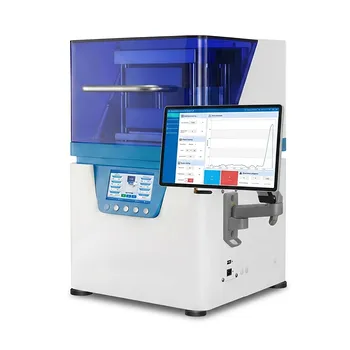
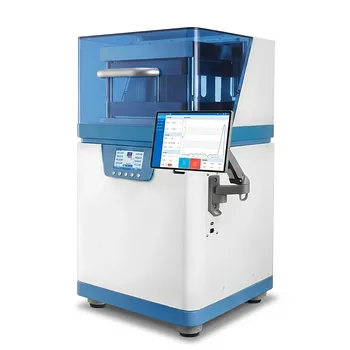
The primary role of laboratory hydraulic presses and forming molds is to establish a standardized physical benchmark for electrode materials. By applying precise, controllable pressure, these tools transform raw powders or slurries into "green bodies" with fixed thickness and density. This ensures that any performance differences observed in comparative studies are due to the material's internal structure rather than variations in its physical dimensions.
In comparative electrochemical research, laboratory hydraulic presses act as the guarantor of experimental validity. They eliminate physical variables by ensuring that non-hierarchical electrodes possess the exact same geometric and density specifications as the specialized structures being tested.
Establishing Geometric and Density Consistency
Creating a Standardized Physical Benchmark
The hydraulic press allows researchers to achieve consistent physical specifications across multiple samples. By using precision molds, materials are compressed into uniform shapes with a fixed thickness, which is essential for calculating volumetric performance metrics. This standardization provides the "control" environment necessary to compare conventional, non-hierarchical electrodes against complex hierarchical structures.
Controlling Initial Green Density
The "green density"—the density of the material before further thermal or chemical processing—is directly dictated by the compaction pressure. Laboratory presses allow for the fine-tuning of this density to ensure consistent internal porosity. This is particularly critical in applications like Electro-Discharge Coating (EDC), where the material deposition rate is highly sensitive to the initial compaction of the tool electrode.
Enhancing Electrochemical and Mechanical Performance
Minimizing Interfacial Contact Resistance
One of the most critical functions of the pressing process is to increase the electrical contact between active material particles and the current collector. By applying several tons of vertical pressure, the press reduces interfacial resistance, ensuring a uniform current distribution. This is vital for in-situ testing, where poor contact can create artifacts that obscure the material's intrinsic properties.
Improving Structural Integrity and Adhesion
High-pressure forming ensures that the active material layer is securely bonded to substrates like copper foil, steel mesh, or metal foams. This mechanical adhesion prevents delamination or peeling during the volume expansion that occurs in long-term cyclic testing. Without this structural stability, electrodes would fail prematurely, making it impossible to evaluate their true electrochemical lifespan.
Understanding the Trade-offs
The Risk of Over-Compaction
While high pressure reduces resistance, excessive force can lead to over-compaction, which crushes the pore structure of the electrode. If the pores are closed off, the electrolyte cannot penetrate the material effectively, leading to poor ion transport. Researchers must balance the need for mechanical contact with the necessity of maintaining a path for ionic diffusion.
Substrate Deformation and Damage
Not all current collectors can withstand high tonnage; fragile substrates like thin metal foils or highly porous foams may deform or tear under excessive pressure. Using a hydraulic press requires careful calibration to ensure the pressure is high enough for adhesion but low enough to maintain the structural integrity of the underlying collector.
How to Apply This to Your Project
Making the Right Choice for Your Goal
To achieve the best results in electrode preparation, your pressing strategy should align with your specific experimental objectives.
- If your primary focus is Benchmarking New Structures: Use a high-precision mold to ensure your control electrodes match the exact dimensions and mass loading of your experimental hierarchical samples.
- If your primary focus is High-Current Stability: Prioritize higher compaction pressures to maximize mechanical adhesion and minimize contact resistance, ensuring the electrode survives high-rate cycling.
- If your primary focus is Bulk Material Analysis: Use the press to create dense, pelletized samples from catalyst powders to ensure accurate data during XRD analysis or bulk resistivity measurements.
By mastering the precise application of pressure, you ensure your experimental data reflects the true potential of your materials rather than the inconsistencies of their preparation.
Summary Table:
| Key Role | Impact on Electrode Quality | Critical Consideration |
|---|---|---|
| Geometric Standardization | Ensures uniform thickness and fixed physical benchmarks for accurate comparison. | Precise mold selection is required for specific dimensions. |
| Density Control | Fine-tunes "green density" and internal porosity for consistent ionic transport. | Balancing compaction is vital to avoid crushing pore structures. |
| Interfacial Resistance | Increases electrical contact between active material and the current collector. | Vertical pressure must be calibrated to minimize resistance. |
| Structural Integrity | Enhances adhesion to substrates, preventing delamination during cyclic testing. | High tonnage may risk substrate deformation or tearing. |
Optimize Your Electrode Preparation with KINTEK
Precision is the foundation of breakthrough electrochemical research. KINTEK specializes in high-performance laboratory equipment designed to eliminate variables and deliver repeatable results. Our comprehensive range of hydraulic presses (pellet, hot, and isostatic) and precision forming molds ensures your non-hierarchical electrodes meet the exact density and geometric specifications required for rigorous comparative studies.
Beyond pressing solutions, KINTEK offers an extensive portfolio including:
- High-temperature furnaces (muffle, vacuum, CVD, and more) for material processing.
- Battery research tools and electrolytic cells for in-depth analysis.
- High-pressure reactors and autoclaves for advanced synthesis.
- Essential consumables like PTFE products, ceramics, and crucibles.
Ensure your experimental data reflects the true potential of your materials. Contact KINTEK today to discuss how our specialized equipment can enhance your laboratory's efficiency and research accuracy.
References
- Dun Lin, Yat Li. 3D‐Printed Graded Electrode with Ultrahigh MnO<sub>2</sub> Loading for Non‐Aqueous Electrochemical Energy Storage. DOI: 10.1002/aenm.202300408
This article is also based on technical information from Kintek Solution Knowledge Base .
Related Products
- Laboratory Hydraulic Press Lab Pellet Press Machine for Glove Box
- Laboratory Hydraulic Press Split Electric Lab Pellet Press
- Fully Automatic Heated Hydraulic Lab Press for Materials Sintering and Sample Preparation
- Laboratory Hydraulic Press Lab Pellet Press for Button Battery
- Automatic Laboratory Hydraulic Pellet Press Machine for Lab Use
People Also Ask
- How do laboratory hydraulic presses contribute to zero-gap electrolyzers? Optimize Performance & Safety
- Why is a laboratory hydraulic press necessary for ZrO2/Cr2O3 interface analysis? Optimize Sample Density and Accuracy
- How do a precision laboratory hydraulic press and specialized molds contribute to the fabrication of spherical ceramic samples? Achieving High-Density Material Precision
- What is the role of a laboratory hydraulic press in the preparation of rare earth denitrification catalysts?
- How does pressure control of a laboratory hydraulic press affect W-Ti alloys? Optimize Grain Structure & Density