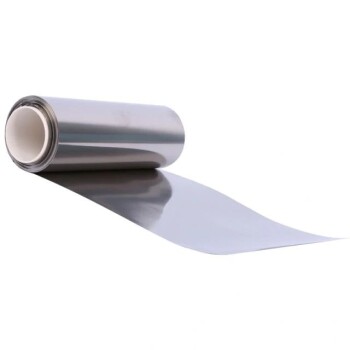
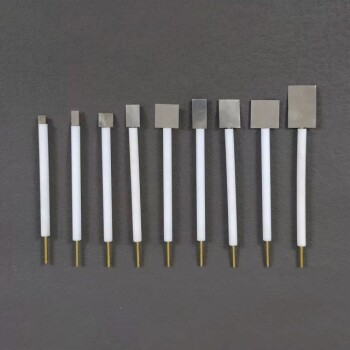
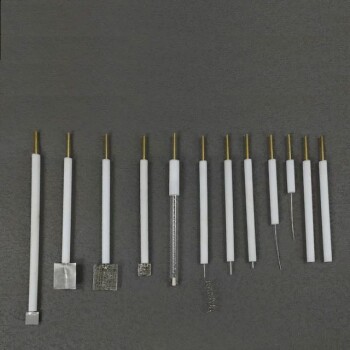
Titanium electrodes function as highly durable cathodes that ensure electrical continuity and physical stability within electrooxidation systems. Their primary role is to provide a corrosion-resistant, conductive surface that completes the electrochemical circuit, maintaining integrity even under high-voltage and high-current conditions.
While the anode is often viewed as the driver of oxidation, the titanium cathode provides the essential structural foundation and electrical stability required for consistent operation. Beyond simple durability, industrial-grade titanium can enhance advanced processes like Electro-Fenton by facilitating chemical regeneration and oxidant production.
Foundational Stability and Durability
Resistance to Harsh Environments
Titanium is primarily selected for its high corrosion resistance.
Electrooxidation creates aggressive electrolyte environments that would degrade lesser materials. Titanium cathodes withstand these conditions, ensuring the structural components of the cell do not fail prematurely.
Handling Electrical Stress
These electrodes are engineered to maintain physical integrity under intense electrical loads.
They operate reliably under high-voltage and high-current conditions. This robustness ensures the reaction system remains stable over long operational cycles, preventing downtime caused by mechanical failure.
Completing the Circuit
At its most fundamental level, the titanium cathode serves as a stable conductive surface.
It effectively completes the electrochemical circuit. This allows for the consistent flow of electrons required to drive the reactions occurring at the anode.
Catalyzing Advanced Oxidation Processes
Facilitating the Electro-Fenton Process
In advanced setups, such as Electro-Fenton systems, the role of the titanium cathode expands beyond simple conduction.
Industrial-grade titanium plates facilitate the two-electron reduction of oxygen. This is a critical electrochemical reaction that transforms dissolved oxygen into active oxidants.
Generating Hydrogen Peroxide
The reduction process described above generates hydrogen peroxide ($H_2O_2$) directly at the cathode surface.
This in-situ generation eliminates the need to add external hydrogen peroxide, making the treatment process more self-sufficient and efficient.
Regenerating Iron Ions
The titanium cathode also accelerates the cyclic regeneration of iron ions ($Fe^{3+}$ back to $Fe^{2+}$).
This regeneration is vital for maintaining the Fenton reaction. This synergistic interaction with the anode significantly improves the overall removal rates of Chemical Oxygen Demand (COD) and enhances wastewater decolorization.
Understanding the Trade-offs
The Requirement for Industrial-Grade Material
Not all titanium is created equal. To achieve the electrochemical benefits described above—specifically hydrogen peroxide generation—industrial-grade titanium plates are necessary.
Using lower-grade alloys may provide structural stability but fail to deliver the catalytic properties required for enhanced COD removal.
Conductivity vs. Cost
Titanium offers excellent electrical conductivity and mechanical strength, but it is generally more expensive than materials like stainless steel.
However, this cost is a trade-off for longevity. The expense is justified in systems where high mechanical strength and resistance to chemical corrosion are non-negotiable for safety and reliability.
Optimizing Your Electrochemical Setup
Choosing the right cathode configuration is about balancing physical durability with chemical efficiency.
- If your primary focus is system longevity: Prioritize titanium for its ability to withstand high current and corrosive electrolytes without structural degradation.
- If your primary focus is pollutant removal efficiency: Utilize industrial-grade titanium to enable oxygen reduction and iron regeneration for enhanced COD removal.
By leveraging the dual benefits of structural robustness and electrochemical synergy, titanium cathodes transform standard electrolysis into a high-performance purification tool.
Summary Table:
| Feature | Function in Electrooxidation | Primary Benefit |
|---|---|---|
| Corrosion Resistance | Withstands aggressive electrolytes | Ensures long-term structural integrity |
| Electrical Conductivity | Completes the electrochemical circuit | Maintains stability under high voltage/current |
| Two-Electron Reduction | Facilitates oxygen-to-oxidant conversion | In-situ generation of Hydrogen Peroxide ($H_2O_2$) |
| Ion Regeneration | Recycles $Fe^{3+}$ back to $Fe^{2+}$ | Accelerates Fenton reactions for higher COD removal |
Maximize Your Treatment Efficiency with KINTEK
Elevate your laboratory and industrial electrochemical setups with KINTEK’s high-performance solutions. Whether you are conducting advanced battery research, optimizing electrolytic cells and electrodes, or managing complex wastewater treatment through electrooxidation, our industrial-grade titanium electrodes deliver the durability and catalytic precision your projects demand.
From high-temperature furnaces and vacuum reactors to specialized electrochemical consumables, KINTEK provides the comprehensive equipment portfolio required for cutting-edge material science and chemical engineering.
Ready to optimize your reactor performance? Contact our technical experts today to find the perfect titanium electrodes and laboratory equipment for your specific application.
References
- Emily K. Maher, Patrick J. McNamara. Removal of Estrogenic Compounds from Water Via Energy Efficient Sequential Electrocoagulation-Electrooxidation. DOI: 10.1089/ees.2019.0335
This article is also based on technical information from Kintek Solution Knowledge Base .
Related Products
- High-Purity Titanium Foil and Sheet for Industrial Applications
- Platinum Sheet Electrode for Laboratory and Industrial Applications
- Platinum Sheet Electrode for Battery Lab Applications
- Platinum Auxiliary Electrode for Laboratory Use
People Also Ask
- What products are manufactured with titanium? The Ultimate Guide to High-Performance Materials
- What are the advantages of utilizing Polytetrafluoroethylene (PTFE) sheets as casting substrates? | KINTEK Solution
- In what way do portable laboratory consumables like PTFE sheets define a functional workspace? Transform Your Lab Bench
- What are the advantages of using titanium? Achieve Unmatched Strength and Corrosion Resistance
- What are the safety considerations for titanium? From Biocompatible Metal to Fire Hazard