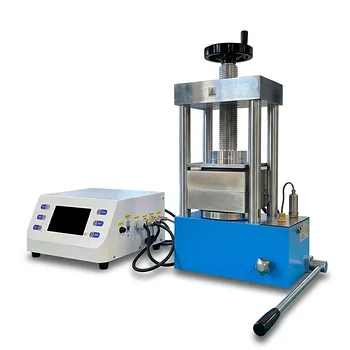
In the fabrication of Ce:GGAG (Cerium-doped Gadolinium Aluminum Gallium Garnet) ceramic rods, the Cold Isostatic Press (CIP) serves as the critical densification step following initial shaping. By applying omnidirectional pressure—typically reaching 70 MPa—to powder-filled containers, the CIP ensures that the ceramic "green body" achieves high initial density and superior internal uniformity. This uniform compaction is the fundamental requirement for producing crack-free, high-strength ceramic rods during the subsequent high-temperature sintering process.
The Cold Isostatic Press (CIP) utilizes isotropic pressure to eliminate density gradients and internal voids within a ceramic green body. This process creates a structurally sound foundation that prevents deformation and cracking during the intense thermal stresses of sintering.
Achieving Isotropic Compaction and Density
The Role of Omnidirectional Pressure
Unlike traditional uniaxial pressing, which applies force from a single direction, a CIP applies uniform pressure from all directions through a liquid medium. This isotropic force ensures that the Ce:GGAG powder is compressed evenly, resulting in a green body with consistent structural properties throughout its entire volume.
Maximizing Green Density
By applying pressures of 70 MPa or higher, the CIP forces powder particles into the closest possible contact, significantly increasing the packing density. A high initial green density is vital because it reduces the total volume of shrinkage that occurs during sintering, leading to better dimensional control.
Elimination of Density Gradients
One of the primary functions of the CIP is to eliminate internal density gradients that often form during the initial mold-filling or dry-pressing stages. Removing these gradients is essential for ensuring that the ceramic rod shrinks at a uniform rate during heating, which prevents warping and internal stress accumulation.
Structural Integrity and Sintering Performance
Prevention of Cracks and Deformation
During high-temperature sintering, materials with uneven density tend to pull apart or distort as they densify at different rates. The CIP provides the excellent density uniformity required to withstand these thermal stresses, resulting in a final ceramic rod that is free of macroscopic cracks and structural defects.
Enhancing Mechanical Strength
The high-pressure treatment effectively eliminates internal pores and microporosity within the green body rods. This reduction in voids directly translates to superior mechanical strength, allowing the Ce:GGAG rods to undergo fine machining or be used as feed rods in optical floating zone crystal growth without failing.
Facilitating Solid-State Diffusion
By increasing the contact points between individual powder particles, the CIP facilitates more efficient solid-state diffusion during sintering. This accelerated diffusion helps the material reach its theoretical density faster and results in a more homogeneous polycrystalline structure.
Understanding the Trade-offs and Limitations
Tooling and Mold Requirements
While a CIP provides superior uniformity, it requires elastic molds (such as rubber or silicone tubes) to transmit pressure to the powder. These molds must be carefully sealed to prevent the hydraulic medium from contaminating the Ce:GGAG powder, adding a layer of complexity to the preparation phase.
Pressure Limits and Material Integrity
While higher pressures (sometimes up to 400 MPa) can further increase density, there is a point of diminishing returns where excessive pressure may cause lamination or structural failure in certain powder compositions. Finding the optimal pressure—such as the 70 MPa identified for Ce:GGAG—is a balance between achieving density and maintaining the integrity of the green body.
Post-Processing Considerations
Although CIP produces a "near-net size" blank that reduces firing shrinkage, the resulting green body often requires pre-sintering machining to achieve exact dimensions. The material must have sufficient "green strength" from the CIP process to survive these handling and shaping steps before it is permanently hardened in the kiln.
How to Optimize CIP for Your Project
Applying This to Your Preparation Process
The effectiveness of the cold isostatic pressing stage depends heavily on your specific material goals and the intended final application of the Ce:GGAG ceramic.
- If your primary focus is optical clarity and transparency: Ensure the CIP pressure is high enough to eliminate all internal micro-voids, as even minor porosity will scatter light and degrade performance.
- If your primary focus is dimensional precision: Utilize CIP to achieve the highest possible green density, which minimizes the shrinkage ratio and reduces the need for expensive post-sintering diamond grinding.
- If your primary focus is high-volume production: Use CIP to create large "near-net shape" blanks that allow for batch processing, significantly lowering production costs by reducing waste and machining time.
By precisely controlling the isotropic pressure environment, the CIP establishes the essential structural foundation required for high-performance Ce:GGAG ceramic components.
Summary Table:
| Feature of CIP | Impact on Ce:GGAG Rod Fabrication |
|---|---|
| Isotropic Pressure | Applies uniform force to eliminate density gradients and prevent warping. |
| High-Pressure Compaction | Reaches 70+ MPa to maximize green density and minimize sintering shrinkage. |
| Structural Uniformity | Eliminates internal voids and microporosity, preventing cracks during heating. |
| Enhanced Strength | Produces robust green bodies capable of withstanding pre-sintering machining. |
Elevate Your Ceramic Research with KINTEK Precision
Achieving the perfect green body for Ce:GGAG rods requires absolute pressure uniformity and reliable equipment. KINTEK specializes in high-performance laboratory solutions, offering a comprehensive range of cold isostatic presses (CIP), hydraulic pellet presses, and hot isostatic systems tailored for advanced material science.
Beyond pressing, our portfolio supports your entire workflow with:
- High-Temperature Furnaces: Muffle, tube, and vacuum systems for precise sintering.
- Material Processing: Crushing, milling, and sieving equipment for powder preparation.
- Essential Consumables: High-purity ceramics, PTFE products, and crucibles.
Whether you are focusing on optical clarity or mechanical durability, KINTEK provides the tools to ensure your materials meet theoretical density. Contact our technical experts today to find the ideal pressing solution for your laboratory.
References
- Tong Wu, Jun Zou. A homogeneity study on (Ce,Gd)<sub>3</sub>Ga<sub>2</sub>Al<sub>3</sub>O<sub>12</sub> crystal scintillators grown by an optical floating zone method and a traveling solvent floating zone method. DOI: 10.1039/d3ce00144j
This article is also based on technical information from Kintek Solution Knowledge Base .
Related Products
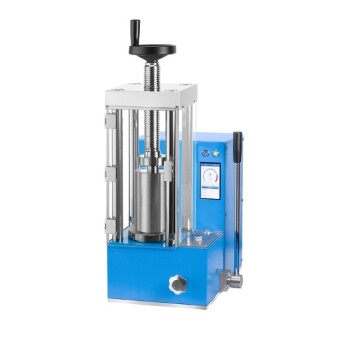
- Electric Lab Cold Isostatic Press CIP Machine for Cold Isostatic Pressing
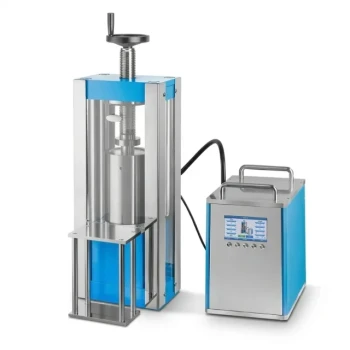
- Electric Split Lab Cold Isostatic Press CIP Machine for Cold Isostatic Pressing
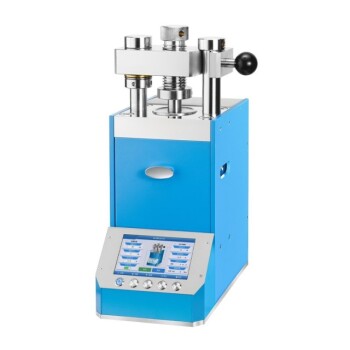
- Automatic Lab Cold Isostatic Press CIP Machine Cold Isostatic Pressing
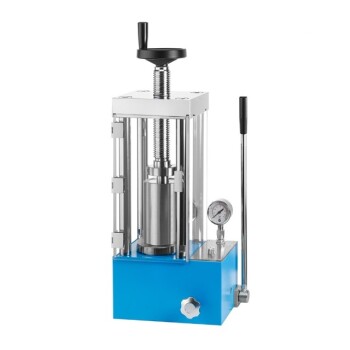
- Manual Cold Isostatic Pressing Machine CIP Pellet Press
- Isostatic Molding Pressing Molds for Lab
People Also Ask
- What role does cold isostatic pressing play in the formation of feed rods for single crystal growth? Ensure Stability.
- What is isostatic pressing method for ceramics? Achieve Uniform Density for Complex Parts
- In what ways does Cold Isostatic Pressing (CIP) enhance LiFePO4 battery performance? Boost Density and Conductivity
- How does Cold Isostatic Pressing (CIP) benefit SiC ceramic reactors? Achieve Flawless Material Integrity
- Why is a cold isostatic press advantageous for Argyrodite sulfide solid-state batteries? Achieve Optimal Densification