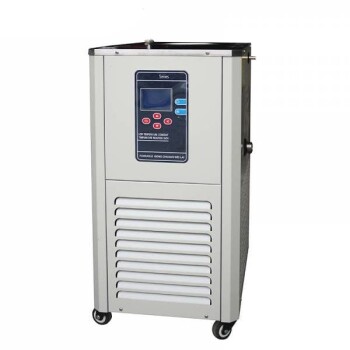
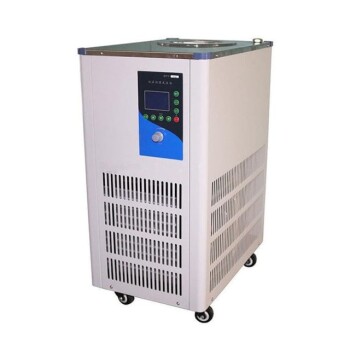
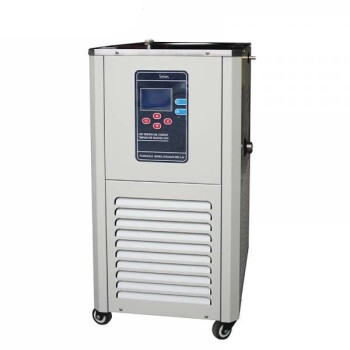
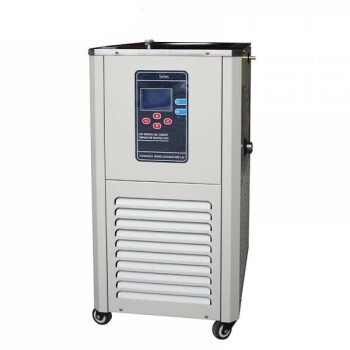
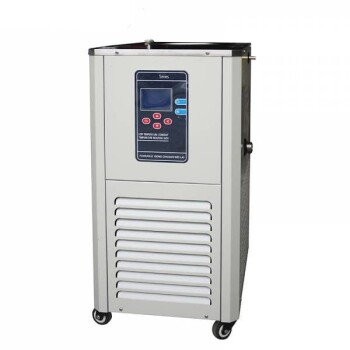
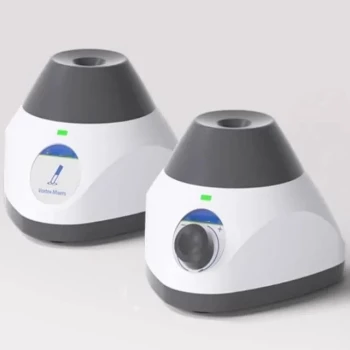
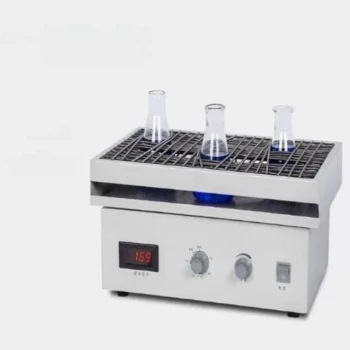
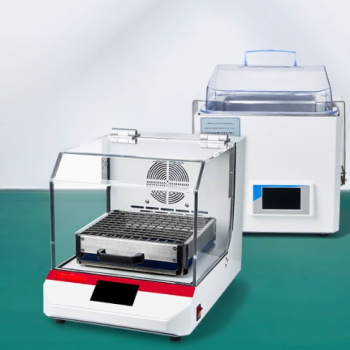
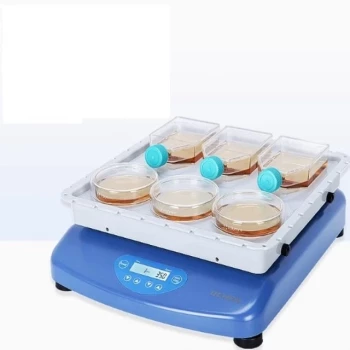
A constant temperature shaker acts as the critical control mechanism for experimental validity in adsorption studies. It simultaneously provides a stable thermal environment and continuous mechanical agitation. This dual function is essential for facilitating thorough contact between boron ions and the adsorbent, ensuring that the data you collect regarding reaction rates and capacity reflects the material's true performance rather than environmental inconsistencies.
Core Takeaway Reliable adsorption data requires the total elimination of external variables. By preventing the formation of local concentration gradients and locking in thermal stability, the constant temperature shaker ensures that your measurements of equilibrium capacity and adsorption kinetics are accurate, reproducible, and scientifically valid.
The Mechanics of Accurate Evaluation
To evaluate an adsorbent effectively, you must isolate the interaction between the solid material and the boron ions in the brine. The constant temperature shaker achieves this through two distinct physical processes.
Eliminating Diffusion Barriers
Static environments create "dead zones" around adsorbent particles.
Continuous mechanical agitation breaks down these boundaries. It forces the brine to move constantly, ensuring that fresh boron ions are perpetually brought into contact with the adsorbent surface.
This prevents the formation of local concentration gradients, where the liquid immediately surrounding the particle becomes depleted of boron while the bulk solution remains rich.
Standardizing Reaction Kinetics
Adsorption is a thermodynamic process; it is inherently sensitive to heat.
A stable temperature-controlled environment is non-negotiable for accurate kinetic data. If the temperature fluctuates during the experiment, the rate at which boron binds to the adsorbent will change unpredictable.
The shaker maintains a constant thermal baseline, ensuring that any change in adsorption rate is due to the material's properties, not a draft in the laboratory or a change in ambient room temperature.
Determining True Equilibrium
The ultimate goal of these experiments is often to find the "equilibrium adsorption capacity"—the maximum amount of boron the material can hold.
To reach this state accurately, the system must be dynamic. The combination of mixing and thermal stability allows the system to reach a true equilibrium state faster and more reliably.
This ensures that your final calculations of adsorption capacity are precise and not the result of a reaction that stalled prematurely due to poor mixing.
Critical Considerations for Experimental Design
While the constant temperature shaker is vital, it introduces specific variables that must be managed to avoid compromising your data.
The Risk of Particle Attrition
While agitation is necessary for diffusion, excessive mechanical force can be detrimental.
If the shaking speed is too high, granular adsorbents may grind against each other or the container walls. This physical breakdown increases the surface area artificially, leading to skewed data that cannot be replicated in a real-world, large-scale column operation.
Thermal Lag Times
Trusting the machine's display is not enough.
A common oversight is assuming the brine inside the flask is at the set temperature the moment it is placed in the shaker.
There is always a thermal lag. To ensure accuracy, the brine samples should ideally be pre-equilibrated to the target temperature before the adsorbent is added and the experiment begins.
Making the Right Choice for Your Goal
When configuring your constant temperature shaker for boron removal experiments, tailor your settings to your specific analytical focus.
- If your primary focus is Adsorption Kinetics (Speed): Prioritize optimizing the agitation speed to ensure the reaction is limited by the chemical process, not by film diffusion (how fast ions move through the liquid).
- If your primary focus is Equilibrium Capacity (Maximum Load): Prioritize rigorous temperature stability, as even slight thermal deviations can shift the adsorption isotherm and alter the calculated maximum capacity.
By controlling these physical parameters, you transform a simple mixture into a precise analytical system capable of delivering high-fidelity data.
Summary Table:
| Feature | Role in Boron Adsorption Evaluation | Impact on Data Quality |
|---|---|---|
| Mechanical Agitation | Breaks down local concentration gradients & diffusion layers. | Ensures reaction rates reflect material performance. |
| Thermal Stability | Maintains a constant thermodynamic baseline for the reaction. | Eliminates kinetic variations caused by ambient temperature. |
| System Dynamics | Facilitates rapid and thorough contact between ions and surface. | Enables accurate determination of true equilibrium capacity. |
| Control Interface | Allows precise adjustment of shaking speed and heating. | Prevents particle attrition and ensures experiment reproducibility. |
Precision is the foundation of breakthrough material science. KINTEK provides high-performance constant temperature shakers and shakers, alongside a full suite of laboratory solutions—from high-temperature furnaces (muffle, vacuum, CVD) and crushing systems to high-pressure reactors and battery research tools. Whether you are refining salt lake brine or developing next-gen adsorbents, our equipment ensures your data is reproducible and your results are definitive. Contact KINTEK today to optimize your laboratory workflow!
References
- Qinglong Luo, Jun Li. Magnetic Separation of Oxoacid of Boron from Salt-Lake Brine by Synergistically Enhanced Boron Adsorbents of Glucose-Functionalized SiO2 and Graphene. DOI: 10.3390/ijms231911356
This article is also based on technical information from Kintek Solution Knowledge Base .
Related Products
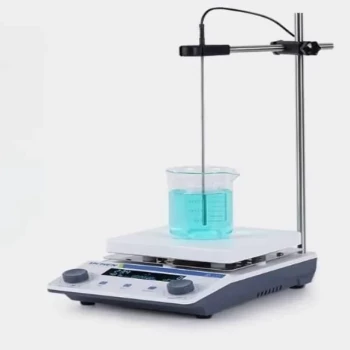
- Laboratory Small Constant Temperature Heated Magnetic Stirrer Heater and Stirrer
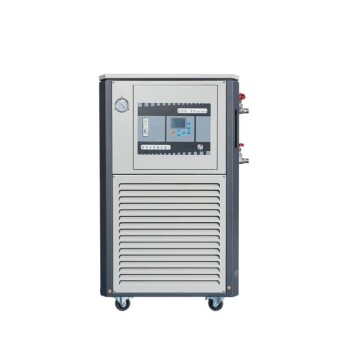
- High Temperature Constant Temperature Heating Circulator Water Bath Chiller Circulator for Reaction Bath
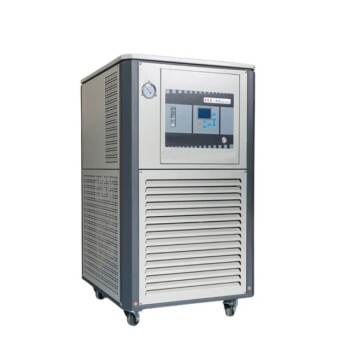
- 10L Heating Chilling Circulator Cooling Water Bath Circulator for High and Low Temperature Constant Temperature Reaction
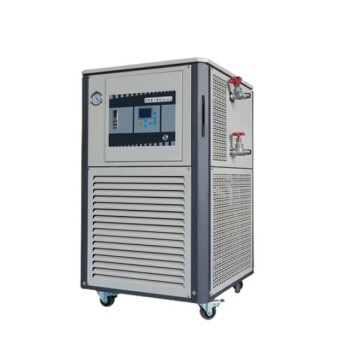
- 5L Heating Chilling Circulator Cooling Water Bath Circulator for High and Low Temperature Constant Temperature Reaction
- 50L Chiller Water Bath Cooling Circulator Low Temperature Constant Temperature Reaction Bath
People Also Ask
- What role does a magnetic stirrer with heating play in ZnO nanoparticle synthesis? Precision Control for Quality Results
- What role does a constant temperature heating magnetic stirrer play in MFC-HAp synthesis? Achieve Material Homogeneity
- What is the function of a laboratory magnetic stirrer in Ni–Cr–P electrodeposition? Optimize Ion Transport & Coating
- Why is a laboratory magnetic stirrer required for benzoic acid esters? Boost Reaction Speed & Yield with High RPM
- What role does a laboratory magnetic stirrer play in TiO2 and TiO2-Ag sol preparation? Master Chemical Kinetics