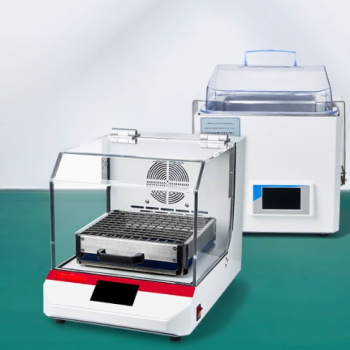
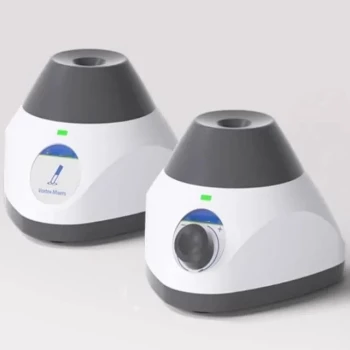
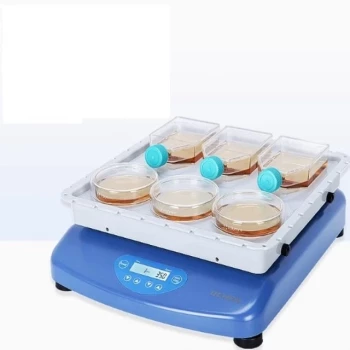
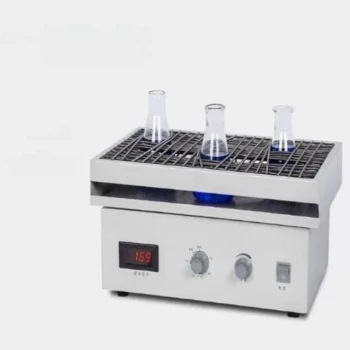
A constant-temperature shaker acts as the critical control engine for laboratory batch adsorption experiments involving emerging contaminants. It performs two simultaneous functions: it generates the mechanical force necessary to overcome water film diffusion resistance and maintains the precise thermal environment required to determine accurate thermodynamic parameters.
Core Takeaway By providing a uniform kinetic environment and a stable thermal state, this device ensures that adsorption data reflects true chemical interactions rather than experimental inconsistencies. It is the primary tool for eliminating external mass transfer limitations and isolating temperature as a controlled variable.
Optimizing the Kinetic Environment
Overcoming Diffusion Resistance
The primary mechanical role of the shaker is to generate specific rotation speeds or oscillation. This mechanical force is essential for overcoming water film diffusion resistance at the liquid-solid interface. Without this agitation, a stagnant film of water surrounds the adsorbent, slowing down the movement of emerging contaminants onto the material.
Ensuring Thorough Contact
The shaker creates a uniform kinetic environment that ensures thorough contact between pollutant molecules and solid adsorbent particles. By keeping the materials in a suspended state, the device maximizes the surface area available for interaction. This constant motion prevents particle settling, which would otherwise lead to inconsistent data.
Reaching Kinetic Equilibrium
To accurately measure how fast a contaminant is removed, the system must reach a state of kinetic equilibrium. The shaker’s consistent mechanical power drives the reaction toward this endpoint efficiently. This allows researchers to reliably determine the time required for the adsorption process to complete.
The Role of Thermal Precision
Evaluating Thermodynamics accurately
Temperature control is not merely a feature; it is a fundamental requirement for calculating thermodynamic parameters. The constant-temperature function ensures the adsorption process occurs at a specific, stable heat level. This stability is required to determine if the reaction is exothermic or endothermic and to calculate entropy and enthalpy changes.
Simulating Environmental Conditions
Emerging contaminants exist in environments ranging from cold groundwater to warm industrial effluents. The shaker allows researchers to simulate pollutant removal efficiency across these different environmental conditions. By locking in a specific temperature, you can predict how an adsorbent will perform in real-world scenarios.
Eliminating Ambient Variables
Ambient room temperature can fluctuate significantly during long-term batch experiments. These fluctuations can alter reaction rates and skew data. The constant-temperature shaker eliminates this variable, ensuring that the resulting isotherms and kinetic models are reproducible and scientifically valid.
Understanding the Trade-offs
The Risk of Improper Speed Selection
While mechanical force is necessary, the rotation speed must be carefully optimized. If the speed is too low, the water film diffusion resistance will not be fully overcome, leading to false kinetic data. Conversely, excessive agitation in some setups could potentially alter the physical state of fragile adsorbents, though the primary goal remains efficient suspension.
Thermal Equilibration Latency
It is critical to recognize that the liquid inside the sample containers may take time to reach the set temperature of the shaker. The constant-temperature mechanism controls the environment (air or water bath), but the sample itself has a thermal lag. Data collection should only begin once the sample solution has truly equilibrated to the shaker's set temperature.
Making the Right Choice for Your Goal
To maximize the utility of a constant-temperature shaker in your experiments, tailor your settings to your specific research objective:
- If your primary focus is Kinetic Analysis: Prioritize the optimization of rotation speed to fully eliminate liquid film mass transfer resistance, ensuring the rate-limiting step is the adsorption itself, not diffusion.
- If your primary focus is Thermodynamic Modeling: Ensure the device is calibrated to maintain strict thermal stability, as even minor fluctuations can invalidate the calculation of thermodynamic parameters like Gibbs free energy.
Ultimately, the constant-temperature shaker transforms a variable-heavy bench test into a controlled, reproducible scientific study, providing the foundational data needed to design industrial-scale water purification systems.
Summary Table:
| Feature | Role in Adsorption Experiments | Impact on Research Data |
|---|---|---|
| Mechanical Agitation | Overcomes water film diffusion resistance | Ensures data reflects chemical kinetics, not mass transfer |
| Uniform Suspension | Maximizes solid-liquid interface contact | Prevents particle settling for consistent pollutant uptake |
| Thermal Precision | Maintains stable thermodynamic environment | Accurate calculation of Enthalpy, Entropy, and Gibbs Free Energy |
| Environmental Simulation | Mimics variable real-world temperatures | Predicts adsorbent performance in diverse field conditions |
Elevate Your Adsorption Research with KINTEK Precision
Precision is the foundation of scientific breakthrough. At KINTEK, we specialize in high-performance laboratory equipment designed to eliminate variables and deliver reproducible results. Whether you are conducting batch adsorption studies or complex material synthesis, our comprehensive range of constant-temperature shakers, homogenizers, and high-temperature furnaces provides the control you need.
From advanced crushing and milling systems for adsorbent preparation to high-pressure reactors for industrial simulation, KINTEK supports your entire workflow with durable equipment and essential consumables like PTFE products and ceramics.
Ready to optimize your lab’s kinetic and thermodynamic modeling? Contact KINTEK today to find the perfect equipment solution and ensure your data stands up to the highest scientific scrutiny.
References
- Cristina E. Almeida‐Naranjo, Cristina Alejandra Villamar. Emerging Contaminants and Their Removal from Aqueous Media Using Conventional/Non-Conventional Adsorbents: A Glance at the Relationship between Materials, Processes, and Technologies. DOI: 10.3390/w15081626
This article is also based on technical information from Kintek Solution Knowledge Base .
Related Products
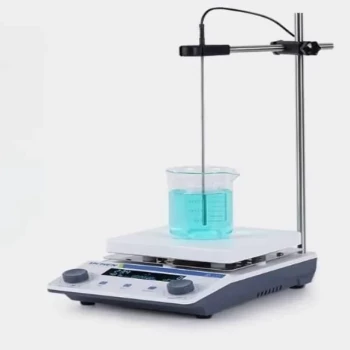
- Laboratory Small Constant Temperature Heated Magnetic Stirrer Heater and Stirrer
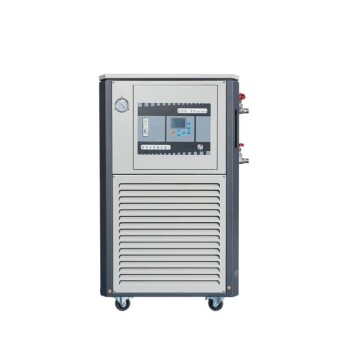
- High Temperature Constant Temperature Heating Circulator Water Bath Chiller Circulator for Reaction Bath
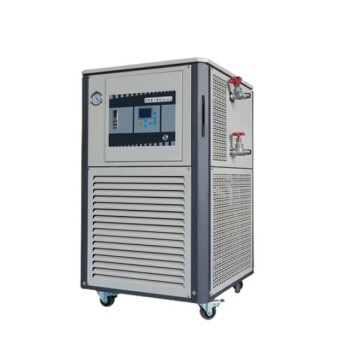
- 10L Heating Chilling Circulator Cooling Water Bath Circulator for High and Low Temperature Constant Temperature Reaction
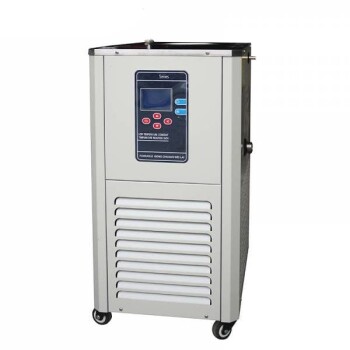
- 5L Heating Chilling Circulator Cooling Water Bath Circulator for High and Low Temperature Constant Temperature Reaction
- 50L Chiller Water Bath Cooling Circulator Low Temperature Constant Temperature Reaction Bath
People Also Ask
- What role does a magnetic stirrer with heating play in ZnO nanoparticle synthesis? Precision Control for Quality Results
- What role does a constant temperature heating magnetic stirrer play in MFC-HAp synthesis? Achieve Material Homogeneity
- What is the function of a laboratory magnetic stirrer in Ni–Cr–P electrodeposition? Optimize Ion Transport & Coating
- Why is a laboratory magnetic stirrer required for benzoic acid esters? Boost Reaction Speed & Yield with High RPM
- What role does a laboratory magnetic stirrer play in TiO2 and TiO2-Ag sol preparation? Master Chemical Kinetics