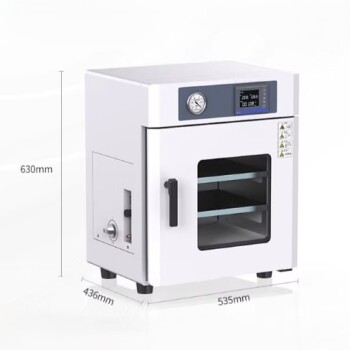
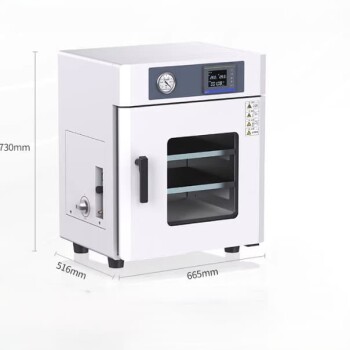
The forced air drying oven serves as a critical stabilization tool in the synthesis of MWCNTs/TiO2 nanocomposites. Its primary function is to remove residual alcohol solvents and moisture from the composite gel using constant-temperature hot air circulation. By strictly maintaining specific temperatures (such as 120°C), it fixes the material's initial physical morphology and prepares it for high-temperature annealing.
Core Takeaway The forced air drying oven acts as the bridge between the wet sol-gel phase and the final crystalline structure. Its controlled thermal environment ensures that solvent evaporation occurs gradually, preventing the structural collapse or cracking that results from uncontrolled, rapid drying.
The Mechanics of Solvent Removal
Efficient Circulation
The oven utilizes constant-temperature hot air circulation. This ensures that heat is distributed evenly across the composite gel, rather than focusing intensity on a single spot.
Targeting Volatiles
The primary goal is the removal of residual alcohol solvents and moisture. These are byproducts of the initial mixing and gelation phases that must be eliminated before further processing.
Establishing the Baseline
This drying phase transforms the raw, wet gel into a solid precursor. This step is non-negotiable; you cannot proceed to high-temperature treatments while volatile solvents remain trapped within the matrix.
Preserving Structural Integrity
Preventing Stress Fractures
A major risk during drying is gel structure cracking. If solvents evaporate too quickly, the internal stress tears the material apart.
Controlled Evaporation rate
By strictly controlling the temperature (e.g., at 120°C), the oven ensures evaporation happens at a manageable rate. This prevents the rapid expansion or contraction that leads to defects.
Fixing Morphology
The oven effectively fixes the initial physical morphology of the MWCNTs/TiO2 nanocomposite. It locks the nanotubes and titanium dioxide into place relative to one another, ensuring the composite structure is stable.
The Pre-Annealing Necessity
Preparing for High Heat
The drying oven is the prerequisite step for high-temperature annealing (typically performed in a muffle furnace at temperatures like 450°C).
Avoiding Thermal Shock
Introducing a wet gel directly into a high-temperature furnace would likely cause explosive evaporation or immediate structural degradation. The drying oven mitigates this risk by delivering a dry, stable sample to the annealing phase.
Understanding the Trade-offs
Temperature Sensitivity
While the oven prevents cracking, it relies on precise temperature adherence. Deviating significantly from the optimal drying temperature (e.g., exceeding 120°C too early) can re-introduce the very cracking issues the oven is designed to prevent.
Airflow Uniformity
The "forced air" component is a double-edged sword. While it speeds up drying, uneven airflow can lead to crust formation on the surface of the gel while the interior remains wet, potentially leading to internal pressure buildup.
Time vs. Integrity
This process is slower than unregulated heating methods. You are trading processing speed for structural reliability and morphological consistency.
Making the Right Choice for Your Goal
Depending on where you are in the synthesis lifecycle, your focus on the drying parameters will shift.
- If your primary focus is Structural Stability: Prioritize longer drying times at steady temperatures (120°C) to ensure the physical morphology is "locked in" without stress fractures.
- If your primary focus is Annealing Preparation: Ensure the sample is completely void of alcohol solvents to prevent chemical interference or structural damage during the subsequent 450°C phase.
- If your primary focus is Defect Reduction: Monitor the air circulation consistency to prevent surface crusting, which can trap moisture and cause cracking later.
The drying oven is not just a heater; it is a precision tool that defines the structural foundation of your final nanocomposite.
Summary Table:
| Feature | Function in MWCNTs/TiO2 Synthesis | Benefit |
|---|---|---|
| Hot Air Circulation | Uniform heat distribution across composite gel | Prevents localized hotspots and uneven drying |
| Temperature Control | Maintains constant 120°C environment | Ensures gradual evaporation and prevents stress cracks |
| Solvent Removal | Eliminates residual alcohols and moisture | Prepares precursor for safe high-temperature annealing |
| Morphology Fixing | Locks nanotubes and TiO2 in place | Preserves the physical structure and material consistency |
Elevate Your Nanomaterial Synthesis with KINTEK Precision
Don't let structural cracks or uneven drying compromise your research. KINTEK specializes in high-performance laboratory equipment designed for the most demanding material science applications. Whether you are synthesizing MWCNTs/TiO2 nanocomposites or processing advanced ceramics, our precision forced air drying ovens and high-temperature muffle furnaces ensure the structural reliability your work requires.
From crushing and milling systems to high-pressure reactors and vacuum furnaces, KINTEK provides a comprehensive range of solutions for labs and industrial research facilities worldwide.
Ready to achieve superior morphological consistency? Contact our technical experts today to find the perfect equipment for your drying, annealing, and processing needs.
References
- Diana S. Raie, Ákos T. Kovács. Effect of Novel Quercetin Titanium Dioxide-Decorated Multi-Walled Carbon Nanotubes Nanocomposite on Bacillus subtilis Biofilm Development. DOI: 10.3390/ma11010157
This article is also based on technical information from Kintek Solution Knowledge Base .
Related Products
- 23L Laboratory Vacuum Drying Oven
- 56L Vertical Laboratory Vacuum Drying Oven
- Laboratory Scientific Electric Heating Blast Drying Oven
- High Temperature Muffle Oven Furnace for Laboratory Debinding and Pre Sintering
People Also Ask
- Why is a laboratory vacuum drying oven recommended for rice straw residues? Protect Your Biomass Integrity
- What role does a laboratory vacuum drying oven play in the preparation of modified multi-walled carbon nanotubes?
- What is the importance of using a laboratory vacuum drying oven? Preserving Slow-Release Microcapsule Integrity
- Why is a Laboratory Vacuum Drying Oven recommended for PBAT microspheres? Protect Sensitive Polymer Integrity
- What role does a laboratory vacuum drying oven play in processing nanoparticle powder samples? Protect Sample Integrity