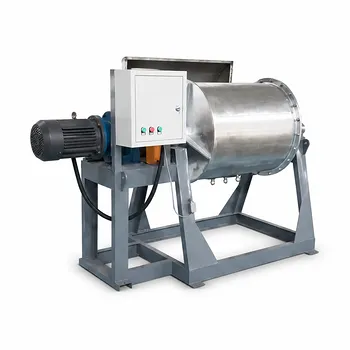
High-energy planetary ball milling serves as the primary engine for physical refinement and mechanochemical activation in the synthesis of magnetic nanocatalysts. It utilizes intense mechanical force to transform bulk precursors into highly reactive nanoparticles, a critical step for enabling efficient heterogeneous Fenton reactions.
Core Takeaway By subjecting bulk materials to high-frequency collision and friction, planetary ball milling drastically reduces particle size and increases specific surface area. This physical transformation exposes a higher density of active sites on magnetic nanoparticles (such as magnetite), directly amplifying their capacity to adsorb and degrade complex organic pollutants like antibiotics.
The Mechanics of Catalyst Refinement
The efficacy of a heterogeneous Fenton catalyst relies heavily on its physical structure. The ball mill acts as a "top-down" synthesis tool to engineer these properties.
Increasing Specific Surface Area
The primary function of the ball mill in this context is the reduction of bulk materials into fine particles. Through high-speed rotation, the grinding media impacts the material, fracturing it into the nanometer scale.
This reduction creates a significantly larger specific surface area. A larger surface area ensures that a greater percentage of the magnetic material is in direct contact with the wastewater, rather than being locked away inside a large particle.
Exposing Active Sites
Surface area alone is not enough; the quality of the surface matters. The "mechanochemical action" of the mill physically exposes active sites on the catalyst's surface.
By fracturing the material, the mill reveals fresh surfaces that possess high surface energy. These exposed sites are essential for initiating the chemical reactions required to break down pollutants.
Enhancing Reaction Efficiency
The physical changes induced by the ball mill translate directly into improved chemical performance during wastewater treatment.
Accelerating Pollutant Degradation
The refinement process directly correlates to the degradation efficiency of organic contaminants. The primary reference specifically highlights the enhanced degradation of ciprofloxacin, a common antibiotic.
Because the ball mill maximizes the contact area between the catalyst and the pollutant, the adsorption rate increases. This allows the Fenton reaction to proceed more rapidly and completely.
Mechanochemical Activation
Beyond simple crushing, the high-energy environment facilitates "mechanochemical action." As noted in broader applications, this process generates mechanical stress fields and intense shear forces.
While primarily used here for refinement, this energy can also introduce structural defects or "disorder" into the crystal lattice. In catalysis, these defects often serve as "hotspots" for chemical activity, further boosting reactivity.
Understanding the Trade-offs
While high-energy ball milling is a powerful synthesis tool, it introduces specific challenges that must be managed to ensure catalyst quality.
Risk of Contamination
The grinding media (balls and jars) are subjected to the same high-energy impacts as your catalyst. Over extended milling periods, microscopic amounts of the grinding media (often zirconia or steel) can wear off and contaminate the catalyst mixture. This can alter the chemical purity and magnetic properties of your final product.
Agglomeration and Structure Damage
There is a point of diminishing returns. Excessive milling time can lead to the "over-refining" of particles. When particles become too small and possess too much surface energy, they may spontaneously agglomerate (clump together), effectively reducing the active surface area you fought to create.
Making the Right Choice for Your Synthesis
To maximize the benefits of high-energy planetary ball milling for Fenton catalysts, tailor your approach to your specific performance metrics.
- If your primary focus is Reactivity: Prioritize optimizing milling speed and duration to maximize specific surface area without inducing agglomeration.
- If your primary focus is Purity: Monitor the wear of your grinding media closely and consider using harder, wear-resistant materials (like high-grade zirconia) to prevent foreign element contamination.
Ultimately, the high-energy planetary ball mill is not just a grinder, but a precision tool for engineering the surface architecture required for high-performance environmental remediation.
Summary Table:
| Feature | Impact on Nanocatalyst Synthesis | Benefit for Fenton Reactions |
|---|---|---|
| Physical Refinement | Reduces bulk materials to nanometer scale | Dramatically increases specific surface area for contact |
| Mechanochemical Activation | Generates high surface energy and structural defects | Creates 'hotspots' for increased chemical reactivity |
| Active Site Exposure | Fractures particles to reveal fresh surfaces | Enhances adsorption and degradation of organic pollutants |
| Energy Intensity | High-frequency collisions and shear forces | Accelerates the synthesis of highly reactive nanoparticles |
Elevate Your Material Synthesis with KINTEK
Precision in particle size and surface activation is the key to high-performance catalysts. KINTEK specializes in advanced laboratory equipment, offering high-energy planetary ball mills, crushing and milling systems, and sieving equipment designed to meet the rigorous demands of nanotechnology and environmental research.
Whether you are developing magnetic nanocatalysts for wastewater treatment or exploring battery research tools, our comprehensive portfolio—including high-temperature furnaces, hydraulic presses, and high-pressure reactors—provides the reliability your lab needs.
Ready to optimize your synthesis process? Contact our experts today to find the perfect milling solution for your research goals.
References
- G.C. Miranda de la Lama, Marta Pazos. Heterogeneous Advanced Oxidation Processes: Current Approaches for Wastewater Treatment. DOI: 10.3390/catal12030344
This article is also based on technical information from Kintek Solution Knowledge Base .
Related Products
- High Energy Planetary Ball Mill Milling Machine for Laboratory
- High Energy Planetary Ball Mill for Laboratory Horizontal Tank Type Milling Machine
- High Energy Planetary Ball Mill Milling Machine for Laboratory
- High Energy Planetary Ball Mill Machine for Laboratory Horizontal Tank Type
- High-Energy Omnidirectional Planetary Ball Mill Milling Machine for Laboratory
People Also Ask
- How does a planetary ball mill provide mechanical activation for scandium recovery? Maximize Your Leaching Efficiency
- What role do planetary ball mills and zirconia media play in LLZT preparation? Optimize Your Solid Electrolyte Research
- What is the function of a planetary ball mill in the preparation of high-entropy rare earth silicate multi-phase ceramics?
- What is the purpose of using a planetary ball mill for cathode material regeneration? Achieve Atomic-Level Mixing
- What is the primary function of a planetary ball mill? Mastering SiC/Al Composite Mixing for Homogeneity