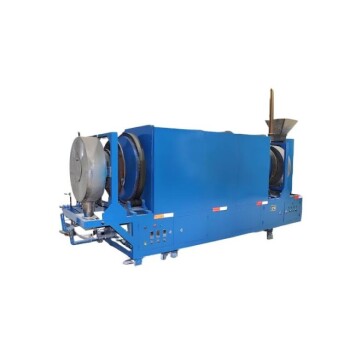
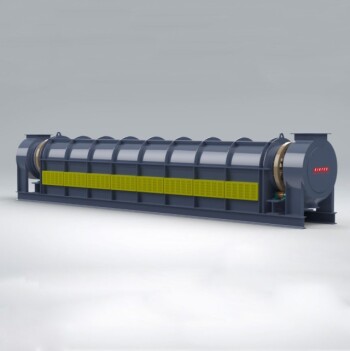
The high-temperature pyrolysis furnace acts as the primary reactor for "ceramization" in the Precursor Infiltration and Pyrolysis (PIP) process. It provides a controlled thermal environment—typically ranging from 900°C to 1600°C—necessary to decompose organic polymer precursors into stable, inorganic ceramic matrices. By maintaining a strict inert atmosphere, the furnace facilitates the chemical transformation of the matrix while protecting the reinforcing fibers from oxidation and degradation.
Core Takeaway: The pyrolysis furnace is the critical engine of the PIP process, responsible for the precise chemical conversion of liquid or solid precursors into a solid ceramic matrix. Its ability to manage heating rates, peak temperatures, and atmospheric purity directly dictates the final density, microstructure, and mechanical integrity of the ceramic matrix composite (CMC).
The Fundamental Role: Conversion of Precursors
Thermal Decomposition and Chemical Transformation
The furnace facilitates the thermal decomposition of organometallic precursors, such as polycarbosilane, into continuous ceramic phases like Silicon Carbide (SiC). This process involves complex chemical reactions, including cross-linking and cracking, which transform the organic molecular structure into an inorganic network.
Atmospheric Control and Protection
To prevent the combustion of organic components or the oxidation of sensitive fibers (like carbon or silicon carbide fibers), the furnace maintains a protective atmosphere. This is typically achieved using flowing inert gases like nitrogen (N2) or argon (Ar), or through high-vacuum environments.
Managing Gas Evolution
As the precursor decomposes, it releases volatile organic components and gases that must be carefully managed. The furnace's controlled environment ensures these gases are evolved and removed at a rate that prevents internal pressure buildup, which could otherwise rupture the matrix.
Optimizing Material Integrity and Density
Achieving High Matrix Density
The PIP process is inherently iterative because the transition from polymer to ceramic involves significant volume shrinkage, leaving behind micropores and cracks. The furnace must support multiple cycles (often 10 or more) of infiltration and pyrolysis to gradually fill these voids and achieve high material density.
Precision Temperature Programming
The furnace utilizes programmable heating rates (e.g., 1 K/min to 5 °C/min) to guide the material through critical transition phases. Precise control over the isothermal zone ensures uniform heating, which is vital for producing a controllable microstructure and preventing large-scale cracking.
Influence on Microstructural Characteristics
The peak temperature and the duration of the "soak" time directly impact the atomic diffusion and bonding between ceramic particles. These factors determine whether the final matrix is amorphous, such as silicon carbonitride (SiCN), or crystalline, and influence the final grain growth.
Understanding the Trade-offs and Pitfalls
Matrix Shrinkage vs. Structural Integrity
While higher temperatures generally lead to better ceramization, they also increase volumetric shrinkage. If the furnace ramps up too quickly, the resulting internal stresses can lead to extensive micro-cracking that compromises the composite's strength.
Cycle Efficiency vs. Equipment Wear
The requirement for repeated cycles (10+) makes the furnace's rapid heating and cooling capabilities vital for production efficiency. However, rapid thermal cycling can increase wear on the furnace heating elements and insulation, leading to higher maintenance costs and potential contamination.
Volatile Management Challenges
If the furnace does not provide adequate gas flow, volatilized species can redeposit on the furnace walls or the sample surface. This redeposition can block the channels needed for subsequent infiltration cycles, resulting in a non-uniform final product.
How to Apply This to Your Project
Selecting Furnace Parameters for Specific Goals
When configuring your pyrolysis furnace, your settings must align with your specific material requirements and production timelines.
- If your primary focus is Maximum Density: Prioritize a furnace with highly repeatable temperature control and plan for multiple low-temperature cycles to gradually minimize porosity without inducing large cracks.
- If your primary focus is Ultra-High Temperature Stability: Utilize a furnace capable of reaching 1600°C+ under Argon to facilitate the formation of refractory phases like Zirconium Carbide (ZrC) or Hafnium Carbide (HfC).
- If your primary focus is Throughput Efficiency: Invest in a furnace with advanced cooling systems to reduce the "down-time" between the numerous infiltration and pyrolysis steps required.
Ultimately, the pyrolysis furnace is the bridge between a polymer-impregnated fiber preform and a high-performance ceramic component.
Summary Table:
| Key Role | Primary Function | Impact on CMC Quality |
|---|---|---|
| Ceramization | Decomposes organic precursors (900°C - 1600°C) | Converts polymer to stable inorganic ceramic matrix |
| Atmosphere Control | Provides inert gas (N2/Ar) or high vacuum | Protects reinforcing fibers from oxidation/degradation |
| Gas Management | Controlled removal of volatile organic components | Prevents internal pressure buildup and matrix rupturing |
| Cycle Management | Supports iterative infiltration & pyrolysis steps | Gradually fills micropores to achieve maximum density |
| Thermal Precision | Programmable heating rates & isothermal zones | Ensures uniform microstructure and prevents micro-cracking |
Elevate Your Advanced Material Research with KINTEK
Precision and reliability are the cornerstones of successful Ceramic Matrix Composite (CMC) production. KINTEK specializes in high-performance laboratory equipment designed to meet the rigorous demands of the PIP process.
Whether you require high-temperature furnaces (muffle, tube, vacuum, CVD, PECVD, or atmosphere-controlled) for precise ceramization, or hydraulic presses and high-temperature high-pressure reactors for material preparation, KINTEK provides the tools to ensure your materials achieve peak performance. Our comprehensive portfolio also includes essential consumables like PTFE products, ceramics, and crucibles to support your entire workflow.
Ready to optimize your pyrolysis workflow and achieve superior material density?
Contact KINTEK Today for a Tailored Solution
References
- Kun Luan, Jianjun Liu. Frequency Characteristics of High Strain Rate Compressions of Cf-MWCNTs/SiC Composites. DOI: 10.3390/ceramics6040122
This article is also based on technical information from Kintek Solution Knowledge Base .
Related Products
- 1700℃ Laboratory High Temperature Tube Furnace with Alumina Tube
- High Temperature Muffle Oven Furnace for Laboratory Debinding and Pre Sintering
- Ultra-High Temperature Graphite Vacuum Graphitization Furnace
- Vacuum Heat Treat and Pressure Sintering Furnace for High Temperature Applications
- Vertical High Temperature Graphite Vacuum Graphitization Furnace
People Also Ask
- What functions does a laboratory high-temperature tube furnace perform? Master Catalyst Synthesis & Carbonization
- What roles does a high-temperature tube furnace play in the synthesis of N/O co-doped carbon? Master Precise Doping
- How does a laboratory tube furnace facilitate methane catalyst evaluation & regeneration? Optimize Thermal Performance
- Why is a high-temperature tube furnace required for the production of biochar from tobacco straw? Expert Pyrolysis Guide
- What are the primary applications of muffle and tube furnaces in photocatalysts? Optimize Metal Loading & Support Synthesis