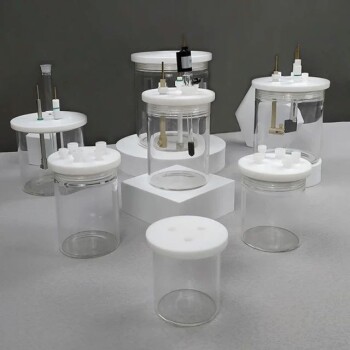
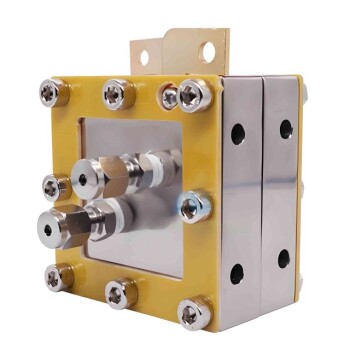
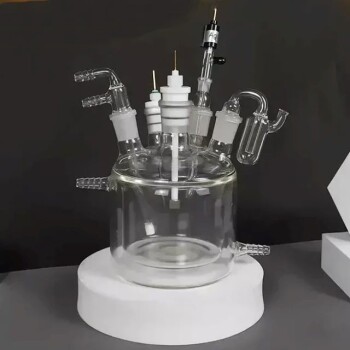
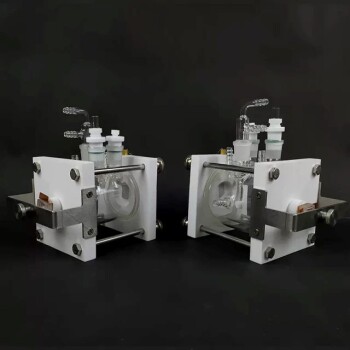
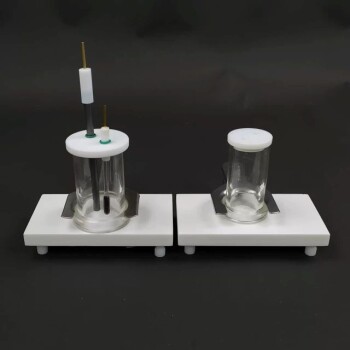
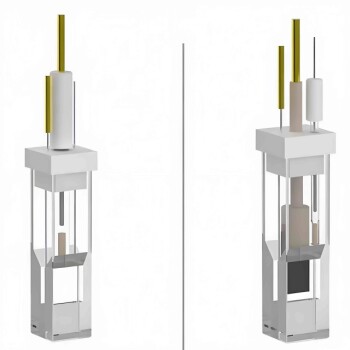
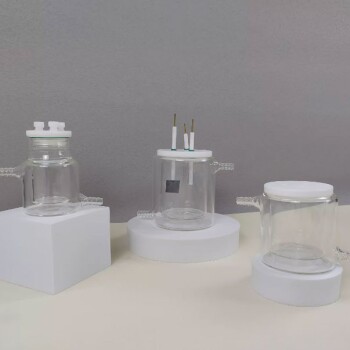
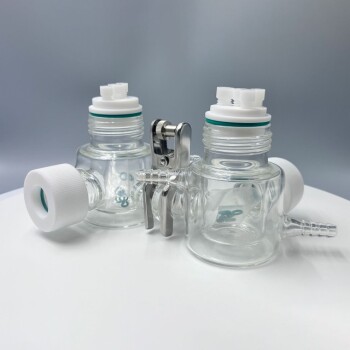
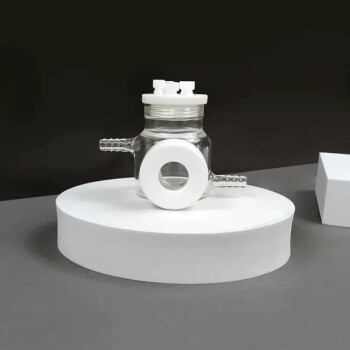
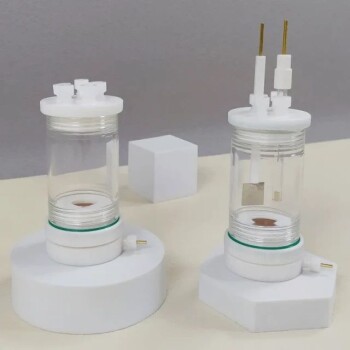
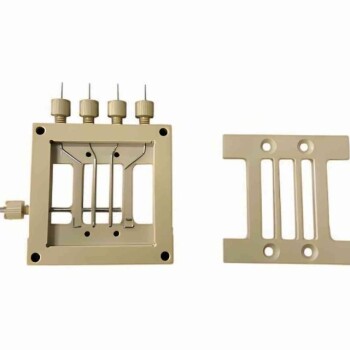
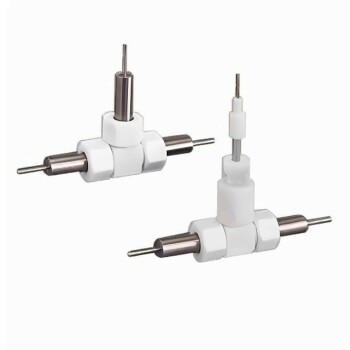
A partitioned electrolytic cell serves as the critical primary separation mechanism in the hydrometallurgical recovery of nickel-based superalloys. Specifically equipped with an anion exchange membrane, this device facilitates the electrochemical dissolution of the alloy, effectively splitting the material into two distinct streams based on chemical solubility. By dissolving base metals while leaving refractory metals intact, it establishes the foundational step for all subsequent purification processes.
Core Insight: The partitioned cell is not just a dissolution tank; it acts as a selective filter. Its primary function is to solubilize the bulk of the alloy (Nickel, Cobalt, Chromium, Aluminum) while isolating high-value refractory metals (Rhenium) in the solid residue, significantly simplifying downstream separation.
The Mechanics of Selective Dissolution
The Function of the Partition
The cell is physically divided by an anion exchange membrane. This partition is essential for controlling the chemical environment during the electrochemical process. It allows for the selective movement of ions while maintaining distinct conditions necessary for efficient alloy breakdown.
Electrochemical Dissolution
The process begins with the electrochemical dissolution of the nickel-based alloy sample. Rather than using purely chemical leaching, the application of electrical current drives the oxidation of the metal components. This forces the metal atoms to lose electrons and detach from the solid alloy lattice.
Elemental Distribution
Metals Entering the Solution
The primary outcome of this stage is the liquefaction of the major alloy components. Nickel, cobalt, chromium, and aluminum pass through the electrochemical reaction and enter the electrolyte solution. This creates a pregnant leach solution rich in these target base metals, ready for further hydrometallurgical processing.
Metals Remaining in Residue
Crucially, not all elements dissolve. Refractory metals, specifically rhenium, possess high resistance to this electrochemical attack. Consequently, they remain behind as a solid residue. This achieves a "primary selective separation," automatically isolating the valuable refractory content from the base metals without complex chemical precipitation steps.
Understanding the Trade-offs
It Is Only a Primary Separation
While the cell effectively separates refractory metals from the base metals, it does not separate the base metals from each other. The resulting solution contains a complex mixture of nickel, cobalt, chromium, and aluminum that will require significant downstream processing (such as solvent extraction) to isolate individual elements.
Residue Purity and Handling
The solid residue contains the rhenium, but it is effectively a concentrate rather than a pure product. The efficiency of this stage depends heavily on the complete dissolution of the surrounding matrix; incomplete dissolution could trap base metals in the residue, lowering the purity of the refractory byproduct.
Making the Right Choice for Your Goal
To maximize the utility of a partitioned electrolytic cell in your recovery flowsheet, consider your specific recovery targets:
- If your primary focus is Rhenium recovery: Optimize the cell conditions to ensure total dissolution of the nickel matrix, as this ensures the solid residue left behind is as pure as possible.
- If your primary focus is Base Metal recovery (Ni, Co): Focus on the efficiency of the electrochemical dissolution to maximize the concentration of metals in the solution, minimizing the volume of electrolyte required for subsequent extraction steps.
This partitioned approach transforms a complex alloy into two manageable streams, laying the groundwork for a high-efficiency recovery plant.
Summary Table:
| Feature | Role/Function in Hydrometallurgy |
|---|---|
| Core Mechanism | Partitioned electrolytic cell with anion exchange membrane |
| Dissolved Metals | Nickel (Ni), Cobalt (Co), Chromium (Cr), Aluminum (Al) |
| Solid Residue | High-value refractory metals (specifically Rhenium) |
| Separation Type | Primary selective separation (Electrochemical dissolution) |
| Key Component | Anion exchange membrane for ionic control |
| Outcome | Creates a metal-rich pregnant leach solution and a refractory concentrate |
Optimize Your Hydrometallurgical Recovery with KINTEK
Precision in material separation is critical for the recovery of high-value nickel-based superalloys. KINTEK specializes in advanced electrolytic cells and electrodes designed to deliver the selective dissolution and reliability required for complex chemical processes.
Our extensive laboratory portfolio supports every stage of your research and production, including:
- High-Temperature Reactors & Autoclaves for demanding leaching environments.
- Crushing & Milling Systems for efficient alloy sample preparation.
- Precision Cooling Solutions like ULT freezers and cold traps.
- Custom Ceramics & Crucibles for high-purity material handling.
Whether you are focusing on Rhenium isolation or base metal purification, KINTEK provides the specialized equipment and consumables to enhance your lab's efficiency and recovery yields.
Ready to upgrade your recovery flowsheet? Contact our technical experts today to find the perfect solution for your lab.
References
- Alexandra Kollová, Katarína Pauerová. Superalloys - Characterization, Usage and Recycling. DOI: 10.21062/mft.2022.070
This article is also based on technical information from Kintek Solution Knowledge Base .
Related Products
- Electrolytic Electrochemical Cell with Five-Port
- PTFE Electrolytic Cell Electrochemical Cell Corrosion-Resistant Sealed and Non-Sealed
- Customizable PEM Electrolysis Cells for Diverse Research Applications
- Super Sealed Electrolytic Electrochemical Cell
- Double Layer Five-Port Water Bath Electrolytic Electrochemical Cell
People Also Ask
- How does the design of an electrochemical electrolytic cell influence the coating uniformity? Optimize Your Catalysts
- What is the correct shutdown and disassembly procedure after an experiment? Ensure Safety and Protect Your Equipment
- What are the three essential components that comprise an electrolytic cell? Key Elements of Chemical Synthesis
- How does the design of an electrolytic cell affect the production yield of ferrate(VI)? Optimize Efficiency & Purity
- What is galvanic cell or electrolytic cell? Unlock the Secrets of Electrochemical Power