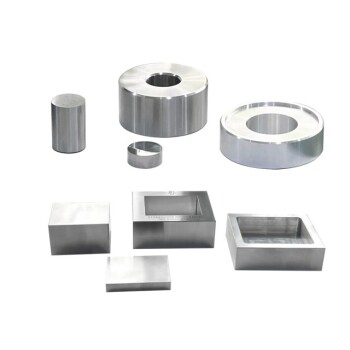
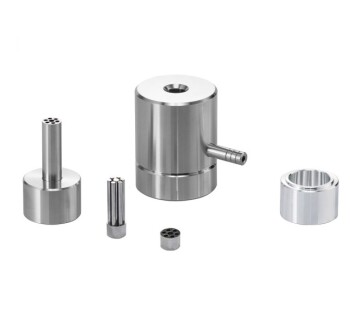
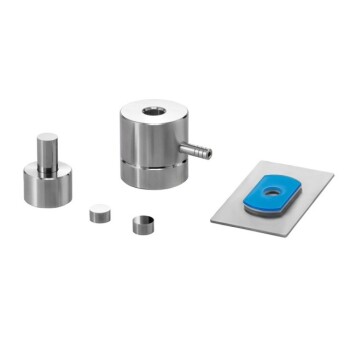
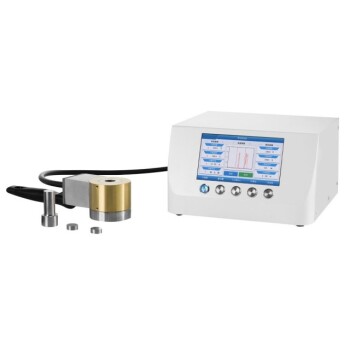
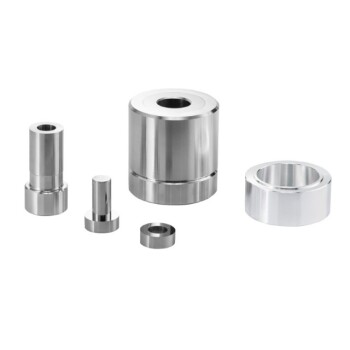
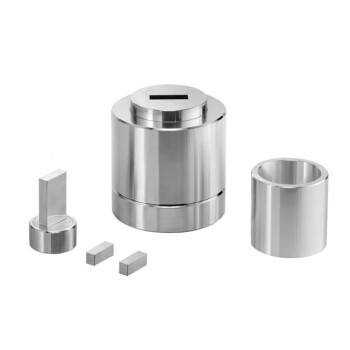
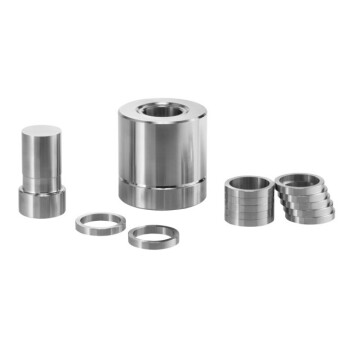
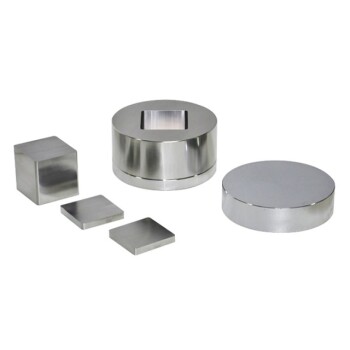
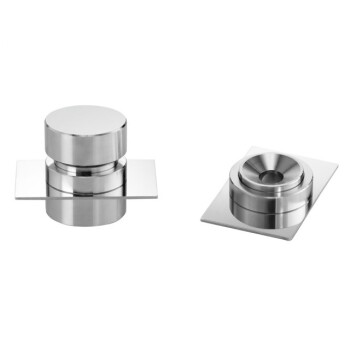
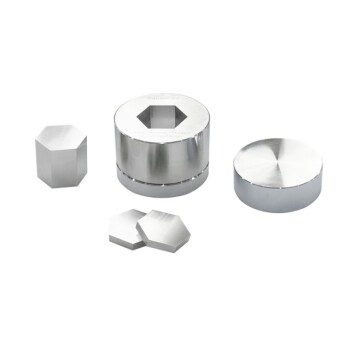
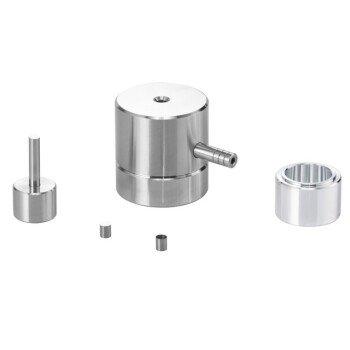
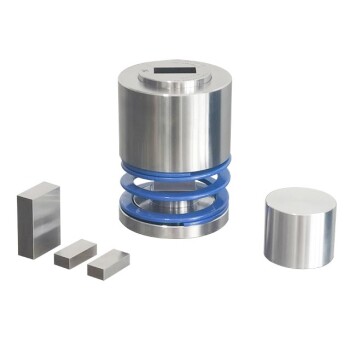
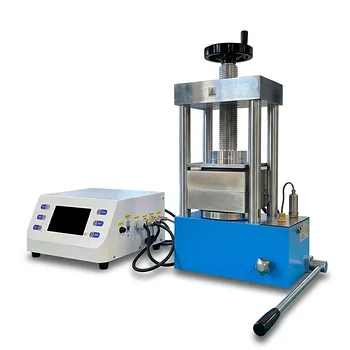
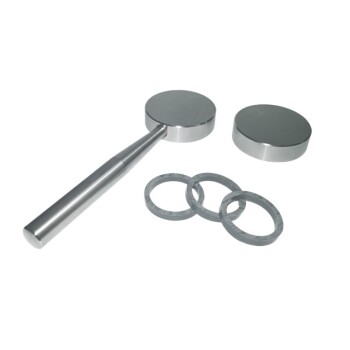
The stainless steel mold acts as the critical structural vessel during the hot-pressing of Li6PS5Cl solid-state electrolytes. Its primary function is to withstand extreme mechanical pressures up to 240 MPa at elevated temperatures of 200°C without deforming, ensuring the electrolyte powder is compacted into a dense, geometrically precise sheet.
Core Takeaway The mold is not merely a container; it is a precision tool that ensures full densification of the electrolyte powder. By maintaining structural integrity under high heat and pressure, it guarantees the uniform distribution of force necessary to eliminate voids and define the material's final physical properties.
Mechanical Integrity Under Extreme Conditions
Withstanding High-Stress Environments
The fabrication of Li6PS5Cl electrolytes requires conditions that would warp or destroy softer materials. A stainless steel mold serves as a pressure vessel capable of maintaining its shape while subjected to mechanical pressures up to 240 MPa.
Thermal Stability
This mechanical resilience must be maintained simultaneously with high heat. The mold remains stable at temperatures up to 200°C, ensuring that the heat required for the pressing process does not compromise the structural containment of the powder.
Precision and Densification
Defining Final Dimensions
The mold is responsible for dictating the exact geometry of the final product. It confines the powder to specific boundaries, ensuring the resulting solid-state electrolyte sheet meets standardized dimensions required for consistent testing or application.
Achieving Uniform Densification
Beyond simple shaping, the mold facilitates uniform pressure distribution. This is critical for driving out air pockets and compacting the powder into a solid mass. Without this uniform pressure, the electrolyte would have inconsistent density, leading to poor performance.
The Role in Electrochemical Testing
While the primary function during pressing is structural, the stainless steel components often play a secondary role during immediate characterization.
Functioning as Blocking Electrodes
In setups used for Electrochemical Impedance Spectroscopy (EIS), the stainless steel plates (often the plungers of the mold) serve as blocking electrodes.
Isolating Ionic Conductivity
These plates conduct electrons but block ion transport. This specific property allows researchers to isolate and accurately measure the intrinsic ionic conductivity and activation energy of the electrolyte without interference from electrochemical reactions at the interface.
Understanding the Trade-offs
Material Compatibility and Testing Limits
While stainless steel is excellent for mechanical forming and acting as a blocking electrode, it is not an active material. It does not store lithium; it only conducts electrons.
Therefore, while the mold setup is perfect for measuring conductivity (how fast ions move), it cannot be used to test the capacity of a battery cell unless the steel plates are replaced with active electrode materials (like Lithium metal or cathode composites) after the initial pressing.
Making the Right Choice for Your Goal
To maximize the effectiveness of your hot-pressing and testing process, consider the following regarding your tooling:
- If your primary focus is fabrication quality: Ensure your mold is rated to withstand at least 240 MPa at 200°C to guarantee full densification without tool deformation.
- If your primary focus is conductivity testing: Utilize the stainless steel plungers/plates as blocking electrodes to accurately measure ionic transport without reaction interference.
Ultimately, the stainless steel mold is the prerequisite for performance, transforming loose powder into a dense, testable solid-state component.
Summary Table:
| Feature | Specification/Function | Benefit in Hot-Pressing |
|---|---|---|
| Pressure Resistance | Up to 240 MPa | Prevents deformation under extreme mechanical stress |
| Thermal Stability | Stable up to 200°C | Maintains structural integrity during heated compaction |
| Structural Role | Precision containment | Ensures uniform densification and geometric accuracy |
| Electrochemical Role | Blocking Electrodes | Enables accurate ionic conductivity measurement via EIS |
Elevate Your Solid-State Battery Research with KINTEK
Precision in material synthesis starts with high-performance tooling. KINTEK specializes in advanced laboratory solutions designed for the rigors of battery research. From our high-precision stainless steel molds and hydraulic pellet presses to our specialized high-temperature furnaces and vacuum systems, we provide the equipment necessary to achieve full densification of solid-state electrolytes like Li6PS5Cl.
Whether you need isostatic presses for uniform compaction or high-temperature reactors for material synthesis, our portfolio is engineered to meet the strictest scientific standards. Ensure your electrolytes deliver maximum performance and accurate ionic conductivity measurements.
Ready to optimize your lab's capabilities? Contact KINTEK today for expert advice and specialized equipment!
Related Products
- Special Heat Press Mold for Lab Use
- Anti-Cracking Press Mold for Lab Use
- Double Plate Heating Press Mold for Lab
- Warm Isostatic Press for Solid State Battery Research
- Isostatic Molding Pressing Molds for Lab
People Also Ask
- How to use a press mold? Master the Art of Creating Consistent Ceramic Forms
- What is the press mould method? A Guide to Consistent, Detailed Ceramic Forms
- What is a press mold used for? Achieve Repeatable Precision and Efficiency
- What is the function of press molds during the preparation of SiCf/Ti-43Al-9V composites? Achieve Structural Precision
- What is the purpose of specialized pressure devices in sulfide solid-state batteries? Ensure Chemo-Mechanical Stability