Hot press molding is preferred primarily because it completely eliminates the need for organic solvents during production. Unlike traditional solution casting, which relies on evaporation, hot press molding utilizes high temperature and pressure to create a dense, uniform electrolyte membrane without the defects that typically hamper battery performance.
The shift to hot press molding solves the fundamental "solvent problem," preventing the formation of structural pores and chemical side reactions that degrade ion conduction and interfacial stability.
The Impact on Structural Integrity
Eliminating Pores and Bubbles
Traditional solution casting requires solvents to dissolve the polymer, which must then be evaporated. This evaporation process frequently leads to the formation of pores and residual solvent bubbles.
These microscopic voids interrupt the material's continuity. In a solid polymer electrolyte, these interruptions act as barriers, significantly hindering ion conduction.
Maximizing Density
Hot press molding avoids evaporation entirely. By applying dual effects of high temperature and high pressure, the method directly molds the mixture of PEO and lithium salts.
This process effectively eliminates internal air pores. The result is a membrane with significantly enhanced density and mechanical strength compared to cast films.
Enhancing Electrochemical Performance
Preventing Side Reactions
A critical flaw in solution casting is the presence of residual solvents. Even trace amounts of solvent can trigger unwanted chemical side reactions on the surface of the lithium anode.
These reactions degrade the battery's internal chemistry over time. Hot press molding removes this risk entirely by processing the materials under solvent-free conditions.
Reducing Interfacial Impedance
The side reactions caused by solvents create resistive layers at the electrode interface. This leads to high interfacial impedance, which restricts the flow of energy.
By eliminating solvents, hot press molding significantly reduces this impedance. This directly improves the polarization stability of the battery, ensuring more consistent performance during charge and discharge cycles.
Operational and Manufacturing Precision
Controlling Rheology and Geometry
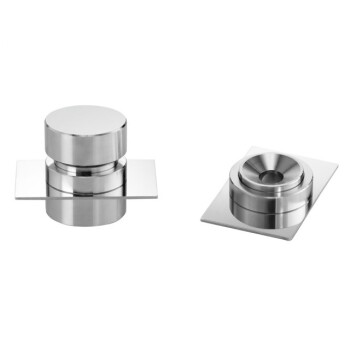
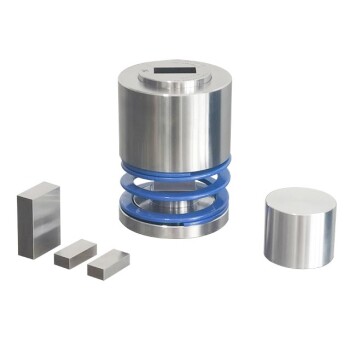
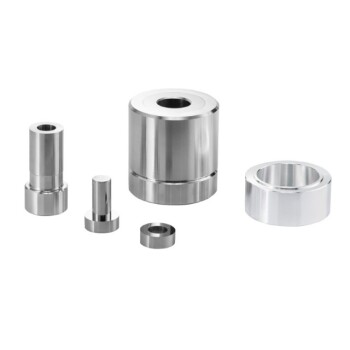
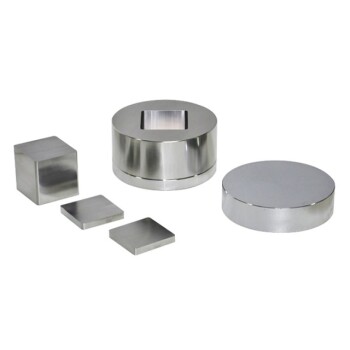
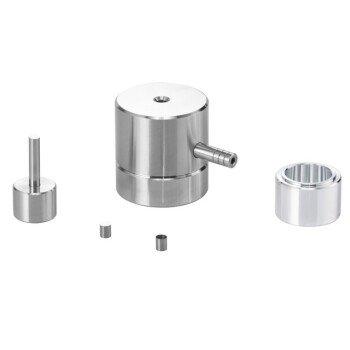
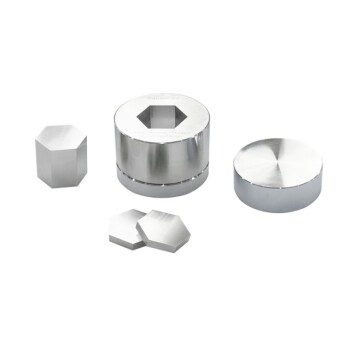
Hot press molding utilizes custom pressure molds to strictly control the flow (rheology) of the polymer during shaping.
These molds define the final geometric dimensions and ensure precise thickness. This prevents the material overflow or edge deformation often seen in less controlled methods.
Suitability for Scale
While solution casting often requires peeling delicate films from substrates like PTFE plates, the hot press method yields high-quality, robust membranes directly.
The combination of high mechanical strength and defect-free production makes hot press molding highly suitable for large-scale production and automated battery assembly.
Understanding the Trade-offs
Equipment and Tooling Requirements
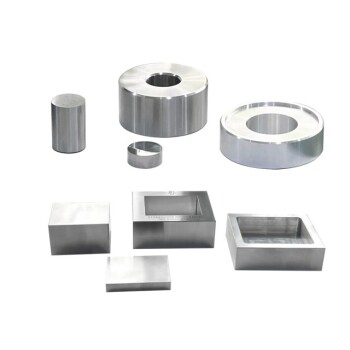
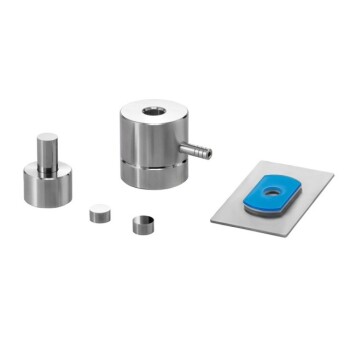
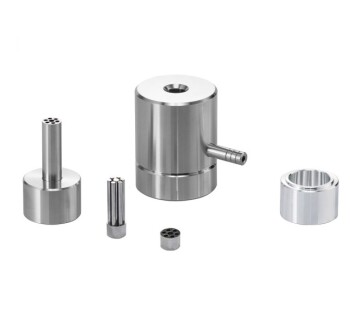
While superior in output, hot press molding requires more specialized hardware than solution casting. It relies on precise custom molds to restrict polymer flow and define dimensions.
Process Control
Success depends on the precise application of heat and pressure. Unlike casting, where the primary variable is evaporation time, hot pressing requires strict control over temperature and pressure settings to avoid damaging the polymer while ensuring full densification.
Making the Right Choice for Your Goal
To determine if hot press molding is the correct approach for your specific application, consider your primary performance metrics:
- If your primary focus is Electrochemical Stability: Choose hot press molding to eliminate residual solvents that cause side reactions and high interfacial impedance.
- If your primary focus is Mechanical Integrity: Select hot press molding to ensure a dense, pore-free membrane with superior physical strength.
- If your primary focus is Mass Production: Leverage hot press molding for its ability to produce dimensionally consistent, robust membranes suitable for automated assembly.
By removing solvents from the equation, hot press molding transforms the solid polymer electrolyte from a porous, reactive film into a dense, stable, and highly conductive component.
Summary Table:
| Feature | Solution Casting | Hot Press Molding |
|---|---|---|
| Solvent Use | Required (Organic) | Solvent-Free (Dry) |
| Membrane Structure | Porous with potential voids | Dense and uniform |
| Interfacial Impedance | High due to residual solvents | Low for better stability |
| Mechanical Strength | Lower; prone to defects | High; robust and consistent |
| Scalability | Limited by evaporation time | High; ideal for automation |
Elevate Your Battery Research with KINTEK Precision
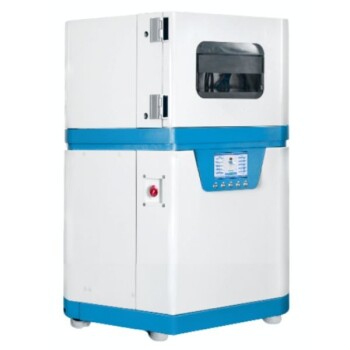
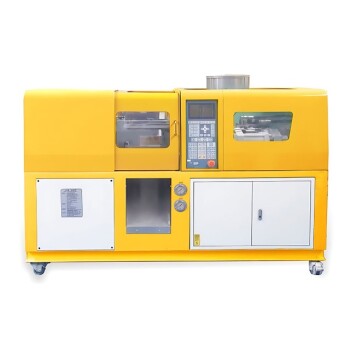
Maximize the performance of your solid polymer electrolytes by switching to solvent-free production. KINTEK specializes in high-performance hydraulic presses (pellet, hot, isostatic) and custom molds designed to provide the precise temperature and pressure control required for superior electrolyte density and mechanical strength.
Whether you are refining laboratory prototypes or scaling for production, our comprehensive range of laboratory equipment, including high-temperature furnaces, crushing systems, and specialized PTFE consumables, ensures your research achieves unmatched electrochemical stability.
Ready to eliminate defects and reduce interfacial impedance? Contact KINTEK today to find the perfect hot pressing solution for your application!
Related Products
- Special Heat Press Mold for Lab Use
- Ball Press Mold for Lab
- Double Plate Heating Press Mold for Lab
- Cylindrical Lab Electric Heating Press Mold for Laboratory Applications
- Anti-Cracking Press Mold for Lab Use
People Also Ask
- How to use a press mold? Master the Art of Creating Consistent Ceramic Forms
- What is the press mould method? A Guide to Consistent, Detailed Ceramic Forms
- What is a press mold used for? Achieve Repeatable Precision and Efficiency
- What is the function of press molds during the preparation of SiCf/Ti-43Al-9V composites? Achieve Structural Precision
- What is the purpose of specialized pressure devices in sulfide solid-state batteries? Ensure Chemo-Mechanical Stability