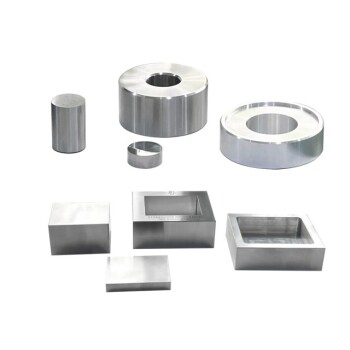
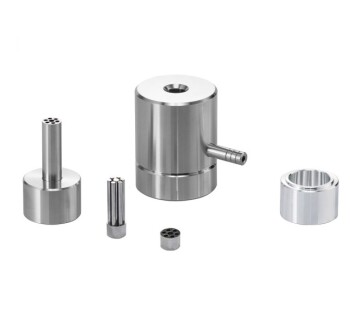
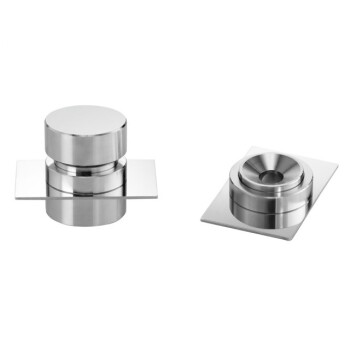
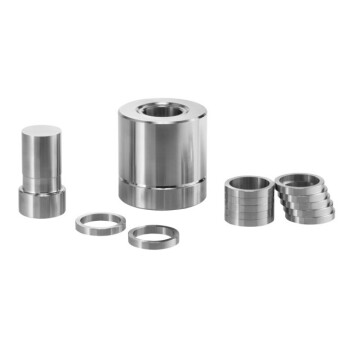
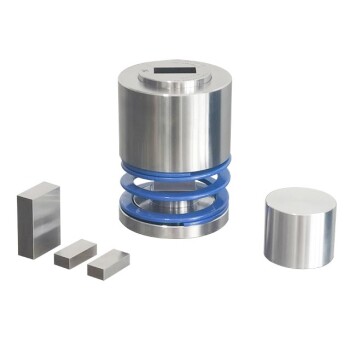
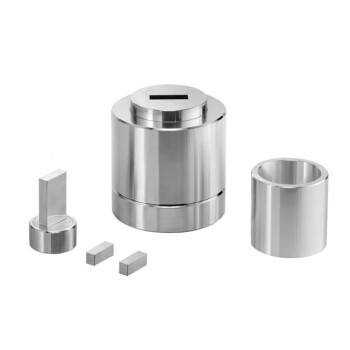
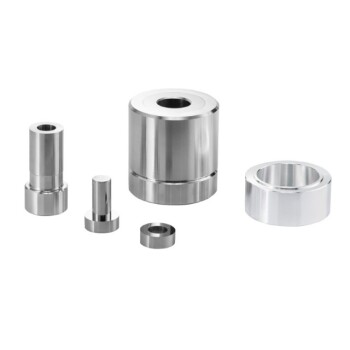
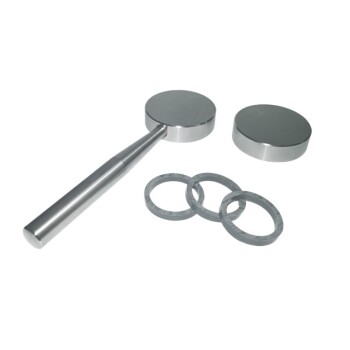
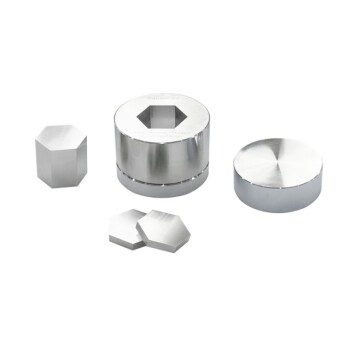
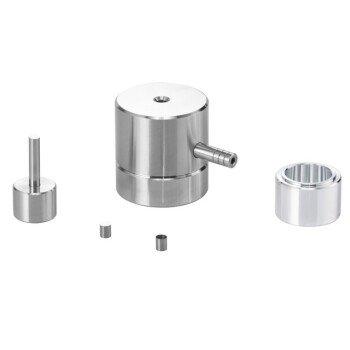
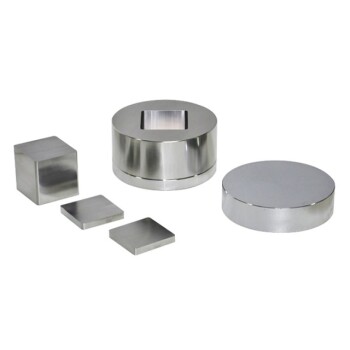
Precise manufacturing dictates structural integrity. Industrial-grade hot press molds are strictly necessary because they apply specific, high temperatures and pressures required to soften and redistribute binders within a wet preform. This process forces nitrocellulose fibers to bond tightly with the resin matrix, ensuring the final product is a cohesive, high-strength unit rather than a porous structure.
The application of controlled heat and pressure is the definitive method for eliminating internal pores and density non-uniformity, ensuring the cartridge case possesses the mechanical strength and dimensional stability required for harsh operational environments.
The Physics of Material Transformation
Activating the Binder Matrix
The primary function of the hot press mold is to manipulate the binder system. By applying specific high temperatures, the process softens the binders embedded in the wet preform.
Once softened, the high pressure forces these binders to redistribute evenly throughout the material. This ensures that the resin matrix is not concentrated in pockets but acts as a uniform adhesive agent.
Ensuring Fiber-Resin Integration
The redistribution of the binder facilitates a critical interaction between the structural components. The process ensures that nitrocellulose fibers bond tightly with the resin matrix.
This tight bonding transforms the loose fibers of the preform into a solid composite. Without this pressure-driven integration, the material would lack the necessary cohesion to function as a combustible case.
Eliminating Structural Defects
Removing Internal Pores
A wet preform naturally contains voids and air pockets. The precise application of pressure squeezes the material, eliminating internal pores.
Removing these pores is vital for structural integrity. A porous case is prone to cracking and cannot withstand the physical stresses of handling or ballistic cycling.
Achieving Density Uniformity
Inconsistent density leads to unpredictable performance. The hot press mold ensures density uniformity across the entire geometry of the cartridge case.
This uniformity guarantees that the case reacts consistently to physical stress. It prevents weak spots that could lead to catastrophic failure during operation.
The Risks of Imprecision
Compromised Mechanical Strength
If the temperature or pressure is insufficient, the binder will not redistribute effectively. This results in weak bonding between fibers and resin.
A case formed without precise control will lack the mechanical strength to survive harsh environments. It may deform or crumble before it is ever fired.
Dimensional Instability
Industrial-grade molds are not just for compression; they are for shaping. Precision is required to maintain dimensional accuracy.
Without exact pressure control, the case may warp or deviate from specifications. This leads to issues with chambering or structural stability within the weapon system.
Making the Right Choice for Your Goal
To ensure the reliability of combustible cartridge cases, you must align your manufacturing parameters with your performance objectives.
- If your primary focus is Structural Durability: Prioritize high pressure settings to completely eliminate internal pores and maximize density.
- If your primary focus is Material Consistency: Ensure temperature regulation is precise to facilitate uniform binder softening and redistribution.
Precise control in the molding phase is the difference between a reliable component and a structural failure.
Summary Table:
| Key Parameter | Impact on Manufacturing | Performance Outcome |
|---|---|---|
| Precise Temperature | Softens binders for even redistribution | Prevents material pockets & ensures resin uniformity |
| High Pressure | Eliminates internal pores & voids | Maximizes mechanical strength & durability |
| Mold Precision | Ensures fiber-resin integration | Guarantees dimensional accuracy & chambering stability |
| Controlled Cooling | Maintains material consistency | Prevents warping & structural defects |
Elevate Your Advanced Material Manufacturing with KINTEK
Precision is non-negotiable when manufacturing high-performance combustible components. At KINTEK, we specialize in providing the industrial-grade laboratory equipment needed to achieve absolute structural integrity. Whether you require advanced hydraulic hot presses, pellet presses, or specialized high-temperature crushing and milling systems, our solutions are engineered for consistency and durability.
From high-temperature high-pressure reactors to precision ceramics and consumables, KINTEK empowers researchers and manufacturers to eliminate structural defects and optimize material density. Partner with KINTEK to secure the reliability of your ballistic components.
Contact Our Technical Experts Today to find the perfect equipment for your high-precision manufacturing needs!
References
- Mengde Wu, Zhenggang Xiao. Advances in the development and characterization of combustible cartridge cases and propellants: Preparation, performance, and future prospects. DOI: 10.1515/rams-2025-0119
This article is also based on technical information from Kintek Solution Knowledge Base .
Related Products
- Special Heat Press Mold for Lab Use
- Ball Press Mold for Lab
- Double Plate Heating Press Mold for Lab
- Infrared Heating Quantitative Flat Plate Press Mold
- Lab Infrared Press Mold
People Also Ask
- How to use a press mold? Master the Art of Creating Consistent Ceramic Forms
- What is the press mould method? A Guide to Consistent, Detailed Ceramic Forms
- What is a press mold used for? Achieve Repeatable Precision and Efficiency
- What is the function of press molds during the preparation of SiCf/Ti-43Al-9V composites? Achieve Structural Precision
- What is the purpose of specialized pressure devices in sulfide solid-state batteries? Ensure Chemo-Mechanical Stability