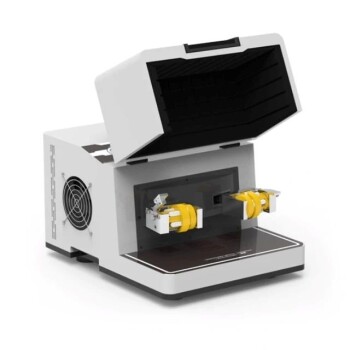
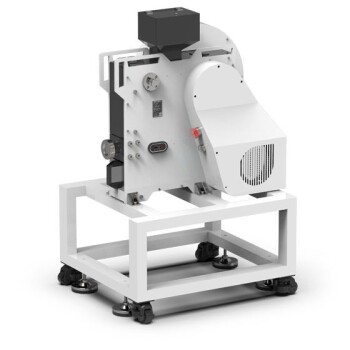
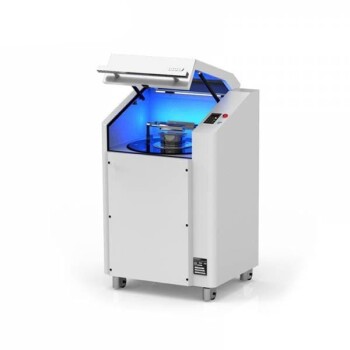
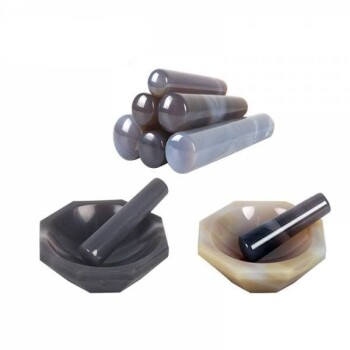
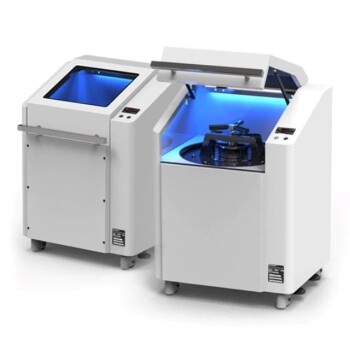
Industrial grinders and standard analytical sieves serve as the primary mechanical controls for optimizing the physical structure of modified biochar. These tools reduce raw agricultural waste into fine powders and filter them to specific size ranges, typically ranging from 20-mesh to 100-mesh. This process ensures a high specific surface area and particle uniformity, which are mandatory for efficient heat transfer and thorough chemical interaction during the modification and pyrolysis stages.
Precision grinding and sieving transform heterogeneous biomass into a standardized precursor, ensuring predictable thermal reactivity and uniform distribution of chemical modifiers. This mechanical standardization is the foundation for achieving high-performance, reproducible biochar products with optimized adsorption and catalytic properties.
The Role of Industrial Grinding in Feedstock Preparation
Mechanical Refinement of Raw Biomass
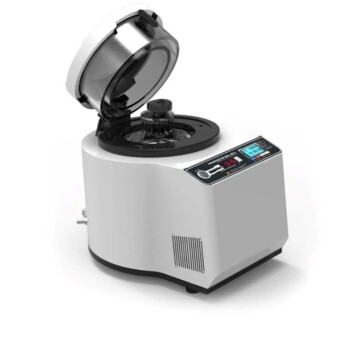
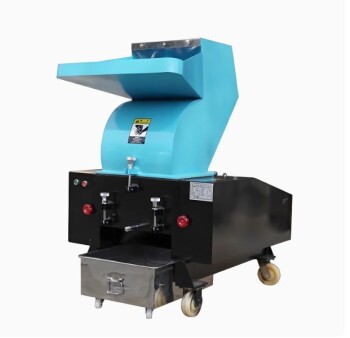
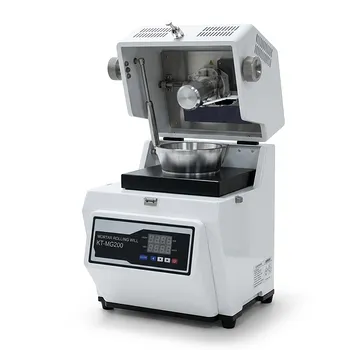
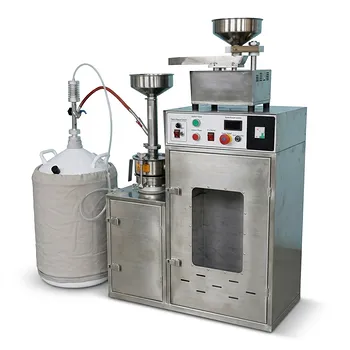
Industrial grinders are used to mechanically break down large agricultural wastes, such as peanut shells, oyster shells, and plant stems, into a fine powder. This physical transformation is the first step in converting raw biomass into a viable precursor for carbonization.
Maximizing Specific Surface Area
By milling materials into a powder, grinders significantly increase the specific surface area of the raw material. A higher surface area allows for better contact between the biomass and any chemical modifiers, such as calcium or boron sources, added before the pyrolysis process.
Improving Conversion Efficiency
The reduction in particle size ensures that heat is transferred rapidly and uniformly to the core of each particle during pyrolysis. This uniform heating prevents incomplete carbonization and improves the overall conversion efficiency of the biomass into biochar.
The Function of Standard Analytical Sieves
Ensuring Particle Size Uniformity
Standard analytical sieves, such as 40-mesh (0.425 mm) or 100-mesh screens, are used to classify the ground powder into specific size ranges. This screening process eliminates outliers, ensuring that the feedstock has a regular and consistent particle distribution.
Optimizing Mass Transfer
Uniform particle sizes facilitate thorough mixing and uniform mass transfer during chemical modification and pyrolysis. When particles are consistent in size, they react at similar rates, which prevents the formation of heterogeneous zones within the final biochar product.
Standardizing Final Product Quality
Sieves are also employed after modification or ball-milling to ensure the modified biochar reaches an extremely fine and uniform size. This standardization maximizes the contact area between the biochar (adsorbent) and the target pollutants, ensuring the reproducibility and accuracy of experimental data.
Understanding the Trade-offs and Limitations
Energy Consumption vs. Particle Fineness
While finer particles generally offer better performance, the energy required for intensive grinding increases exponentially as particle size targets decrease. Producers must balance the performance benefits of ultra-fine powders against the operational costs of high-speed industrial milling.
Material Loss and Dust Management
Extensive grinding and sieving can lead to significant material loss in the form of fine dust. This not only reduces the yield of the biochar precursor but also necessitates robust dust collection systems to maintain a safe and clean working environment.
Reactivity and Processing Challenges
Extremely fine powders may exhibit clumping or poor flowability, which can complicate the uniform loading of metal salt solutions or chemical modifiers. If particles are too fine, they may also lead to pressure drops or clogging in certain industrial reactor configurations.
Strategic Implementation of Grinding and Sieving
To achieve the best results when preparing modified biochar, the selection of grinding intensity and sieve mesh size should be aligned with the intended application of the material.
- If your primary focus is maximizing adsorption capacity: Utilize a high-mesh sieve (e.g., 100-mesh) after modification to ensure an extremely high surface-area-to-volume ratio for pollutant binding.
- If your primary focus is uniform chemical modification: Ensure raw materials are screened through at least a 40-mesh sieve to allow for thorough distribution of calcium, boron, or metal salt modifiers.
- If your primary focus is process efficiency and yield: Use a coarser sieve (e.g., 20-mesh) for initial feedstock preparation to reduce energy costs while still providing sufficient surface area for carbonization.
The deliberate use of mechanical refinement ensures that modified biochar achieves the physical consistency necessary for high-performance environmental and industrial applications.
Summary Table:
| Equipment Type | Primary Role in Biochar Preparation | Key Benefits for Final Product |
|---|---|---|
| Industrial Grinders | Mechanical refinement of raw biomass | Increases specific surface area & improves heat transfer efficiency |
| Analytical Sieves | Particle size classification & standardization | Ensures uniform mass transfer & predictable adsorption properties |
| Combined Process | Physical structure optimization | Delivers reproducible, high-performance modified biochar |
Elevate Your Biochar Research with KINTEK Precision
Achieving high-performance modified biochar requires absolute control over particle morphology and thermal processing. KINTEK specializes in providing the high-end laboratory equipment necessary for every stage of your workflow.
From our robust crushing and milling systems and precision analytical sieves for feedstock preparation to our industry-leading muffle, vacuum, and atmosphere furnaces for exact carbonization, we ensure your materials meet the highest standards of uniformity and reactivity.
Why choose KINTEK?
- Comprehensive Range: One-stop shop for grinders, sieves, hydraulic presses, and high-temperature reactors.
- Precision & Reliability: Equipment designed to deliver reproducible data for demanding research applications.
- Expert Support: Our team helps you select the right mesh sizes and heating configurations for your specific biomass modification goals.
Ready to optimize your biochar production? Contact our specialists today to find the perfect equipment solution!
References
- Cancan Xu, Quanxi Wang. Efficient Adsorption Removal of Phosphate from Rural Domestic Sewage by Waste Eggshell-Modified Peanut Shell Biochar Adsorbent Materials. DOI: 10.3390/ma16175873
This article is also based on technical information from Kintek Solution Knowledge Base .
Related Products
- Laboratory High Throughput Tissue Grinding Mill Grinder
- Powerful Plastic Crusher Machine
- Laboratory Grinding Mill Mortar Grinder for Sample Preparation
- High Energy Planetary Ball Mill Milling Machine for Laboratory
- Liquid Nitrogen Cryogenic Grinder Mill Cryomill with Screw Feeder
People Also Ask
- What is the purpose of using a laboratory grinder and standard sieves? Unlock Precise Rice Husk Pretreatment
- What is the purpose of using a laboratory grinder with specific mesh sieves for oat straw? Optimize Pellet Quality
- What is the role of laboratory-grade grinders and sieves in sample prep? Ensure High-Precision Corrosion Analysis
- How do laboratory grinders and standard sieving systems ensure the quality of feedstock for torrefaction?
- What does a grinder do in a laboratory? Achieve Homogeneous Sample Preparation for Accurate Analysis