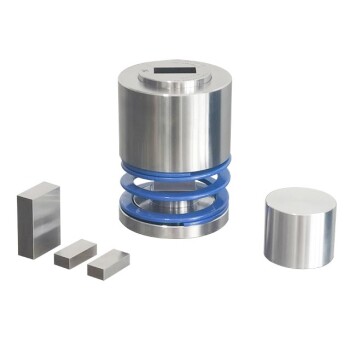
A high-pressure reactor generates a unique subcritical or supercritical fluid environment. By sealing reactants within a high-temperature and high-pressure vessel, the system forces solvents into a state that significantly enhances their penetrating power and chemical reactivity.
This environment overcomes the natural diffusion barriers of nanomaterials. It allows chemical modifiers to reach beyond the surface, accessing the deep, interstitial layers of structures like graphene and carbon nanotubes that remain inaccessible under ambient conditions.
The reactor's ability to maintain high-pressure, high-temperature conditions is not just about speeding up reactions; it fundamentally alters solvent behavior to enable the uniform functionalization and deep-layer integration of modifiers into complex carbon nanostructures.
The Physics of the Process Environment
Generating Supercritical Fluids
The core mechanism involves bringing solvents to a subcritical or supercritical state. In this phase, the fluid exhibits the density of a liquid but the diffusivity of a gas.
Enhanced Reactivity
The elevated temperature and pressure significantly increase the kinetic energy of the reaction. This is critical for processes like the solvothermal reduction of graphene, where high energy barriers must be overcome to alter the carbon lattice.
Overcoming Structural Limitations
Deep Layer Penetration
Carbon nanomaterials often possess complex, tight geometries. The high-pressure environment forces solvents and modifiers into the deep layers of these structures.
Integrating Low-Surface-Energy Modifiers
Standard methods often fail to bond low-surface-energy substances (such as hydrophobic agents) effectively. The reactor conditions ensure these modifiers fully integrate into the carbon structure, resulting in superior hydrophobic performance of the final coating.
Stability and Growth Mechanisms
In-Situ Nanostructure Growth
Beyond simple coating, these reactors support in-situ growth. As seen in similar nanofiber applications, the environment facilitates the synthesis of secondary structures (like metal oxides) directly onto the carbon substrate.
Improving Bond Strength
The extreme conditions strengthen the interface between the substrate and the modification layer. This increased bond density ensures that the material retains its properties (such as contaminant removal efficiency) even after repeated use and regeneration cycles.
Understanding the Trade-offs
Equipment Complexity and Safety
Operating at pressures such as 300 bar and temperatures exceeding 375°C requires specialized, robust equipment. This introduces significant safety considerations and higher capital costs compared to ambient synthesis methods.
Risk of Material Degradation
While these conditions modify materials, they can also simulate destructive environments (like High-Temperature Hydrogen Attack). If parameters are not strictly controlled, the aggressive environment intended to modify the carbon structure could inadvertently degrade its mechanical integrity.
Making the Right Choice for Your Goal
To maximize the utility of a high-pressure reactor for your specific application, consider the following:
- If your primary focus is Hydrophobicity: Prioritize supercritical conditions to force low-surface-energy modifiers deep into the carbon lattice for a uniform, durable coating.
- If your primary focus is Composite Durability: Utilize the reactor to facilitate the in-situ growth of secondary particles, which creates stronger interfacial bonds than simple surface adsorption.
- If your primary focus is Chemical Reduction: Leverage the solvothermal capabilities to enhance solvent reactivity, allowing for the efficient reduction of graphene oxide or functionalization of nanotubes.
By leveraging the unique physics of high-pressure environments, you can transform surface treatments from temporary coatings into intrinsic material enhancements.
Summary Table:
| Process Condition | Mechanism | Primary Benefit for Carbon Nanomaterials |
|---|---|---|
| Supercritical Fluid State | Density of liquid + Diffusivity of gas | Overcomes diffusion barriers; penetrates deep interstitial layers |
| High Kinetic Energy | Elevated temperature & pressure | Overcomes reaction energy barriers for lattice alteration |
| In-Situ Growth | Controlled solvothermal environment | Facilitates synthesis of secondary structures directly on substrates |
| High Bond Density | Strengthened interfacial bonding | Enhances material durability and performance after repeated use |
| Solvothermal Reduction | Enhanced solvent reactivity | Efficiently reduces graphene oxide and functionalizes nanotubes |
Elevate Your Nanomaterial Research with KINTEK Precision
Unlock the full potential of your carbon nanostructures with KINTEK’s advanced high-temperature high-pressure reactors and autoclaves. Whether you are targeting uniform functionalization of graphene or the in-situ growth of complex metal oxides, our robust reactor systems provide the precise control needed to manage supercritical fluid environments safely and efficiently.
Why choose KINTEK for your lab?
- Comprehensive High-Pressure Solutions: Specialized reactors and autoclaves designed for extreme conditions up to 300 bar and 375°C+.
- Total Material Support: From high-temperature furnaces and crushing systems to essential consumables like PTFE products and ceramics.
- Reliable Performance: Engineered to minimize the risk of material degradation while maximizing bond strength and reactivity.
Ready to transform your surface treatments into intrinsic material enhancements? Contact our technical experts today to find the perfect reactor or crushing and milling system for your specific research goals.
References
- Viswanathan S. Saji. Carbon nanostructure-based superhydrophobic surfaces and coatings. DOI: 10.1515/ntrev-2021-0039
This article is also based on technical information from Kintek Solution Knowledge Base .
Related Products
- Customizable Laboratory High Temperature High Pressure Reactors for Diverse Scientific Applications
- Customizable High Pressure Reactors for Advanced Scientific and Industrial Applications
- Stainless High Pressure Autoclave Reactor Laboratory Pressure Reactor
- Visual High-Pressure Reactor for In-Situ Observation
- Mini SS High Pressure Autoclave Reactor for Laboratory Use
People Also Ask
- How do high-pressure and high-temperature reactors ensure the effective treatment of lignocellulosic wastewater in WAO?
- What equipment is required for high-pressure high-temperature reactions? Master Extreme Chemistry Safely
- How do you control high pressure in a reactor? A Guide to Safe & Stable Operation
- Why is argon better than nitrogen for inert atmosphere? Ensure Absolute Reactivity & Stability
- How does initial oxygen pressure affect the wet oxidation of pharmaceutical sludge? Master Your Oxidation Depth