In short, infrared (IR) spectroscopy can analyze an exceptionally wide range of samples, including solids, liquids, and gases. The key limitation is not the physical state of the sample itself, but the method used to prepare it. For a successful analysis, the sample must be prepared in a way that allows infrared light to either pass through it or interact with its surface effectively.
The core principle of IR sample analysis is transparency. The sample, and any material holding it (like a window or a solvent), must be transparent to infrared radiation in the wavelength range of interest to obtain a usable spectrum.
Analyzing Solid Samples
The primary challenge with solids is making them transparent enough for IR light to pass through. Several well-established techniques accomplish this.
The KBr Pellet Method
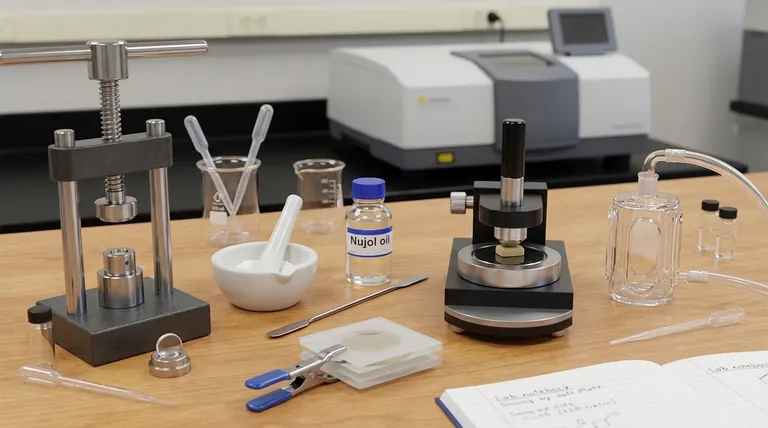
This is a classic transmission method. A small amount of the solid sample is finely ground with a dry, powdered alkali halide, most commonly potassium bromide (KBr). This mixture is then pressed under high pressure in a die to form a small, transparent pellet that can be placed directly in the IR beam.
The Mull Technique
For this method, the solid sample is ground into a fine paste (a "mull") with a mulling agent. The most common agent is Nujol, which is a mineral oil. A thin film of this paste is then smeared between two flat, polished salt plates (like NaCl or KBr) for analysis.
Attenuated Total Reflectance (ATR)
ATR is a modern surface technique that has become extremely popular due to its simplicity. It requires almost no sample preparation. The solid (or liquid) is simply pressed against a high-refractive-index crystal, typically made of diamond, germanium, or zinc selenide. The IR beam is directed through the crystal, where it interacts with the immediate surface of the sample.
Analyzing Liquid and Gas Samples
Liquids and gases are generally simpler to analyze because they are already uniform. The main consideration is containing them in an IR-transparent vessel.
Neat Liquids and Solutions
Pure liquids ("neat" samples) can be analyzed by placing a single drop between two salt plates, creating a thin film. For solutions, the sample is dissolved in a solvent that has minimal IR absorption bands (like carbon tetrachloride or chloroform) and placed into a special liquid cell with IR-transparent windows.
Gas Analysis
Gases are analyzed using a gas cell. This is a long tube sealed at both ends with IR-transparent windows. The IR beam passes through the length of the cell, increasing the path length and thus the chance of interaction with the low-concentration gas molecules.
The Critical Constraint: Why Salt Plates are Essential
You cannot use standard glass or quartz cuvettes for mid-range IR spectroscopy. This is because the chemical bonds in these materials (silicon-oxygen) strongly absorb IR radiation, blocking the signal and making them effectively opaque.
The Role of Alkali Halides
Materials like sodium chloride (NaCl) and potassium bromide (KBr) are used because they are transparent to IR light. The single ionic bonds in their crystal lattice do not have vibrational frequencies in the typical mid-IR range (4000-400 cm⁻¹), so they don't interfere with the measurement of the sample.
Understanding the Trade-offs
Each sample preparation method has distinct advantages and disadvantages that make it suitable for different situations.
KBr Pellets: High Quality, High Effort
Pellets produce high-quality spectra but are labor-intensive and highly sensitive to moisture. Water has a very strong IR absorption and can easily contaminate the KBr, obscuring parts of the spectrum.
Mulls: Fast but Potentially Interfering
The mull technique is faster than making a pellet, but the mulling agent (e.g., Nujol) will show its own C-H absorption bands in the spectrum. An analyst must be able to distinguish these known peaks from the sample's actual peaks.
ATR: The Go-To for Speed and Simplicity
ATR is fast, non-destructive, and works on a huge range of samples, including opaque solids, films, and powders. However, it is a surface technique, so it may not represent the bulk composition of an inhomogeneous sample.
Making the Right Choice for Your Goal
Your choice of method depends entirely on your sample type and analytical goal.
- If your primary focus is obtaining a high-quality transmission spectrum of a pure solid: The KBr pellet method is the gold standard, assuming you can avoid moisture contamination.
- If your primary focus is a quick, qualitative analysis of a solid or liquid: ATR is the fastest and most convenient method available.
- If your primary focus is analyzing a dissolved compound or a neat liquid: Use a liquid cell or create a thin film between two salt plates.
- If you must analyze a sample in its gaseous state: A dedicated gas cell is the only appropriate choice.
Ultimately, understanding the principles of sample preparation empowers you to select the optimal technique for any analytical challenge.
Summary Table:
| Sample Type | Common Preparation Methods | Key Considerations |
|---|---|---|
| Solids | KBr Pellet, ATR, Mull (Nujol) | Transparency to IR light is critical; avoid moisture contamination. |
| Liquids | Neat (salt plates), Solution (IR-transparent solvent) | Use solvents like CCl₄ or chloroform with minimal IR absorption. |
| Gases | Gas Cell (long path length) | Ideal for low-concentration molecules; requires sealed IR-transparent windows. |
Need the right equipment for your IR spectroscopy analysis? KINTEK specializes in high-quality lab equipment and consumables, including presses for KBr pellets, ATR accessories, and IR-transparent salt plates. Our products are designed to ensure accurate, reliable results for your laboratory. Contact us today to find the perfect solution for your sample preparation needs!
Visual Guide

Related Products
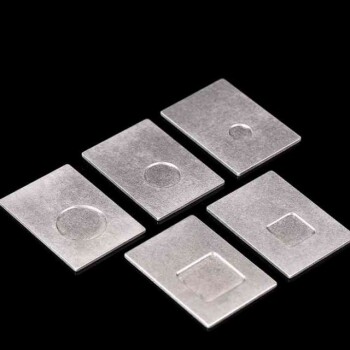
- Customizable XRD Sample Holders for Diverse Research Applications
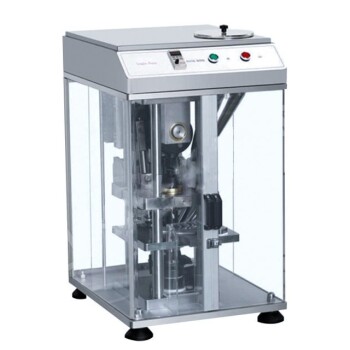
- Single Punch Electric Tablet Press Machine Laboratory Powder Tablet Punching TDP Tablet Press
- KF ISO Stainless Steel Vacuum Flange Blind Plate for High Vacuum Systems
- Button Battery Case for Battery Lab Applications
- Rubber Vulcanizer Vulcanizing Machine Plate Vulcanizing Press for Lab
People Also Ask
- What affects melting point chemistry? A Guide to Molecular Forces and Lattice Energy
- How can corrosion of the sample holder be prevented when using corrosive chemicals? Protect Your Lab's Integrity
- Does higher heat capacity mean higher melting point? Unraveling the Critical Difference
- What are the temperature and pressure limitations for using the sample holder? Essential Guide for Lab Safety
- How should a sample holder be handled to ensure its longevity? Protect Your Lab Investment and Data Integrity