The unique role of Initiated Chemical Vapor Deposition (i-CVD) lies in its ability to perform solvent-free, deep-penetration coating on complex geometries. Unlike liquid-based methods, i-CVD utilizes gas-phase initiators and monomers to completely infiltrate the internal porous structures of materials like sponges. This allows for uniform, in-situ polymerization that renders the entire three-dimensional structure super-amphiphobic without relying on solvents.
i-CVD solves the challenge of coating complex, porous materials by combining deep penetration with a gentle, room-temperature process, ensuring total internal protection without damaging delicate substrates.
Achieving True Conformal Coating
Penetrating Deep Internal Pores
The primary challenge with 3D structures like sponges is reaching the internal surface area. i-CVD uses gas-phase reactants, which can diffuse freely into the deepest pores of the material.
This capability ensures that the super-amphiphobic coating is not just a superficial shell, but a thorough modification of the sponge's entire volume.
In-Situ Polymerization
Once the reactants (fluorinated acrylate monomers and initiators) penetrate the structure, they react chemically in place.
This in-situ polymerization ensures that every internal fiber and strut of the sponge is wrapped in a uniform protective layer. This creates a consistent barrier against both water and oils (super-amphiphobicity) throughout the material.
The Advantage of a Solvent-Free Process
Eliminating Surface Tension Issues
Liquid coatings often fail in porous media because surface tension prevents fluids from entering small pores.
Because i-CVD is a dry process, there is no liquid surface tension to block entry. This guarantees that even the most intricate, microscopic geometries are fully coated.
Ensuring Uniformity
Liquid methods can result in pooling, clogging, or uneven thickness as solvents evaporate.
The i-CVD method avoids these irregularities. It produces a uniform coating thickness across complex surfaces, maintaining the original porosity and breathability of the sponge.
Preserving Delicate Substrates
Operating at Room Temperature
Many porous materials, particularly organic ones like cellulose sponges, are sensitive to heat.
The i-CVD reaction is unique because it can occur effectively at room temperature. This prevents thermal degradation or deformation of the substrate during the coating process.
Protecting Structural Integrity
By avoiding harsh solvents and high heat, i-CVD is non-destructive.
This allows for the functionalization of fragile, heat-sensitive cellulose-based substrates that would otherwise be damaged by conventional chemical vapor deposition or thermal curing methods.
Understanding the Trade-offs
System Complexity vs. Simplicity
While i-CVD offers superior coating quality, it is inherently more complex than simple dip-coating or spray methods.
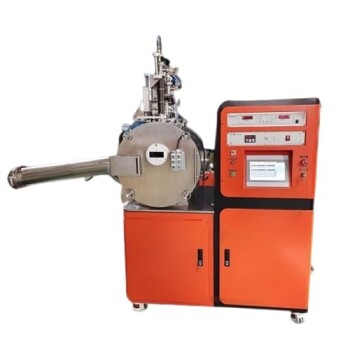
It requires a specialized vacuum chamber system to manage the gas-phase delivery of monomers and initiators. This makes the setup more demanding than open-air liquid application methods.
Process Control Requirements
Achieving the perfect coating requires precise control over the reaction rates.
Users must carefully manage the flow of gas-phase initiators and monomers to ensure the controlled reactions necessary for uniform polymerization inside the dense pore structure.
Making the Right Choice for Your Goal
To determine if i-CVD is the correct solution for your specific application, consider the nature of your substrate and your performance requirements.
- If your primary focus is deep internal coverage: Choose i-CVD to ensure fluorinated acrylate monomers penetrate and coat the entire 3D structure of porous sponges.
- If your primary focus is substrate preservation: Rely on i-CVD’s room-temperature, solvent-free operation to modify heat-sensitive materials like cellulose without damage.
By leveraging the gas-phase nature of i-CVD, you can achieve a level of durability and uniformity in complex structures that liquid chemistry simply cannot match.
Summary Table:
| Feature | i-CVD (Initiated CVD) | Liquid-Based Methods |
|---|---|---|
| Application Phase | Gas-phase (Dry) | Liquid-phase (Wet) |
| Penetration Depth | Deep infiltration of 3D pores | Limited by surface tension |
| Coating Uniformity | Highly uniform, conformal | Prone to pooling & clogging |
| Temperature | Room temperature (Gentle) | Often requires thermal curing |
| Substrate Compatibility | Heat-sensitive & fragile | Risk of solvent/heat damage |
| Process Nature | Solvent-free polymerization | Solvent-dependent |
Elevate Your Material Science with KINTEK Precision
Unlock the full potential of complex material modification with KINTEK’s advanced CVD and laboratory solutions. Whether you are developing super-amphiphobic sponges or functionalizing delicate 3D substrates, our specialized i-CVD, PECVD, and vacuum furnace systems provide the precision control necessary for uniform, deep-penetration coatings.
From high-temperature reactors and hydraulic presses to specialized electrolytic cells and battery research tools, KINTEK offers a comprehensive portfolio designed to support cutting-edge research and industrial scaling. Don't let surface tension or thermal degradation limit your innovation.
Ready to optimize your coating process? Contact KINTEK today for expert guidance and customized equipment solutions!
References
- Hui Liu, Yuekun Lai. Bioinspired Surfaces with Superamphiphobic Properties: Concepts, Synthesis, and Applications. DOI: 10.1002/adfm.201707415
This article is also based on technical information from Kintek Solution Knowledge Base .
Related Products
- Chemical Vapor Deposition CVD Equipment System Chamber Slide PECVD Tube Furnace with Liquid Gasifier PECVD Machine
- Customer Made Versatile CVD Tube Furnace Chemical Vapor Deposition Chamber System Equipment
- HFCVD Machine System Equipment for Drawing Die Nano-Diamond Coating
- Inclined Rotary Plasma Enhanced Chemical Vapor Deposition PECVD Equipment Tube Furnace Machine
- Multi Heating Zones CVD Tube Furnace Machine Chemical Vapor Deposition Chamber System Equipment
People Also Ask
- What are the advantages of chemical vapor deposition? Achieve Superior Thin Films for Your Lab
- What types of substrates are used in CVD to facilitate graphene films? Optimize Graphene Growth with the Right Catalyst
- What is the chemical vapor deposition growth process? Build Superior Thin Films from the Atom Up
- How expensive is chemical vapor deposition? Understanding the True Cost of High-Performance Coating
- Why is Chemical Vapor Deposition (CVD) equipment uniquely suited for constructing hierarchical superhydrophobic structures?