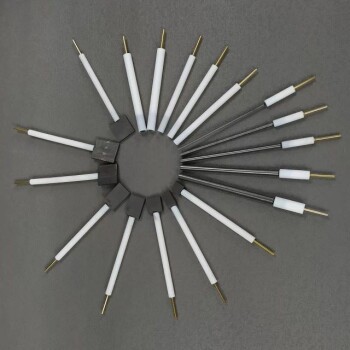
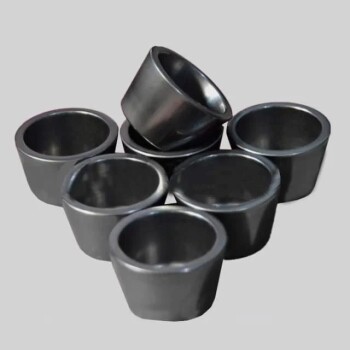
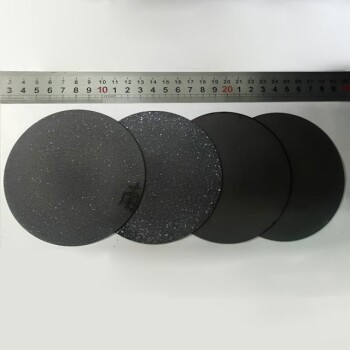
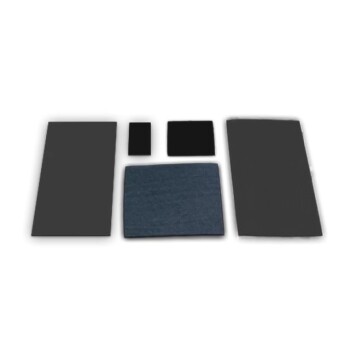
High-purity graphite is the standard material for thermal plasma reactors because it uniquely bridges the gap between electrical conductivity and extreme thermal resistance. In these systems, graphite electrodes are critical for guiding plasma gas flow and stabilizing the electric arc, while graphite crucibles function simultaneously as the electrical anode and the containment vessel for high-temperature reactants.
The selection of graphite is driven by the need for a material that can withstand temperatures up to 3000°C while serving as an active part of the electrical circuit. Its chemical inertness ensures that the intense energy input required for plasma synthesis does not introduce metallic impurities into the final product.
The Functional Role of Graphite Components
The Electrode as a Stabilizer
The top graphite electrode is not merely a conductor; it is a structural guide for the plasma gas.
By maintaining a consistent geometry under heat, it stabilizes the electric arc. This stability is required to ensure a uniform energy input into the reaction chamber.
The Crucible as an Active Anode
Unlike traditional ceramic vessels, a graphite crucible in a plasma reactor serves as the anode in the electrical circuit.
It acts as the base of the reaction chamber, holding molten reactants while completing the electrical connection. This dual purpose eliminates the need for inserting separate metal electrodes into the melt, which could melt or contaminate the batch.
Critical Engineering Properties
Extreme Thermal Refractoriness
High-purity graphite can withstand temperatures up to 3000°C (5472°F).
This extreme refractoriness allows the reactor to process materials that would melt or destroy conventional containers. Compared to clay or ceramics, graphite also offers superior thermal shock resistance, preventing cracking during rapid temperature changes.
Chemical Purity and Inertness
The primary advantage of high-purity (99.9%) graphite is the prevention of contamination.
Because graphite is chemically inert, it does not react with the substances being melted. Furthermore, low-ash graphite prevents the release of volatile substances, which avoids defects such as spots or holes in the final coating or synthesized material.
Erosion Resistance via High Density
To survive the aggressive environment of thermal plasma, graphite crucibles are engineered with high bulk density (typically 1.78 g/cm³ or greater) and low porosity.
This density is critical for resisting erosion from molten materials and high-velocity gas particles. A smoother, denser surface also minimizes the mechanical sticking of cast metal alloys to the crucible walls.
Understanding the Trade-offs
Oxidation Vulnerability
While graphite is thermally robust, it is susceptible to oxidation at high temperatures in oxygen-rich environments.
To mitigate this, crucibles often require special anti-oxidation coatings or treatments. Without these treatments or a controlled atmosphere, the service life of the component can be significantly reduced due to material burn-off.
Physical Property Variances
Not all graphite is equal; variations in particle size and manufacturing technology impact performance.
For example, a particle size of 43um or less is often specified to ensure structural integrity. Using graphite with lower bending strength (below 40 Mpa) or compression resistance (below 70 Mpa) may lead to premature mechanical failure under the physical stress of the reactor.
Making the Right Choice for Your Goal
Selecting the correct graphite specifications depends on the specific constraints of your plasma synthesis process.
- If your primary focus is Product Purity: Prioritize graphite with extremely low ash content and 99.9% purity to eliminate the risk of volatile substances causing coating defects.
- If your primary focus is Component Longevity: Select crucibles with anti-oxidation coatings and high bulk density to maximize resistance against molten erosion and gas particle wear.
Success in thermal plasma processing relies on treating the graphite not just as a container, but as a precision-engineered component of your electrical and thermal system.
Summary Table:
| Property | Graphite Specification | Functional Benefit |
|---|---|---|
| Thermal Resistance | Up to 3000°C | Withstands extreme plasma temperatures without melting |
| Chemical Purity | 99.9% High-Purity | Prevents metallic contamination and coating defects |
| Electrical Conductivity | Active Anode/Electrode | Facilitates arc stability and completes the circuit |
| Bulk Density | ≥ 1.78 g/cm³ | Resists erosion from molten reactants and high-velocity gas |
| Mechanical Strength | ≥ 40 MPa (Bending) | Ensures structural integrity under high-stress plasma environments |
Elevate Your Material Synthesis with KINTEK Precision
Maximize the efficiency and purity of your thermal plasma processes with KINTEK’s high-performance graphite solutions. As experts in laboratory equipment and consumables, we provide a comprehensive range of high-temperature furnaces (vacuum, CVD, PECVD, atmosphere), high-temperature high-pressure reactors, and precision-engineered graphite crucibles and electrodes designed to withstand the most demanding environments. Whether you are conducting battery research, dental material fabrication, or advanced alloy melting, our high-density, low-ash graphite components ensure long-lasting durability and zero contamination.
Ready to optimize your reactor performance? Contact KINTEK today to consult with our specialists and find the perfect laboratory solutions for your unique requirements.
References
- Sangita Mohapatra, S. K. Singh. Performance Evaluation of Glass-Epoxy-TiC Hybrid Composites Using Design of Experiment. DOI: 10.1155/2014/670659
This article is also based on technical information from Kintek Solution Knowledge Base .
Related Products
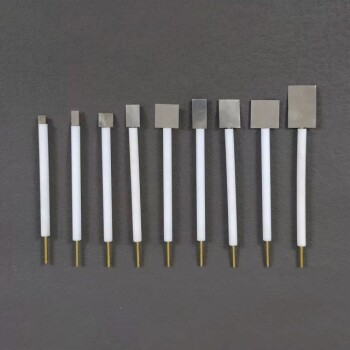
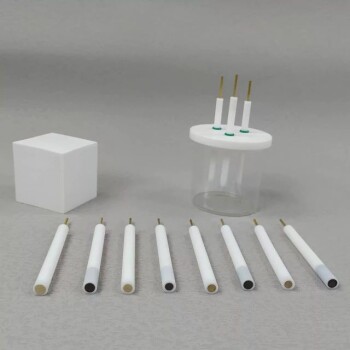
- Graphite Disc Rod and Sheet Electrode Electrochemical Graphite Electrode
- Graphite Vacuum Furnace Negative Material Graphitization Furnace
- High Purity Pure Graphite Crucible for Electron Beam Evaporation
- Glassy Carbon Sheet RVC for Electrochemical Experiments
- Glassy Carbon Electrochemical Electrode
People Also Ask
- Why is a graphite electrode used as a counter electrode? Achieve Pure Electrochemical Reduction with KINTEK
- What is the correct procedure for installing and connecting a graphite electrode during an experiment? Ensure Accurate Electrochemical Results
- What are the potential risks when using a graphite electrode in electrochemical tests? Avoid Decomposition and Contamination
- What are the key precautions for handling graphite electrodes? Ensure Safety & Maximize Performance
- Why are Dimensionally Stable Anodes (DSA) preferred for indium electrowinning? Ensure High-Purity Results.