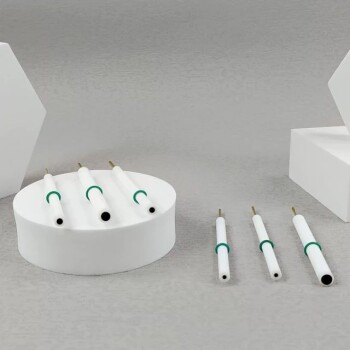
High-purity platinum is typically selected as the counter electrode in photoelectrochemical (PEC) water splitting because it eliminates experimental bottlenecks. It combines exceptional electrocatalytic activity with high conductivity, ensuring that the system's performance limits are dictated by the material you are testing (the photoanode), not the hardware measuring it.
Core Insight: In water splitting experiments, the counter electrode must serve as an "invisible" facilitator. Platinum is chosen because it catalyzes the Hydrogen Evolution Reaction (HER) with extremely low overpotential, ensuring rapid proton reduction without distorting the data of the working electrode.
The Technical Necessity of Platinum
In a PEC cell, the goal is often to evaluate the efficiency of a photoanode. To do this accurately, the rest of the circuit must operate near perfection. Platinum provides the necessary characteristics to achieve this baseline.
Minimizing Overpotential in Hydrogen Evolution
The primary reference highlights that platinum exhibits exceptional electrocatalytic activity specifically for the Hydrogen Evolution Reaction (HER).
During water splitting, electrons flow from the photoanode to the counter electrode. Platinum efficiently receives these electrons and catalyzes the rapid reduction of protons in the electrolyte into hydrogen gas.
Because platinum has an extremely low overpotential for HER, it requires minimal excess energy to drive this reaction. This ensures that the voltage applied to the system is utilized for the reaction of interest at the working electrode, rather than being wasted overcoming resistance at the counter electrode.
Ensuring Chemical Stability
A counter electrode must be a robust charge carrier, not a reactant. Platinum is renowned for its chemical inertness.
Supplementary sources confirm that platinum acts as a stable carrier for charge exchange without participating in unwanted side reactions. It does not undergo self-dissolution or corrosion during standard operation.
This stability is vital for maintaining the purity of the electrolyte. If a counter electrode were to degrade, dissolved ions could plate onto the working electrode, altering its surface properties and invalidating the experimental results.
Reducing Ohmic Losses
Accurate data depends on minimizing electrical resistance within the cell. Platinum possesses superior electrical conductivity.
This high conductivity ensures low ohmic losses across the circuit. By minimizing resistance, platinum helps maintain the accuracy of the electrical signals measured by the potentiostat, particularly during long-term operations where stability is paramount.
Understanding the Trade-offs
While platinum is the premier choice for accuracy, it is important to understand the specific conditions required for its effective use.
The Requirement for High Purity
The "high-purity" designation mentioned in your question is not a suggestion; it is a requirement. Impurities in the platinum can leach into the electrolyte, causing signal interference.
As noted in the supplementary references, the goal is to prevent the counter electrode from generating its own polarization or oxidation signals. Lower-grade platinum may introduce noise that obscures the intrinsic response of the graphene-coated or semiconductor working electrode.
Experimental Context
Platinum is specifically optimized for the Hydrogen Evolution Reaction in these setups. If your experiment involved a different reaction at the counter electrode where platinum is not catalytically active, it would act as a resistor rather than a catalyst, potentially skewing data. Therefore, its selection is tied directly to its synergy with hydrogen production.
Making the Right Choice for Your Goal
When designing your electrochemical cell, your choice of counter electrode defines the reliability of your data.
- If your primary focus is fundamental material analysis: Use high-purity platinum to ensure the reaction kinetics measured are strictly those of your working electrode, with zero interference from the counter electrode.
- If your primary focus is long-term system stability: Rely on platinum to prevent electrode dissolution, ensuring that the electrolyte remains uncontaminated throughout extended testing cycles.
Ultimately, platinum is used to ensure that the counter electrode remains the most efficient and least intrusive component of your electrochemical system.
Summary Table:
| Feature | Benefit in PEC Water Splitting |
|---|---|
| Low HER Overpotential | Minimizes energy loss; ensures measured voltage reflects the working electrode. |
| High Electrocatalytic Activity | Facilitates rapid proton reduction for efficient hydrogen evolution. |
| Chemical Inertness | Prevents electrode corrosion and electrolyte contamination. |
| Superior Conductivity | Reduces ohmic losses for precise electrical signal measurement. |
| High Purity | Eliminates signal noise and prevents unwanted leaching into the system. |
Elevate Your Electrochemical Research with KINTEK
Precision in photoelectrochemical water splitting starts with high-quality components. KINTEK specializes in providing premium laboratory equipment and consumables, including high-purity electrolytic cells and electrodes designed to eliminate experimental bottlenecks.
Whether you are conducting fundamental material analysis or long-term stability testing, our range of products—from platinum counter electrodes and reactors to advanced battery research tools and cooling solutions—ensures your data remains accurate and reproducible.
Ready to optimize your lab's performance? Contact us today to discover how our high-performance solutions can support your research goals.
References
- Guilherme G. Bessegato, María Valnice Boldrin Zanoni. Achievements and Trends in Photoelectrocatalysis: from Environmental to Energy Applications. DOI: 10.1007/s12678-015-0259-9
This article is also based on technical information from Kintek Solution Knowledge Base .
Related Products
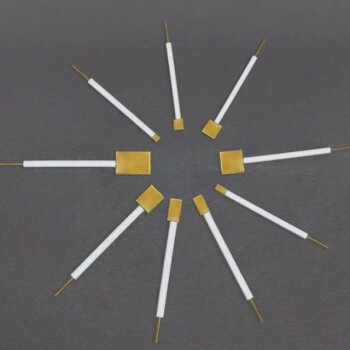
- Platinum Sheet Electrode for Laboratory and Industrial Applications
- Rotating Platinum Disk Electrode for Electrochemical Applications
- Platinum Sheet Electrode for Battery Lab Applications
- Platinum Auxiliary Electrode for Laboratory Use
- RRDE rotating disk (ring disk) electrode / compatible with PINE, Japanese ALS, Swiss Metrohm glassy carbon platinum
People Also Ask
- What is a common use for a platinum sheet electrode? As a Reliable Counter Electrode in Electrochemical Cells
- What is the most critical guideline for immersing a platinum sheet electrode in an electrolyte? Ensure Accurate Electrochemical Measurements
- What is the purity of the platinum sheet in a platinum sheet electrode? The Key to Reliable Electrochemical Data
- What is the expected lifespan of a platinum sheet electrode? Maximize Your Electrode's Service Life
- What are the available specifications for platinum sheet electrodes? Find the Perfect Fit for Your Electrochemical Needs