The precision of battery performance begins with mechanical integrity.
Laboratory hydraulic punching and precision pressing machines are indispensable because they ensure the geometric consistency of electrodes and the physical density of active materials. These tools transform raw coated foils into standardized components, minimizing internal resistance and ensuring that experimental data is both reproducible and accurate.
High-precision mechanical preparation is the foundation of electrochemical efficiency; it optimizes the interface between current collectors and active materials while ensuring the structural integrity required for stable battery cycling.
The Role of Precision Punching in Data Integrity
Ensuring Uniform Material Loading
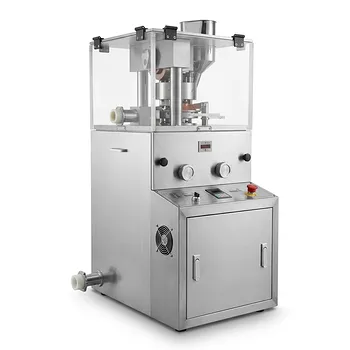
Hydraulic punching machines are used to cut dried electrode sheets into precise, consistent circular discs. This consistency is vital because even minor variations in disc size can lead to unequal loading of active materials, which skews capacity measurements and makes it impossible to compare cells accurately.
Minimizing Edge Defects and Burrs
High-quality punching ensures clean edges on the electrode discs, preventing physical shorts during assembly. Manual cutting often introduces microscopic tears or "burrs" on the current collector, whereas hydraulic systems apply uniform force to preserve the structural profile of the electrode.
Enhancing Conductivity Through Precision Pressing
Reducing Ohmic and Contact Resistance
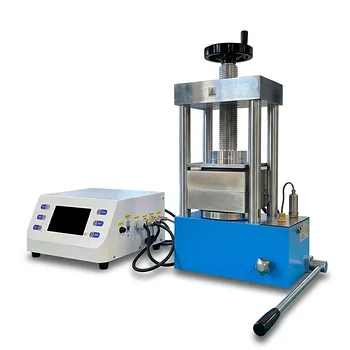
Precision pressing machines apply controlled axial pressure to densify the active material layer. This process forces the particles into tighter contact with each other and the current collector (such as copper or aluminum foil), significantly lowering the ohmic resistance within the electrode.
Optimizing Solid-State Interfaces
In all-solid-state batteries, pressing is critical for overcoming the lack of "wetting" at solid-solid interfaces. High-tonnage pressure induces plastic deformation in materials like metallic lithium, allowing it to fill microscopic voids in electrolyte membranes (like LLZO) and reducing interface impedance.
Facilitating Ion Transmission Channels
Pressing is used for the cold-press molding of electrolyte powders, such as Li6PS5Cl-based composites, into low-porosity membranes. By eliminating gaps between powder particles, the machine establishes the continuous ion transmission channels necessary for high-performance battery operation.
Maintaining Stability During Battery Cycling
Managing Volume Changes
During the charging and discharging cycles, battery materials naturally expand and contract. Constant-pressure test systems apply continuous external stack pressure to offset these volume changes, which prevents the formation of internal voids and inhibits the growth of lithium dendrites.
Ensuring Hermetic Sealing
During the final packaging phase, hydraulic presses provide the stable, uniform pressure required to seal battery cases. A perfect hermetic seal is essential to prevent electrolyte leakage or the ingress of moisture and air, both of which would compromise the safety and longevity of the test cell.
Understanding the Trade-offs
Over-densification vs. Electrolyte Permeability
While high pressure reduces resistance, excessive pressing can over-densify the electrode and close off the pores needed for electrolyte infiltration. If the pores are too small, the electrolyte cannot "wet" the material effectively, leading to poor ion transport and reduced rate performance.
Mechanical Stress on Fragile Components
Applying high tonnage to brittle ceramic electrolytes or thin polymer separators carries the risk of structural failure. It is critical to balance the need for interface contact with the mechanical limits of the materials to avoid micro-cracks that could lead to internal short circuits.
How to Apply This to Your Battery Research
Making the Right Choice for Your Goal
- If your primary focus is standardizing coin cell data: Invest in a high-precision hydraulic punch with interchangeable dies to ensure perfectly uniform electrode geometry.
- If your primary focus is solid-state battery development: Prioritize a high-tonnage hydraulic press capable of maintaining constant pressure to manage solid-solid interface resistance.
- If your primary focus is manufacturing scalability: Focus on precision rolling or "calendering" settings that mimic industrial pressing processes to ensure your lab results translate to production.
By mastering the mechanical variables of punching and pressing, you ensure that your battery's electrochemical performance is a true reflection of your chemistry, not a result of assembly flaws.
Summary Table:
| Machine Type | Key Function | Core Benefit |
|---|---|---|
| Hydraulic Punching | Precise cutting of electrode discs | Uniform material loading & clean, burr-free edges |
| Precision Pressing | Densification of active materials | Lowered contact resistance & optimized ion channels |
| Constant Pressure | Management of volume expansion | Inhibits lithium dendrites & maintains interface contact |
| Sealing Presses | Hermetic sealing of battery cases | Prevents electrolyte leakage and moisture ingress |
Elevate Your Battery Research with KINTEK Precision
In the world of energy storage, mechanical integrity is the foundation of electrochemical success. KINTEK specializes in providing the high-precision tools necessary to transform raw materials into high-performance battery components.
From our robust hydraulic presses (pellet, hot, and isostatic) designed for material densification to our specialized battery research tools and consumables, we ensure your assembly process is flawless. Our portfolio also includes high-temperature furnaces (muffle, vacuum, CVD) for material synthesis, crushing and milling systems, and high-pressure reactors to support every stage of your lab’s workflow.
Don’t let inconsistent preparation compromise your data. Contact KINTEK today to find the perfect equipment for your research needs!
References
- Safina‐E‐Tahura Siddiqui, Nirjhor Barua. Microstructured pebble stone like Ni-NiO composite as anode of high-performance lithium-ion batteries. DOI: 10.55670/fpll.fusus.2.1.1
This article is also based on technical information from Kintek Solution Knowledge Base .
Related Products
- Laboratory Hydraulic Press Lab Pellet Press Machine for Glove Box
- Automatic Laboratory Hydraulic Pellet Press Machine for Lab Use
- Lab Scale Rotary Single Punch Tablet Press Machine TDP Tablet Punching Machine
- Automatic Heated Hydraulic Press Machine with Heated Plates for Laboratory Hot Press 25T 30T 50T
- 30T 40T Split Automatic Heated Hydraulic Press Machine with Heated Plates for Laboratory Hot Press
People Also Ask
- How do laboratory hydraulic presses contribute to zero-gap electrolyzers? Optimize Performance & Safety
- Why is a laboratory hydraulic press necessary for ZrO2/Cr2O3 interface analysis? Optimize Sample Density and Accuracy
- How do a precision laboratory hydraulic press and specialized molds contribute to the fabrication of spherical ceramic samples? Achieving High-Density Material Precision
- What is the role of a laboratory hydraulic press in the preparation of rare earth denitrification catalysts?
- How does pressure control of a laboratory hydraulic press affect W-Ti alloys? Optimize Grain Structure & Density