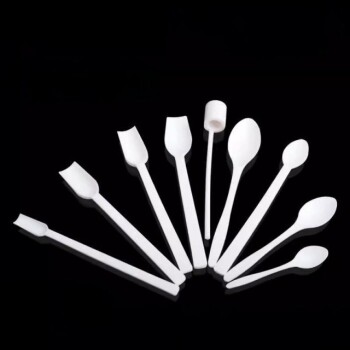
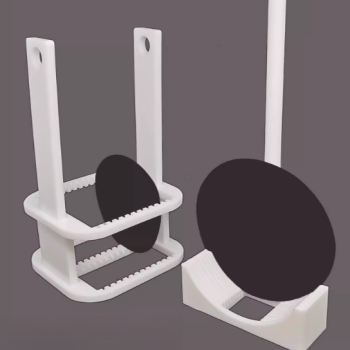
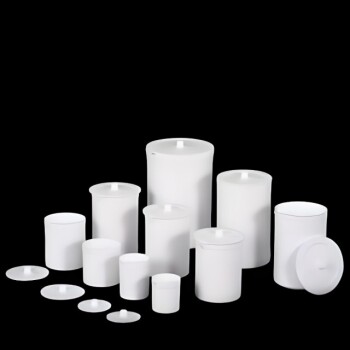
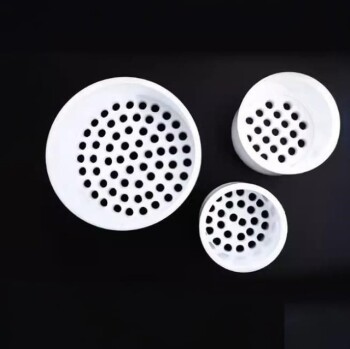
The recommendation to use PTFE (Polytetrafluoroethylene) or high-quality steel molds stems fundamentally from the need to counteract the extremely strong adhesive properties of geopolymer slurries. These specific materials provide superior demolding performance, ensuring that test specimens retain precise dimensions and intact surfaces, which is a prerequisite for accurate mechanical testing.
Core Takeaway The validity of mechanical test data relies heavily on the quality of the specimen's surface and edges. PTFE and high-quality steel are required not just for ease of use, but to prevent geometric defects and stress concentrations that artificially lower the measured strength of the geopolymer.
The Physics of Demolding Geopolymers
Overcoming High Adhesion
Geopolymers possess inherent chemical properties that make them adhere strongly to mold walls during the curing process. If a standard mold material is used, the slurry will bond to the surface, making removal difficult and often destructive.
The Advantage of Low Surface Energy
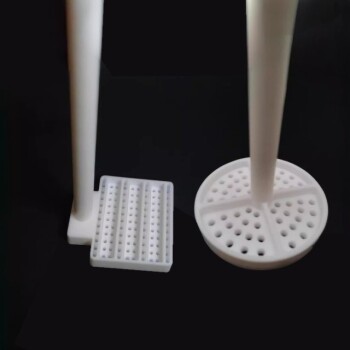
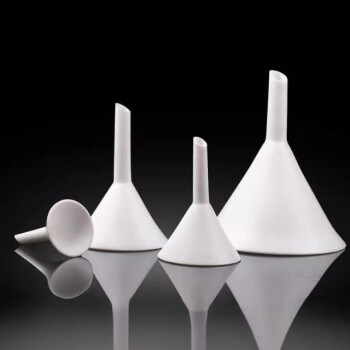
PTFE is ideal because it possesses low surface energy characteristics. This creates a "non-stick" interface that prevents the geopolymer slurry from chemically or physically bonding to the mold, allowing the sample to slide out effortlessly.
The Role of Chemical Inertness
In addition to surface energy, PTFE is chemically inert. This ensures there is no unwanted reaction between the mold and the geopolymer matrix during curing, preserving the chemical composition of the sample's outer layer.
Ensuring Data Integrity
Precision and Dimensional Control
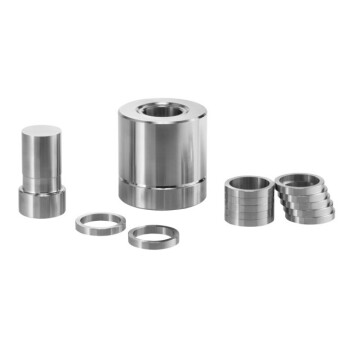
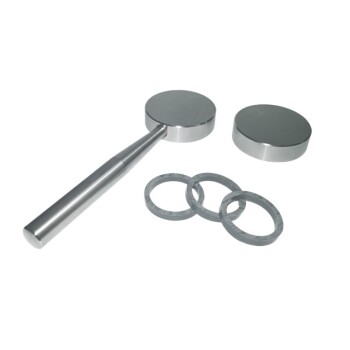
High-quality steel molds are favored when precise dimensional control is the priority. Unlike softer materials, steel provides a rigid boundary that ensures the cured specimen meets exact geometric specifications.
Preserving Surface Smoothness
For a test specimen to yield valid results, its surface must be perfectly smooth. The use of PTFE or high-quality steel prevents the surface tearing or roughness that typically occurs when forcing a sticky material out of a lower-quality mold.
Preventing Stress Concentrations
This is the most critical technical factor. If a specimen sticks to the mold, demolding often causes chipped edges or micro-cracks. These geometric defects act as stress concentrations—points where physical stress gathers—causing the sample to fail prematurely during testing and rendering the data useless.
Common Pitfalls to Avoid
The Risk of Mechanical Damage
Using makeshift or adhesive-prone molds often forces the operator to use excessive force during demolding. This mechanical stress can introduce invisible micro-fractures into the specimen before testing even begins.
Compromised Specimen Edges
Edges are particularly vulnerable during demolding. If the mold material does not release cleanly, the edges will crumble or distort. In compression or flexural testing, compromised edges lead to uneven load distribution and inaccurate strength readings.
Making the Right Choice for Your Goal
When selecting between these recommended materials, consider your specific testing priorities:
- If your primary focus is absolute geometric precision: Prioritize high-quality steel molds to ensure the strictest dimensional control and rigidity.
- If your primary focus is ease of demolding and surface finish: Prioritize PTFE molds to leverage their low surface energy and prevent adhesion without the need for release agents.
Ultimately, the choice of mold material is a quality control measure that protects the scientific validity of your mechanical performance data.
Summary Table:
| Feature | PTFE (Teflon) Molds | High-Quality Steel Molds |
|---|---|---|
| Primary Benefit | Exceptional non-stick release | Superior dimensional precision |
| Surface Energy | Low (prevents chemical bonding) | Moderate (requires release agent) |
| Rigidity | Flexible to semi-rigid | High rigidity (no deformation) |
| Chemical Resistance | Inert to geopolymer slurries | High durability and wear resistance |
| Best Used For | Ease of use & surface smoothness | Strict geometric tolerance testing |
Elevate Your Geopolymer Research with KINTEK Precision Molds
Don't let poor demolding compromise your research data. KINTEK specializes in high-performance laboratory equipment, providing the precision PTFE products, ceramics, and high-quality molds needed to ensure your specimens are free from stress concentrations and geometric defects.
Whether you are performing mechanical testing on geopolymers or advanced material synthesis, our comprehensive range of crushing and milling systems, hydraulic presses, and high-temperature furnaces provides a complete solution for your laboratory workflow.
Ready to achieve superior specimen quality and reliable test results? Contact our technical experts today to find the perfect molding solution for your specific application.
References
- G. Saravanan, S. Kandasamy. Flyash Based Geopolymer Concrete – A State of t he Art Review. DOI: 10.25103/jestr.061.06
This article is also based on technical information from Kintek Solution Knowledge Base .
Related Products
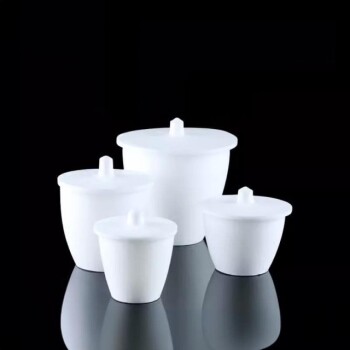
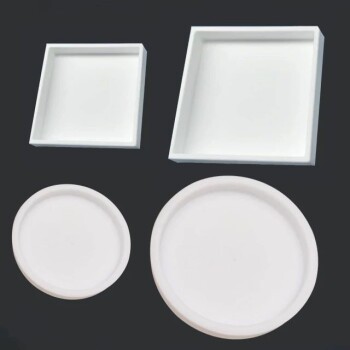
- Custom Machined and Molded PTFE Teflon Parts Manufacturer with PTFE Crucible and Lid
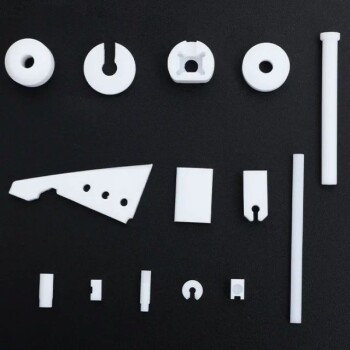
- Custom PTFE Teflon Parts Manufacturer for Non-Standard Insulator Customization
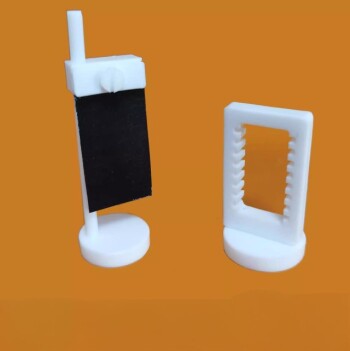
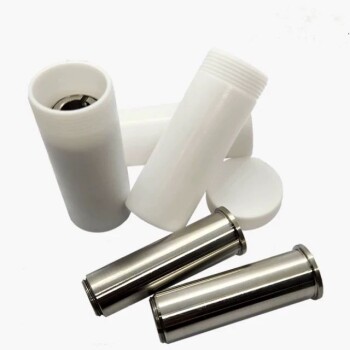
- Custom PTFE Teflon Parts Manufacturer for Hydrothermal Synthesis Reactor Polytetrafluoroethylene Carbon Paper and Carbon Cloth Nano-growth
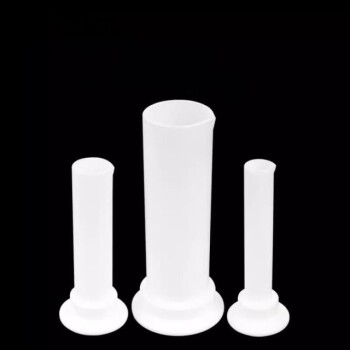
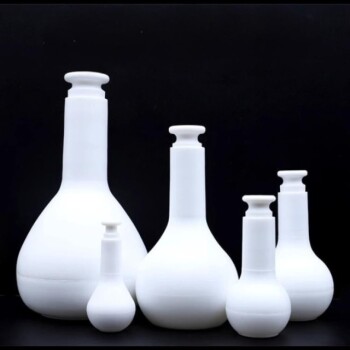
- Custom PTFE Teflon Parts Manufacturer for PTFE Measuring Cylinder 10/50/100ml
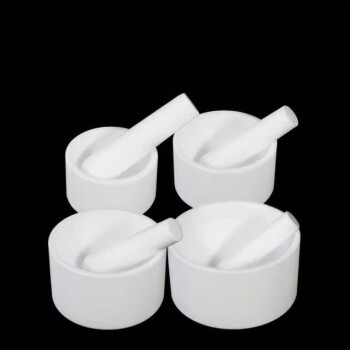
- Custom PTFE Teflon Parts Manufacturer Grinding Bowl
People Also Ask
- Why is a PTFE crucible preferred for plasma etching? Ensure Chemical Integrity and Targeted Action
- What essential consumables are required for laboratory processes? Expert Guide to PTFE, Ceramics, and Crucibles
- Why are PTFE molds used for dental resin specimens? Ensure Pure Samples and Accurate Testing
- What are the advantages of using PTFE molds for preparing PUA hybrid films? Ensure High Purity and Easy Demolding
- What advantages do PTFE molds offer for composite polymer electrolyte casting? Ensure Defect-Free Membrane Fabrication