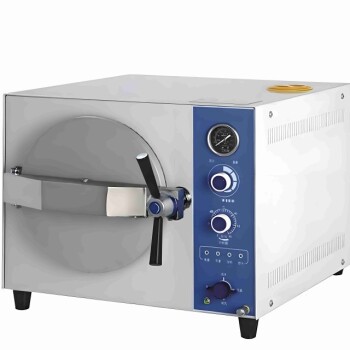
Stainless steel autoclaves are the critical enabler for synthesizing Layered Double Hydroxides (LDHs) because they create a sealed reaction vessel capable of withstanding extreme pressure. This allows solvents to reach a subcritical state—remaining liquid at temperatures well above their atmospheric boiling points—which fundamentally alters the solubility of precursors and the kinetics of the reaction.
Core Takeaway The autoclave is not merely a container; it is a thermodynamic tool that lowers the activation energy of the reaction. By generating high pressure and temperature, it forces the crystallization of 2D nanoflowers and nanosheets with superior structural stability and crystallinity that cannot be achieved under standard atmospheric conditions.
The Physics of the Reaction Environment
The primary function of the stainless steel autoclave is to manipulate the physical state of the solvent.
Achieving Subcritical Conditions
In an open vessel, a solvent is limited by its boiling point. Inside a sealed autoclave, the solvent can be heated far beyond this limit while remaining liquid.
This subcritical state is essential for LDH synthesis because it drastically changes the properties of the solvent, making it more effective at facilitating complex chemical reactions.
Self-Produced Pressure
As the temperature rises within the sealed volume, the system generates its own internal pressure.
This high-pressure environment is the mechanical force that drives the solution to penetrate porous structures and enhances the interaction between reactants.
Impact on Crystallization and Morphology
The physical conditions created by the autoclave directly translate to superior material properties in the final LDH product.
Enhanced Precursor Solubility
The high-pressure and high-temperature conditions significantly increase the solubility of precursors.
Materials that are sparingly soluble at room temperature dissolve fully, creating a homogenous mixture essential for uniform crystal growth.
Reduced Activation Energy
The intense thermal energy and pressure within the vessel reduce the reaction activation energy.
This lowers the thermodynamic barrier, allowing the chemical reaction to proceed more rapidly and efficiently than it would under ambient conditions.
Directed Crystal Growth
The autoclave environment promotes the growth of LDH crystals along specific orientations.
This directional growth is what yields the desirable morphology of 2D layered nanoflowers or nanosheet arrays, which are prized for their high surface area.
High Crystallinity
Hydrothermal synthesis in an autoclave significantly enhances the crystallinity of the material.
Compared to atmospheric synthesis, the high-pressure environment strengthens the chemical bonding between phases, leading to greater structural stability.
Ensuring Purity and Chemical Resistance
While the stainless steel provides the structural strength to hold pressure, the internal configuration ensures chemical purity.
The Role of PTFE Liners
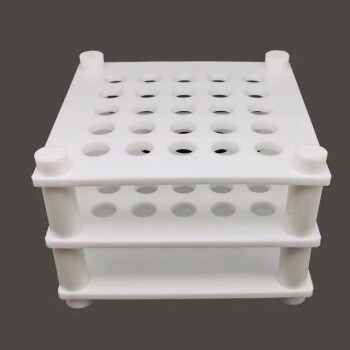
To handle the often alkaline or acidic environments required for synthesis, stainless steel autoclaves are typically fitted with a PTFE (polytetrafluoroethylene) liner.
This liner is chemically inert, preventing the reaction solution from corroding the metal walls of the autoclave.
Preventing Contamination
By isolating the solution from the steel, the liner prevents the leaching of impurity metal ions (such as iron or chromium) into the catalyst.
This ensures the final precursor powder maintains high purity, which is critical for applications requiring precise electrochemical or catalytic performance.
Understanding the Trade-offs
While autoclaves are essential for high-quality LDH synthesis, there are inherent limitations to the method.
The "Black Box" Limitation
Once the autoclave is sealed and heated, the reaction cannot be observed or adjusted in real-time.
You cannot tweak pH or add reagents mid-reaction, meaning the initial stoichiometry must be calculated with extreme precision.
Batch Processing Constraints
Autoclave synthesis is inherently a batch process, not a continuous one.
Scaling up production can be difficult, as large-volume high-pressure vessels present significant safety and engineering challenges compared to small lab-scale reactors.
Safety Hazards
The combination of high heat and high pressure creates a potential energetic hazard.
Equipment failure or improper sealing can lead to ruptures; therefore, the quality of the stainless steel body is non-negotiable for safety.
Making the Right Choice for Your Goal
When designing your synthesis protocol, consider how the autoclave's parameters align with your specific objectives.
- If your primary focus is Morphology Control: Prioritize precise temperature regulation to drive growth along specific orientations for distinct 2D nanoflowers.
- If your primary focus is High Purity: Ensure your autoclave utilizes a high-grade PTFE liner to completely isolate the reaction from the stainless steel shell.
- If your primary focus is Structural Stability: Maximize the pressure capabilities of the vessel to enhance crystallinity and chemical bonding between phases.
The stainless steel autoclave is the bridge between a simple mixture of salts and a highly engineered, crystalline nanomaterial.
Summary Table:
| Feature | Impact on LDH Synthesis | Benefit for Research |
|---|---|---|
| Subcritical State | Solvent heated above boiling point while liquid | Enhanced precursor solubility and kinetics |
| High Pressure | Drives solution into porous structures | Superior crystallinity and phase stability |
| Thermodynamics | Lowers reaction activation energy | Efficient formation of 2D nanoflowers/sheets |
| PTFE Lining | Inert chemical barrier | Prevents metallic contamination and leaching |
| Sealed Design | Self-generated internal pressure | Controlled, directional crystal growth |
Elevate Your Material Synthesis with KINTEK Precision
Unlock the full potential of your 2D nanomaterial research with high-performance synthesis tools from KINTEK. Whether you are developing Layered Double Hydroxides (LDHs) or advanced catalysts, our high-temperature high-pressure reactors and autoclaves provide the precise thermodynamic environment required for superior crystallinity and morphology.
Why choose KINTEK?
- Comprehensive Laboratory Range: From muffle and vacuum furnaces to crushing, milling, and hydraulic pellet presses.
- Specialized Solutions: High-grade PTFE-lined autoclaves, electrolytic cells, and advanced battery research tools.
- Reliability & Purity: Our consumables, including ceramics and crucibles, ensure contamination-free results for critical applications.
Ready to enhance your lab's efficiency and material quality? Contact our technical experts today to find the perfect solution for your synthesis needs!
References
- Xue Li, Zhanhu Guo. Progress of layered double hydroxide-based materials for supercapacitors. DOI: 10.1039/d2qm01346k
This article is also based on technical information from Kintek Solution Knowledge Base .
Related Products
- Stainless High Pressure Autoclave Reactor Laboratory Pressure Reactor
- Mini SS High Pressure Autoclave Reactor for Laboratory Use
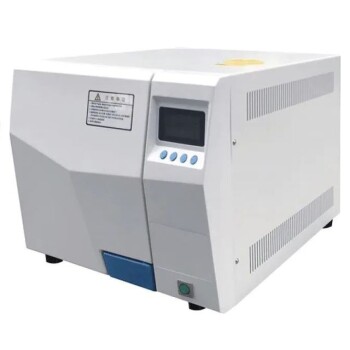
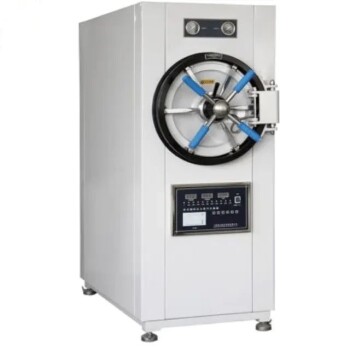
- Desktop Fast Laboratory Autoclave Sterilizer 35L 50L 90L for Lab Use
- Desktop Fast High Pressure Laboratory Autoclave Sterilizer 16L 24L for Lab Use
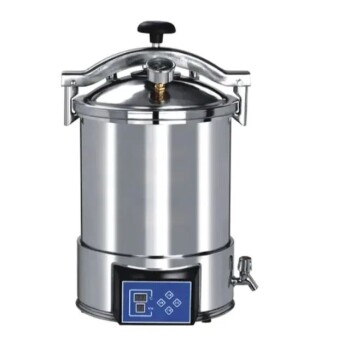
- Portable High Pressure Laboratory Autoclave Steam Sterilizer for Lab Use
People Also Ask
- Why is a laboratory high-pressure reactor used in the hydrothermal synthesis of hydroxyapatite catalysts?
- What role does a laboratory high-pressure reactor play in the leaching process of spent cathode materials? Optimize Recovery
- Why is a laboratory high-pressure reactor necessary for synthesizing fly ash-based zeolite? Achieve Pure Crystallization
- What conditions do laboratory high-pressure reactors provide for HTC? Optimize Your Biochar Production Processes
- What is the function of a high-pressure reactor autoclave? Enhancing Cu/N Co-Doped Carbon Catalyst Synthesis