The design pressure and temperature ranges of a high-pressure autoclave are the defining factors that allow water to transition into subcritical or supercritical states. Without these specific extreme parameters—typically 250–450 °C and 100–350 bar—water cannot attain the low viscosity and low dielectric constants required to dissolve organic biomass and drive the chemical reactions necessary for bio-crude production.
The critical function of these reactors is to maintain a sealed environment where water acts as both a solvent and a reactant. By sustaining specific high-pressure and high-temperature thresholds, the autoclave modifies water’s physical properties to efficiently break down biopolymers into high-energy-density fuels without the need for pre-drying.
The Role of Water Phase Transformation
Achieving Subcritical and Supercritical States
The fundamental purpose of the autoclave's design is to access the "fourth state" of water.
Standard boiling water cannot dissolve complex biomass. However, when the reactor maintains pressures between 100–350 bar and temperatures between 250–450 °C, water enters a subcritical or supercritical state.
Altering Solubility and Viscosity
In these states, the physical properties of water change drastically.
The dielectric constant drops, causing water to behave more like a non-polar organic solvent. Simultaneously, viscosity decreases, allowing better mass transfer. This enables the water to penetrate the biomass structure and dissolve organic compounds that are insoluble under standard atmospheric conditions.
Driving Essential Chemical Reactions
Enabling Dehydration and Decarboxylation
The specific pressure and temperature ranges are not arbitrary; they are the activation triggers for specific reaction pathways.
The reactor must sustain conditions that promote dehydration and decarboxylation. These reactions strip oxygen from the biomass, which is essential for upgrading the feedstock into high-heating-value bio-crude oil rather than low-value char.
Water as Reactant and Catalyst
Under these high-pressure conditions, water exhibits a high ionic product.
It functions not just as a solvent, but also as a reactant and a catalyst. This environment accelerates the hydrolysis of macromolecules, effectively chopping long biopolymer chains into shorter, fuel-grade molecules.
Eliminating Pre-Drying Requirements
The autoclave's ability to maintain high pressure prevents the water from vaporizing into steam, keeping it in a dense, liquid-like phase.
This allows wet biomass to be processed directly. Because the water serves as the reaction medium, the energy-intensive and costly step of pre-drying the feedstock is eliminated entirely.
Understanding the Trade-offs
Material Limitations vs. Process Needs
While higher temperatures and pressures generally increase reaction rates and solubility, they impose severe demands on reactor metallurgy.
Operating at the upper end of the range (near 450 °C and 350 bar) requires expensive, high-grade alloys to prevent mechanical failure or corrosion.
Control vs. Safety
Designing for these extremes introduces significant safety considerations.
The system must be robust enough to handle the saturated steam pressures generated. If the pressure containment fails, the rapid expansion of supercritical fluid poses a catastrophic risk, making the precision of the design range a matter of both chemical efficiency and operational safety.
Making the Right Choice for Your Goal
To select the correct autoclave parameters for your specific application, consider your desired end-product:
- If your primary focus is high-quality Bio-Crude: Prioritize reactors capable of supercritical conditions (>374 °C, >221 bar) to maximize the solubility of organics and minimize char formation.
- If your primary focus is Process Safety and Cost: Target the subcritical range (280–350 °C), which offers a balance of efficient liquefaction with lower mechanical stress on the equipment.
- If your primary focus is Wet Feedstock Efficiency: Ensure the reactor design pressure exceeds the vapor pressure of water at your target temperature to guarantee the solvent remains in the liquid phase.
Ultimately, the autoclave is not just a vessel; it is a thermodynamic tool designed to force water into a state where it can unlock the chemical energy stored in biomass.
Summary Table:
| Feature | Subcritical Range | Supercritical Range | Impact on HTL |
|---|---|---|---|
| Temperature | 250–374 °C | >374 °C | Triggers dehydration & decarboxylation |
| Pressure | <221 bar | >221 bar | Prevents vaporization; keeps water dense |
| Solubility | Moderate | High (Non-polar) | Dissolves organic biomass efficiently |
| Feedstock | Wet biomass | Wet biomass | Eliminates costly pre-drying steps |
| End Product | Bio-crude & Char | High-quality Bio-crude | Increases energy density of fuel |
Unlock High-Efficiency Bio-Crude Production with KINTEK
Maximize your biomass conversion potential with KINTEK’s industry-leading high-temperature high-pressure reactors and autoclaves. Specifically engineered to withstand the extreme 350 bar and 450 °C conditions required for supercritical HTL, our reactors provide the precision and safety your research demands.
From specialized corrosion-resistant alloys to integrated cooling solutions and high-pressure hydraulic presses, KINTEK delivers the comprehensive lab equipment and consumables (including PTFE and ceramics) needed for advanced material science and green energy development.
Ready to scale your hydrothermal liquefaction process?
Contact KINTEK experts today to find the perfect reactor for your application!
References
- Ayaz Ali Shah, Daniele Castello. The Role of Catalysts in Biomass Hydrothermal Liquefaction and Biocrude Upgrading. DOI: 10.3390/pr10020207
This article is also based on technical information from Kintek Solution Knowledge Base .
Related Products
- High Pressure Laboratory Autoclave Reactor for Hydrothermal Synthesis
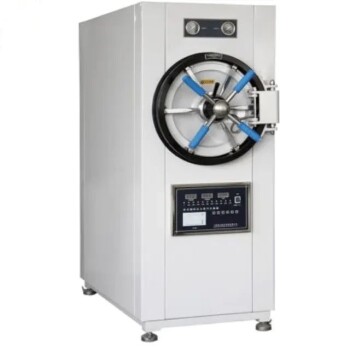
- Laboratory High Pressure Horizontal Autoclave Steam Sterilizer for Lab Use
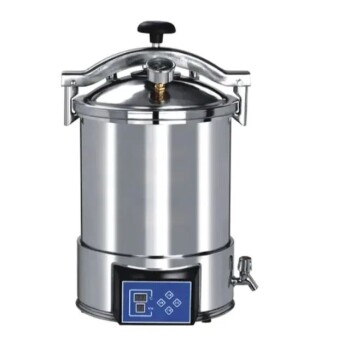
- Portable High Pressure Laboratory Autoclave Steam Sterilizer for Lab Use
- Desktop Fast High Pressure Laboratory Autoclave Sterilizer 16L 24L for Lab Use
- Stainless High Pressure Autoclave Reactor Laboratory Pressure Reactor
People Also Ask
- What role does a high-pressure reactor (autoclave) play in the synthesis of NiCuFe-LDH? Master Hydrothermal Growth
- What Role Does a High-Pressure Reactor or Autoclave Play in HA Catalyst Synthesis? Achieve High Surface Area Materials
- What equipment is required for hydrothermal synthesis of Ga0.25Zn4.67S5.08? Optimize Your Semiconductor Production
- What is the function of a high-pressure reactor in the hydrothermal synthesis of boehmite? Expert Process Insights
- What role does an autoclave play in the synthesis of MnO2 nanofibers? Mastering Hydrothermal Growth