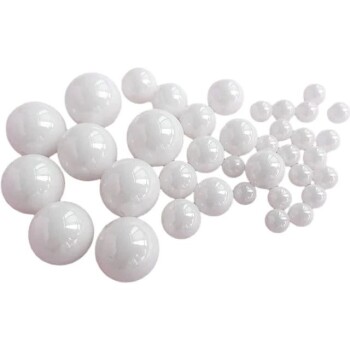
Zirconia grinding media and jars are the standard choice for preparing sulfide solid-state electrolytes because they offer a critical combination of extreme hardness and chemical inertness. Unlike stainless steel, zirconia prevents the introduction of metallic iron impurities during the high-energy milling process, which is essential for preserving the purity and electrochemical performance of these sensitive materials.
Core Takeaway: The aggressive mechanical energy required to synthesize sulfide electrolytes causes standard milling materials to degrade and shed contaminants. Zirconia provides the necessary durability to withstand this process without reacting with the sulfides, ensuring the final product maintains high ionic conductivity and stability.
Ensuring Chemical Purity and Stability
Preventing Metallic Contamination
The primary danger during the ball milling of sulfide electrolytes is the introduction of impurities. When using stainless steel jars or balls, the intense mechanical impact inevitably wears down the equipment, introducing metallic iron into the mixture.
Zirconia is chemically inert, meaning it does not react with the highly active sulfide precursors. By using zirconia, you eliminate the risk of iron contamination, which is known to trigger side reactions and degrade the material's purity.
Avoiding Electrochemical Failure
Metallic contaminants are not just passive impurities; they are detrimental to battery function. Iron particles can create conductive pathways that lead to internal short circuits during battery cycling.
By maintaining a metal-free environment, zirconia ensures the synthesized electrolyte remains an electrical insulator while conducting ions, preserving the integrity of the solid-state battery.
Optimizing the Mechanochemical Reaction
Harnessing High Hardness and Wear Resistance
Sulfide electrolytes are often synthesized via mechanochemical reactions, which require significant mechanical energy transfer. Zirconia possesses exceptional hardness and wear resistance, allowing it to withstand prolonged, high-energy milling without fracturing or degrading.
Improving Reaction Efficiency
The density and hardness of zirconia grinding balls allow for the efficient pulverization of hard particles. This high impact energy can effectively shorten reaction times, ensuring the precursors are fully converted into the final electrolyte phase.
Managing Environmental Sensitivity
Maintaining an Inert Atmosphere
Sulfide electrolytes are notorious for their sensitivity to air and moisture, often degrading via hydrolysis or oxidation if exposed. High-quality zirconia jars are designed to be hermetically sealed, often housing an inert argon gas environment.
This sealing capability is vital for preventing atmospheric moisture from entering the jar during the long milling process, thereby preventing the degradation of the electrolyte.
Reducing Material Adhesion
An often-overlooked benefit of zirconia is its surface interaction with sulfide materials. Zirconia linings reduce the adhesion of sulfide powders to the jar walls compared to metal jars.
This reduction in sticking improves the overall yield of the material and facilitates the cleaning of corrosive sulfide components after the process is complete.
Common Pitfalls: The Stainless Steel Risk
While stainless steel is a common milling medium in other industries, it represents a significant liability in solid-state battery research.
- Conductivity Degradation: The introduction of iron reduces the ionic conductivity of the electrolyte, rendering it less effective.
- False Economics: While steel jars may be cheaper initially, the contamination results in wasted batches and unreliable data, making zirconia the only viable option for high-performance applications.
Making the Right Choice for Your Goal
To ensure the success of your solid-state electrolyte synthesis, align your equipment choice with your specific technical requirements:
- If your primary focus is Electrochemical Stability: Prioritize zirconia to completely eliminate metallic iron impurities that cause short circuits and side reactions.
- If your primary focus is Process Efficiency: Rely on zirconia's high density and hardness to maximize impact energy and reduce milling duration.
- If your primary focus is Yield and Recovery: Utilize zirconia-lined jars to minimize powder adhesion and simplify the recovery of hazardous sulfide materials.
Ultimately, the chemical fragility of sulfide electrolytes demands that the milling media be as robust and inert as the zirconia used to process them.
Summary Table:
| Feature | Zirconia Grinding Media | Stainless Steel Media |
|---|---|---|
| Chemical Purity | Inert; No metallic contamination | High risk of iron impurities |
| Hardness | Superior wear resistance | Moderate wear resistance |
| Battery Safety | Prevents internal short circuits | Metallic particles cause shorts |
| Material Yield | Low powder adhesion | High powder sticking |
| Sealing | Supports hermetic inert gas seals | Standard sealing options |
| Main Benefit | Preserves ionic conductivity | Degrades electrochemical performance |
Elevate Your Solid-State Battery Research with KINTEK
Don't let metallic contamination compromise your electrolyte's ionic conductivity. KINTEK specializes in high-performance laboratory equipment designed for the most sensitive materials. Our premium zirconia grinding balls and jars ensure your sulfide solid-state electrolytes remain pure, stable, and high-performing.
Beyond milling solutions, KINTEK offers a comprehensive range of crushing systems, hydraulic presses, high-temperature furnaces, and battery research tools to support every stage of your material synthesis.
Ready to optimize your lab's output? Contact us today to discuss your specific requirements and find the perfect equipment for your research goals.
Related Products
- Laboratory Jar Ball Mill with Alumina Zirconia Grinding Jar and Balls
- Precision Machined Zirconia Ceramic Ball for Engineering Advanced Fine Ceramics
- Laboratory Jar Mill with Agate Grinding Jar and Balls
- Laboratory Ball Mill Jar Mill with Metal Alloy Grinding Jar and Balls
- Nature Agate Mortar and Pestle for Grinding and Mixing
People Also Ask
- What are the primary functions of using a ball mill for BZCY72 powder? Achieve High Purity and Enhanced Sintering
- In what way does a laboratory ball mill affect material properties when modifying PHBV/pulp fiber composites?
- Why is a laboratory ball mill required for ultra-fine fly ash? Unlock Nano-Scale Adsorption Power
- What is the function of a laboratory ball mill in the preparation of AMMCs? Optimize Dispersion & Grain Refinement
- What is the function of a laboratory ball mill in the pretreatment of waste tire char (WTC)? Optimize Material Reactivity