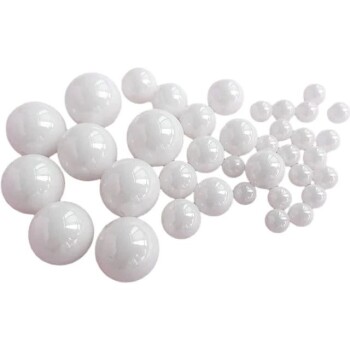
Zirconia (ZrO2) grinding media are the industry standard for this application because they simultaneously solve the problems of contamination and insufficient impact energy. Specifically, for Li2O–LiI–MoO3 electrolytes, zirconia provides the high density required to physically alter the material's structure while remaining chemically inert to prevent fatal metallic impurities.
The synthesis of Li2O–LiI–MoO3 relies on a clean, high-energy environment. Zirconia is preferred because it delivers the kinetic force necessary for amorphization without shedding performance-degrading contaminants like iron, which are common with stainless steel alternatives.
The Critical Role of Purity
Eliminating Metallic Contamination
Standard grinding media, such as stainless steel, inevitably shed microscopic particles during high-energy milling. Zirconia is preferred because it possesses extreme wear resistance, significantly reducing the generation of debris.
Chemical Inertness
Li2O–LiI–MoO3 electrolyte powders are highly sensitive to impurities. Zirconia is chemically inert, meaning it will not react with the precursor materials even under the heat and pressure of milling.
Preventing Electrochemical Failure
Metallic impurities, such as iron or chromium from steel jars, can cause side reactions or internal short circuits in the final battery cell. Using zirconia ensures high product purity, which is directly linked to the electrochemical stability of the synthesized electrolyte.
The Physics of Amorphization
High Density for Kinetic Impact
To create the Li2O–LiI–MoO3 electrolyte, the crystalline raw materials must often be converted into an amorphous (glassy) phase. Zirconia has a high density, which translates into greater kinetic energy when the balls impact the powder.
Facilitating Structural Change
The heavy weight of zirconia balls provides the powerful mechanical force needed to refine the powder and drive the amorphization process. Lighter media would fail to impart sufficient energy to achieve this specific structural transformation.
Understanding the Trade-offs
Zirconia vs. Stainless Steel
While stainless steel is often more durable against fracture and less expensive, it is unsuitable for this application due to contamination risks. The trade-off in using zirconia is accepting a higher material cost and the need for careful handling to avoid brittle fracture, in exchange for the non-negotiable requirement of high purity.
The Risk of Cross-Contamination
Even when using zirconia, cross-contamination can occur if the jars are not cleaned perfectly between batches. Because zirconia is extremely hard, it can trap microscopic residue in surface micro-cracks over time, necessitating rigorous cleaning protocols to maintain its inert benefits.
Making the Right Choice for Your Goal
When setting up your milling protocol for Li2O–LiI–MoO3, consider these specific objectives:
- If your primary focus is Ionic Conductivity: Prioritize zirconia media to strictly eliminate metallic contaminants that impede ion flow and degrade performance.
- If your primary focus is Structural Synthesis: Rely on the high density of zirconia to provide the impact energy required to fully amorphize the crystalline precursors.
Ultimately, zirconia is not just a storage vessel; it is an active tool that enables the mechanical synthesis of high-performance electrolytes through contamination control and kinetic power.
Summary Table:
| Feature | Zirconia (ZrO2) | Stainless Steel | Benefit to Li2O–LiI–MoO3 |
|---|---|---|---|
| Contamination Risk | Extremely Low (Inert) | High (Metallic debris) | Prevents battery short circuits |
| Density/Impact | High (~6.0 g/cm³) | High (~7.8 g/cm³) | Drives essential amorphization |
| Wear Resistance | Superior | Moderate | Maintains electrolyte purity |
| Chemical Stability | Chemically Inert | Reactive | Ensures electrochemical stability |
Optimize Your Electrolyte Synthesis with KINTEK Precision
Elevate your battery research and material processing with KINTEK’s premium zirconia grinding solutions. We understand that for sensitive materials like Li2O–LiI–MoO3, purity and kinetic efficiency are non-negotiable.
Why choose KINTEK?
- High-Performance Milling: Our high-density zirconia jars and balls ensure the mechanical force needed for perfect amorphization.
- Comprehensive Lab Range: From crushing and milling systems to high-temperature furnaces and hydraulic presses, we provide the end-to-end tools required for advanced material synthesis.
- Contamination Control: Beyond milling, we offer high-purity ceramics, crucibles, and PTFE products to maintain the integrity of your samples.
Don't let metallic impurities compromise your ionic conductivity. Contact KINTEK today to find the perfect grinding media and laboratory equipment tailored to your specific research goals!
Related Products
- Laboratory Jar Ball Mill with Alumina Zirconia Grinding Jar and Balls
- Precision Machined Zirconia Ceramic Ball for Engineering Advanced Fine Ceramics
- Laboratory Ball Mill Jar Mill with Metal Alloy Grinding Jar and Balls
- Laboratory Jar Mill with Agate Grinding Jar and Balls
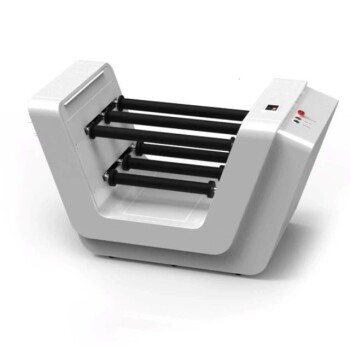
- Laboratory Four-Body Horizontal Jar Mill
People Also Ask
- What are the primary functions of using a ball mill for BZCY72 powder? Achieve High Purity and Enhanced Sintering
- In what way does a laboratory ball mill affect material properties when modifying PHBV/pulp fiber composites?
- Why is a laboratory ball mill required for ultra-fine fly ash? Unlock Nano-Scale Adsorption Power
- What is the function of a laboratory ball mill in the preparation of AMMCs? Optimize Dispersion & Grain Refinement
- What is the function of a laboratory ball mill in the pretreatment of waste tire char (WTC)? Optimize Material Reactivity