The ability to synthesize high-porosity High-Entropy Ceramics without external pore-forming agents stems from the inherent chemistry of the production process itself. Specifically, this is achieved through in-situ reactions, such as carbothermal or borothermal reduction, which generate substantial amounts of gas as a byproduct. These gases act as "natural blowing agents," expanding within the material to create a porous structure simultaneously as the ceramic framework forms.
Core Insight: The porosity in these materials is not an added feature but a fundamental byproduct of the synthesis chemistry. By utilizing the gas released during the reaction (like carbon monoxide), manufacturers can achieve a highly interconnected pore network without the contamination or structural defects caused by traditional "burn-out" agents.
The Mechanism of In-Situ Pore Formation
Harnessing Chemical Byproducts
In traditional ceramic processing, creating a foam usually requires adding a sacrificial material (like polymer beads) and burning it out.
However, in the synthesis of High-Entropy Ceramics via carbothermal or borothermal reduction, the chemical reaction itself drives the process.
As the raw materials react to form the ceramic phase, they release gases, most notably carbon monoxide (CO).
The "Natural Blowing Agent" Effect
These released gases are not waste products in this context; they function as natural blowing agents.
As the gas attempts to escape the solidifying material, it creates voids within the structure.
This occurs during the partial sintering phase, allowing the gas to sculpt a network of interconnected pores before the ceramic fully densifies.
Advantages Over Traditional Methods
Eliminating Contamination
One of the most significant benefits of this method is the removal of external pore-forming agents.
External agents often leave behind carbon residues or impurities after they are burned out, which can degrade the material's performance.
By relying on in-situ gas generation, the resulting ceramic foam maintains a higher chemical purity.
Superior Structural Integrity
The use of external agents can sometimes lead to structural defects, such as micro-cracks or collapsed pores, where the agent was removed.
The in-situ method creates a more uniform pore distribution because the gas generation creates pressure evenly throughout the reacting mass.
This uniformity is critical for achieving the material's defining characteristic: extremely low thermal conductivity.
Understanding the Trade-offs
The Challenge of Process Control
While this method avoids external contaminants, it introduces a challenge in controlling the pore structure.
Because the porosity is tied directly to the chemical reaction rate, the sintering conditions must be managed with extreme precision.
If the reaction occurs too quickly or the sintering temperature is incorrect, the gas may escape too violently or not distinctively enough, potentially affecting the mechanical strength of the foam.
Making the Right Choice for Your Goal
To determine if this synthesis method aligns with your material requirements, consider your primary performance metrics.
- If your primary focus is Thermal Insulation: The in-situ reaction method is superior, as the uniform, interconnected pore network maximizes thermal resistance.
- If your primary focus is Material Purity: This approach is ideal because it eliminates the risk of residue contamination associated with external pore-forming agents.
Ultimately, leveraging the reaction's own byproducts allows for the creation of cleaner, more efficient high-entropy insulators.
Summary Table:
| Feature | In-Situ Reaction Method | Traditional Sintering |
|---|---|---|
| Pore Forming Agent | Natural gas byproducts (CO) | Sacrificial materials (Polymers) |
| Chemical Purity | High (no residues) | Lower (potential carbon ash) |
| Pore Distribution | Uniform & Interconnected | Variable based on agent dispersion |
| Thermal Conductivity | Extremely Low | Standard to High |
| Main Advantage | Structural integrity & Purity | Simpler process control |
Elevate Your Advanced Material Research with KINTEK
Unlock the full potential of High-Entropy Ceramics and advanced insulation materials with KINTEK’s precision-engineered laboratory solutions. Whether you are conducting carbothermal reduction or complex in-situ sintering, our high-performance equipment ensures the thermal accuracy and atmospheric control required for superior material synthesis.
Our specialized portfolio includes:
- High-Temperature Furnaces: Muffle, vacuum, and atmosphere furnaces designed for precise sintering control.
- Advanced Reactors: High-temperature high-pressure reactors and autoclaves for diverse chemical synthesis.
- Material Processing: Crushing, milling systems, and hydraulic presses for optimal powder preparation.
- Specialized Consumables: High-purity ceramics, crucibles, and PTFE products to prevent contamination.
Ready to achieve maximum purity and thermal efficiency in your lab? Contact our technical experts today to find the perfect equipment tailored to your research goals!
References
- Huimin Xiang, Yanchun Zhou. High-entropy ceramics: Present status, challenges, and a look forward. DOI: 10.1007/s40145-021-0477-y
This article is also based on technical information from Kintek Solution Knowledge Base .
Related Products
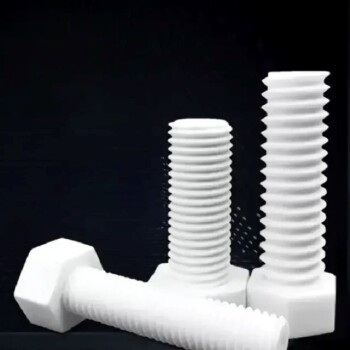
- High Quality Alumina Ceramic Screw for Engineering Advanced Fine Ceramics with High Temperature Resistance and Insulation
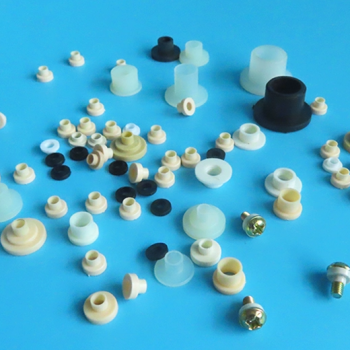
- Zirconia Ceramic Gasket Insulating Engineering Advanced Fine Ceramics
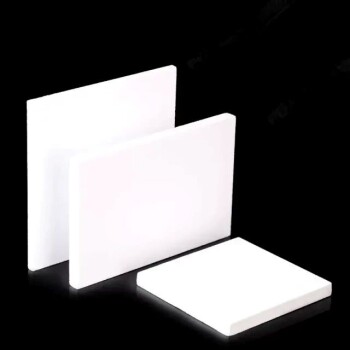
- High Temperature Wear-Resistant Alumina Al2O3 Plate for Engineering Advanced Fine Ceramics
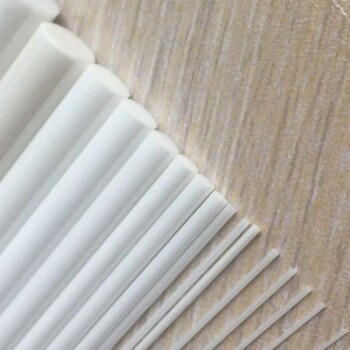
- Engineering Advanced Fine Alumina Al2O3 Ceramic Rod Insulated for Industrial Applications
- Engineering Advanced Fine Ceramics Aluminum Oxide Al2O3 Heat Sink for Insulation
People Also Ask
- How is alumina ceramic made? A Guide to Manufacturing Methods and Material Properties
- What are the methods of high temperature ceramic? Master the 3-Stage Process for Durable Components
- Can ceramics withstand high temperatures? Discover Their Exceptional Heat Resistance
- Can ceramic withstand high temperatures? Discover the Superior Materials for Extreme Heat
- What are the useful applications of ceramics? Unlock High-Performance Solutions for Your Industry