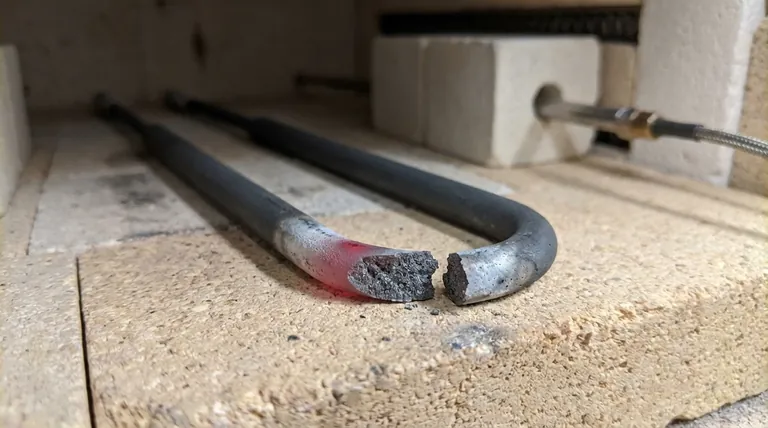
At its core, a heating element fails due to the cumulative stress of its normal operation. The repeated cycle of heating and cooling causes the internal metal wire to expand and contract, which, over thousands of cycles, leads to material fatigue and an eventual break. This process can be dramatically accelerated by overheating or contamination.
A heating element should be viewed as a consumable component, not a permanent one. The very physics that allows it to generate intense heat—forcing electricity through a resistant material—also guarantees its eventual degradation and failure over time.
The Primary Cause: Material Fatigue from Thermal Cycling
The fundamental reason for failure is built into the element's job description. It's a slow, predictable process of wear and tear at a microscopic level.
Expansion and Contraction
Every time you turn on your appliance, the resistive wire inside the element gets extremely hot, causing it to expand. When you turn it off, it cools and shrinks. This constant movement is known as thermal cycling.
Imagine bending a paperclip back and forth. At first, nothing seems to happen, but each bend weakens the metal's internal structure until it eventually snaps. The same principle applies to a heating element, just on a much smaller scale over a longer period.
The Growth of Micro-Fractures
Each cycle of expansion and contraction creates microscopic cracks and voids within the wire's structure. Over time, these tiny imperfections grow and connect, progressively weakening the wire.
Eventually, the wire becomes so thin or compromised at one point that it can no longer carry the electrical current, and it breaks. This is classic metal fatigue, and it often appears to happen for no specific reason.
Oxidation: The Slow Burn
Heating metal in the presence of oxygen causes it to oxidize, forming a thin, brittle layer on its surface. This oxide layer does not conduct electricity as well as the pure metal and is less flexible.
As the element cycles, this brittle layer can flake off, thinning the wire over time. This process exposes fresh metal to further oxidation, creating a self-perpetuating cycle that steadily degrades the element.
Accelerants: What Speeds Up Failure?
While thermal cycling is the root cause, other factors can cause an element to fail prematurely. The most common of these is overheating.
The Vicious Cycle of Hot Spots
A "hot spot" is an area on the element that gets significantly hotter than its surroundings. This can be caused by a thin spot in the wire from oxidation or a manufacturing defect.
Because electrical resistance in these metals increases with temperature, the hot spot's higher heat further increases its resistance. This creates a feedback loop: higher resistance generates more heat, which increases resistance further, causing the spot to rapidly burn out and break.
External Causes of Overheating
Overheating isn't always the element's fault. A failing thermostat that doesn't shut off the power at the correct temperature can force the element to run too hot for too long.
Similarly, in an oven, spills or food debris that fall directly onto the element can act as an insulator. This traps heat in one spot, preventing it from radiating normally and creating a localized hot spot that leads to a quick failure.
Understanding the Trade-offs and External Factors
Not all failures are due to simple wear and tear. External events and inherent quality differences play a significant role in the lifespan of a heating element.
Contamination and Corrosion
Grease splatters, cleaning solutions, and boil-overs can chemically attack the protective outer sheath of the heating element. This corrosion can expose the internal wire to air, leading to rapid oxidation and failure.
Voltage Spikes and Power Surges
A sudden, powerful surge of electricity from the power grid can send a massive jolt of current through the element. If the wire is already weakened by age and fatigue, this surge can be enough to instantly snap it.
Manufacturing Quality
The purity of the alloys used and the precision of the manufacturing process have a direct impact on an element's lifespan. An element with inconsistent wire thickness or impurities in the metal will have built-in weak points, making it prone to premature failure.
Making the Right Choice for Your Goal
Understanding why heating elements break helps you move from reacting to a failure to proactively managing your appliances.
- If your primary focus is extending lifespan: Keep the element and the appliance interior clean to prevent insulating debris, and ensure vents are clear for proper airflow.
- If your primary focus is diagnosing a failure: A gradual failure after years of service is normal wear. A sudden or repeated failure may indicate an external problem like a faulty thermostat or control board.
- If your primary focus is reliable replacement: Invest in a high-quality, OEM-spec replacement part, as its manufacturing consistency is a key predictor of its durability.
By recognizing these failure modes, a broken heating element becomes a predictable maintenance event rather than a frustrating surprise.
Summary Table:
| Cause of Failure | Description | Effect on Element |
|---|---|---|
| Material Fatigue | Repeated heating/cooling cycles cause expansion and contraction. | Creates micro-fractures, leading to eventual breakage. |
| Oxidation | Metal reacts with oxygen at high temperatures. | Forms a brittle layer that flakes off, thinning the wire. |
| Hot Spots | Localized overheating from thin spots or debris. | Creates a feedback loop of heat and resistance, causing rapid burnout. |
| Contamination | Exposure to grease, cleaning agents, or spills. | Corrodes the protective sheath, accelerating internal oxidation. |
Is a broken heating element disrupting your lab's workflow?
Understanding the cause of failure is the first step. Choosing the right, high-quality replacement is what ensures long-term reliability and consistent performance for your critical applications.
KINTEK specializes in durable, high-performance lab equipment and consumables. We provide reliable heating elements and the expert support to keep your laboratory running smoothly.
Contact us today to find the perfect replacement and get expert advice on maintaining your equipment.
Get in touch with our specialists now →
Visual Guide

Related Products
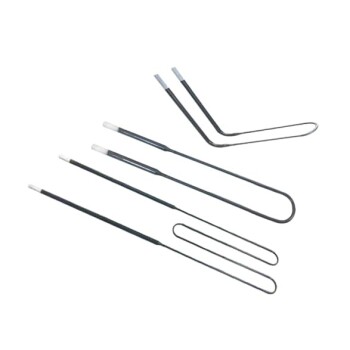
- Molybdenum Disilicide (MoSi2) Thermal Elements Electric Furnace Heating Element
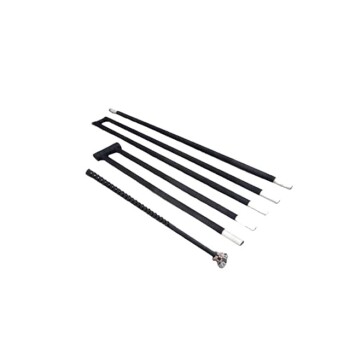
- Silicon Carbide SiC Thermal Heating Elements for Electric Furnace
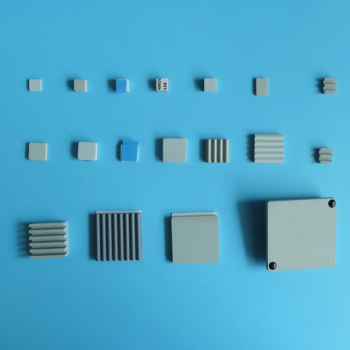
- Silicon Carbide (SIC) Ceramic Sheet Flat Corrugated Heat Sink for Engineering Advanced Fine Ceramics
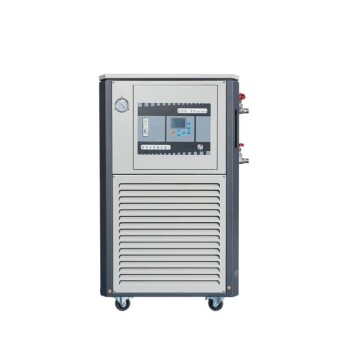
- 10L Heating Chilling Circulator Cooling Water Bath Circulator for High and Low Temperature Constant Temperature Reaction
- 50L Heating Chilling Circulator Cooling Water Bath Circulator for High and Low Temperature Constant Temperature Reaction
People Also Ask
- What are the properties of molybdenum heating element? Choose the Right Type for Your Furnace Atmosphere
- What is the temperature range of a MoSi2 heating element? Unlock 1900°C Performance for Your Lab
- What is MoSi2 heating element? A High-Temp Solution with Self-Healing Power
- How long does a heating element last on the furnace? Understand Lifespan & Safety for Your System
- What is the temperature range of molybdenum disilicide heating elements? Choose the Right Grade for Your High-Temp Needs