A 70°C conditioning treatment is a critical thermal activation step required to establish a viable physical interface within assembled solid-state batteries prior to electrical testing. By maintaining this constant high temperature, you soften the linear PEO polymer electrolyte, enabling it to physically deform and mold itself to the cathode's surface geometry.
Without this thermal conditioning, the solid-state interface remains comprised of imperfect physical contact points. The heat treatment induces plastic deformation in the electrolyte, allowing it to flow into microscopic irregularities, effectively "healing" the interface and minimizing resistance.
The Physical Challenge: Interfacial Roughness
The Reality of Composite Cathodes
While battery components may appear flat to the naked eye, composite cathodes possess microscopically rough surfaces.
Upon initial assembly, a solid-state electrolyte sits atop these irregularities, much like a rigid board resting on uneven ground.
The Problem of Voids
This roughness creates interfacial voids—microscopic gaps where the electrolyte and cathode do not touch.
These voids act as insulators, blocking ionic pathways and creating distinct points of high resistance that hinder battery performance.
The Mechanism: Thermal Plastic Deformation
Softening the PEO Polymer
The conditioning treatment targets the physical properties of the linear PEO (Polyethylene Oxide) polymer electrolyte.
At 70°C, this specific polymer softens significantly, transitioning from a rigid solid to a malleable state capable of plastic deformation.
Achieving Conformal Contact
Once softened, the electrolyte can be pressed into the microscopic valleys of the rough cathode surface.
This process creates seamless conformal contact, ensuring that the electrolyte effectively "wets" the solid surface of the cathode without the use of liquids.
The Self-Healing Effect
The primary reference highlights a self-healing effect triggered by this environment.
The heat allows the polymer chains to rearrange, effectively repairing physical disconnects formed during the assembly process.
Performance Outcomes and Reliability
Reducing Contact Resistance
By eliminating interfacial voids, the total active surface area between the cathode and electrolyte increases dramatically.
This directly results in a significant reduction in interfacial contact resistance, facilitating efficient ion transport during testing.
Preventing Structural Failure
The bond formed during conditioning is mechanical as well as ionic.
Proper conditioning ensures adhesion that prevents delamination—the physical separation of layers—during the stress of repeated battery cycling.
Understanding the Trade-offs
The Risk of Insufficient Conditioning
If this step is skipped or performed at too low a temperature, the electrolyte remains rigid.
This leaves voids intact, resulting in artificially high resistance readings that do not accurately reflect the battery's true electrochemical potential.
The Necessity of Precision
Using precise temperature control equipment is non-negotiable.
Fluctuating temperatures may fail to induce uniform softening, leading to inconsistent contact patches and unpredictable current density hotspots.
Making the Right Choice for Your Testing Protocol
To ensure your data is valid and your cells are durable, consider the specific goals of your conditioning phase:
- If your primary focus is lowering impedance: Ensure the 70°C treatment is held long enough for the PEO to fully soften and flow into all cathode surface irregularities.
- If your primary focus is cycle life: Prioritize this step to establish the mechanical adhesion necessary to prevent delamination during long-term charge/discharge cycles.
This thermal treatment is not merely a setup step; it is the final manufacturing process required to complete the cell's internal structure.
Summary Table:
| Feature | Impact of 70°C Conditioning Treatment |
|---|---|
| PEO Electrolyte State | Transitions from rigid solid to malleable for plastic deformation |
| Interfacial Contact | Eliminates voids; creates seamless conformal contact with cathode |
| Electrical Effect | Significantly reduces interfacial contact resistance |
| Mechanical Benefit | Improves adhesion to prevent delamination during cycling |
| Data Integrity | Ensures testing reflects true electrochemical potential, not assembly flaws |
Elevate Your Battery Research with KINTEK Precision
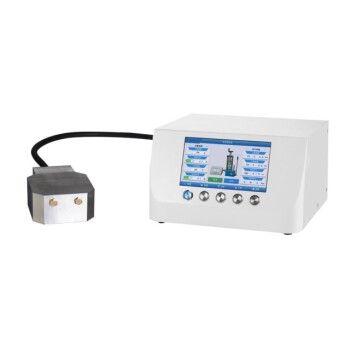
Achieving the perfect 70°C conditioning environment requires absolute thermal stability. KINTEK specializes in high-performance laboratory equipment designed for the rigorous demands of energy storage research. From vacuum ovens and high-temperature furnaces for thermal activation to hydraulic presses (pellet, hot, isostatic) for cell assembly, and dedicated battery research tools and consumables, we provide the precision you need to eliminate interfacial resistance and ensure data reliability.
Ready to optimize your solid-state battery testing protocol? Contact our experts today to discover how KINTEK’s comprehensive range of temperature control solutions and material processing systems can empower your next breakthrough.
Related Products
- Laboratory Small Constant Temperature Heated Magnetic Stirrer Heater and Stirrer
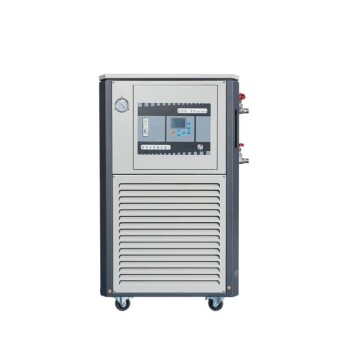
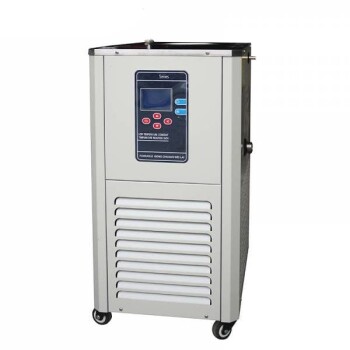
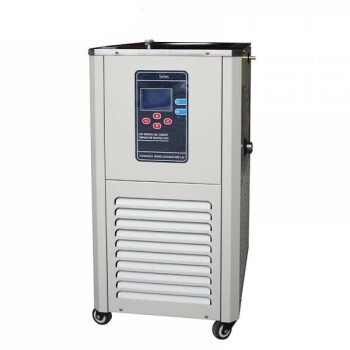
- 5L Heating Chilling Circulator Cooling Water Bath Circulator for High and Low Temperature Constant Temperature Reaction
- 10L Heating Chilling Circulator Cooling Water Bath Circulator for High and Low Temperature Constant Temperature Reaction
- 50L Heating Chilling Circulator Cooling Water Bath Circulator for High and Low Temperature Constant Temperature Reaction
- 100L Heating Chilling Circulator Cooling Water Bath Circulator for High and Low Temperature Constant Temperature Reaction
People Also Ask
- What role does a magnetic stirrer with heating play in ZnO nanoparticle synthesis? Precision Control for Quality Results
- What role does a constant temperature heating magnetic stirrer play in MFC-HAp synthesis? Achieve Material Homogeneity
- What is the function of a laboratory magnetic stirrer in Ni–Cr–P electrodeposition? Optimize Ion Transport & Coating
- Why is a laboratory magnetic stirrer required for benzoic acid esters? Boost Reaction Speed & Yield with High RPM
- What role does a laboratory magnetic stirrer play in TiO2 and TiO2-Ag sol preparation? Master Chemical Kinetics