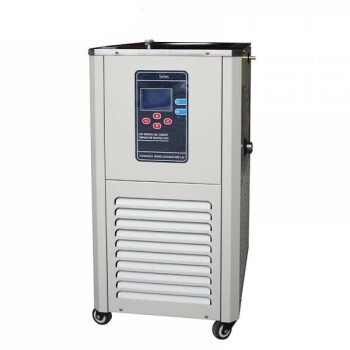
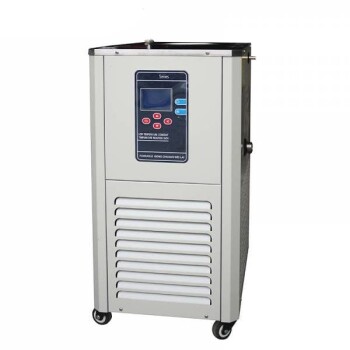
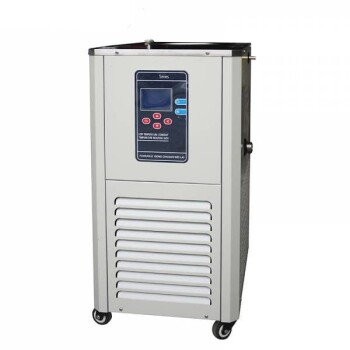
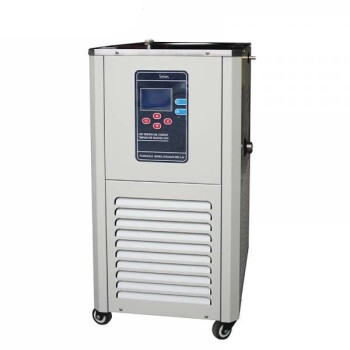
A constant temperature water bath is strictly required to maintain a precise, non-fluctuating thermal environment that mimics actual oil well formation conditions. In static corrosion experiments with J55 steel, even minor deviations from specific temperatures—such as 60 °C—can drastically alter the chemical behavior of the metal. Without this stability, the experimental data will not accurately reflect how the steel withstands corrosion in an industrial setting.
The reliability of corrosion data hinges on thermal stability. Because corrosion is an electrochemical process, a constant temperature water bath eliminates variables that would otherwise distort reaction kinetics, ionic activity, and inhibitor performance.
The Critical Role of Thermal Stability
To understand why a water bath is non-negotiable, you must look beyond simple heating. You are controlling the fundamental physics of the reaction.
Controlling Reaction Kinetics
Corrosion is a kinetic process, meaning its rate is governed by temperature. Metal corrosion kinetics are highly sensitive; a fluctuation of just a few degrees can significantly accelerate or decelerate the degradation of J55 steel. A water bath maintains the temperature within a tight margin, ensuring that the observed corrosion rate is a result of the environment, not a result of thermal error.
Managing Ionic Activity
Corrosion involves the movement and reaction of ions in a solution. Ionic activity increases with temperature, altering how aggressive the corrosive medium acts toward the steel. By locking the temperature, you ensure the chemical aggressiveness of the solution remains constant throughout the test duration.
Regulating Molecular Motion
Temperature fluctuations directly influence the thermal motion of molecules within the test solution. Inconsistent molecular motion leads to inconsistent collision rates between corrosive agents and the steel surface. Precise thermal control ensures that the frequency of these interactions remains uniform.
Simulating Industrial Reality
The goal of testing J55 steel is often to predict its lifespan in real-world applications, such as oil wells.
Replicating Formation Temperatures
Oil well formations often operate at elevated, specific temperatures, such as 60 °C. To validate if J55 steel is suitable for a specific well, the experiment must simulate that exact environment. The water bath allows researchers to dial in these specific industrial conditions with high fidelity.
Ensuring Data Validity
If the temperature drifts, the resulting data becomes "distorted." Distorted data breaks the correlation between the lab results and the actual industrial operating conditions. This renders the experiment useless for making engineering decisions about material selection.
The Impact on Corrosion Inhibitors
Many J55 experiments involve testing inhibitors—chemicals added to slow down corrosion. These are exceptionally temperature-sensitive.
Stabilizing Adsorption Behavior
Inhibitors work by adsorbing (sticking) onto the surface of the J55 steel to form a protective film. This adsorption behavior changes drastically with temperature; heat can either help the film form or cause it to detach. A stable bath ensures you are testing the inhibitor's chemical efficiency, not its reaction to a changing thermostat.
Adsorption-Desorption Equilibrium
There is a constant balance between inhibitor molecules sticking to the steel and falling off (desorption). Temperature fluctuations shift this adsorption-desorption equilibrium, leading to inconsistent protection. Strict temperature control allows you to observe the true effectiveness of the inhibitor's protective layer.
Common Pitfalls to Avoid
While a constant temperature water bath is essential, relying on it requires an understanding of its limitations and the rigorous demands of thermodynamic calculation.
The "Drift" Error in Thermodynamics
Calculating core parameters like activation energy (Ea) and enthalpy change (ΔH) requires data collection across specific gradients (e.g., 298 K to 338 K). If the bath allows temperature drift during these steps, the mathematical calculation of these parameters will be mathematically incorrect. The precision of the bath directly correlates to the accuracy of your thermodynamic modeling.
Evaporation and Concentration
At higher temperatures (approaching 60 °C or higher), water in the bath—and potentially the sample—can evaporate. While the bath controls temperature, users must ensure that evaporation does not alter the concentration of the corrosive solution. Changes in solution volume can inadvertently shift the chemical parameters, even if the temperature remains perfect.
Making the Right Choice for Your Experiment
The degree of precision you need from your water bath depends on the ultimate goal of your J55 steel analysis.
- If your primary focus is Industrial Simulation: Prioritize a bath capable of holding steady at specific formation temperatures (e.g., 60 °C) for long durations to mimic field conditions.
- If your primary focus is Thermodynamic Analysis: Ensure your bath allows for precise, stepwise temperature adjustments between 298 K and 338 K to accurately calculate activation energy ($E_a$).
Ultimately, the water bath is not just a heater; it is a standardization tool that transforms variable chemical reactions into reproducible engineering data.
Summary Table:
| Factor | Impact on J55 Corrosion Experiment | Role of Water Bath |
|---|---|---|
| Reaction Kinetics | Temperature shifts alter degradation speed | Maintains uniform corrosion rates |
| Ionic Activity | Fluctuations change solution aggressiveness | Stabilizes chemical interactions |
| Inhibitor Performance | Affects adsorption/desorption equilibrium | Ensures consistent protective film formation |
| Thermodynamics | Inaccurate temps distort Ea and ΔH calculations | Provides precision for activation energy data |
| Formation Simulation | Mimics specific oil well conditions (e.g., 60°C) | Replicates industrial reality with high fidelity |
Optimize Your Corrosion Research with KINTEK
Precision is the backbone of reliable metallurgical data. At KINTEK, we specialize in high-performance laboratory equipment designed to meet the rigorous demands of material science. From constant temperature water baths and cooling solutions to advanced high-temperature furnaces, autoclaves, and crushing systems, our tools ensure your J55 steel experiments yield reproducible, industry-standard results.
Ready to elevate your lab's precision? Contact us today to explore our full range of laboratory solutions!
References
- Wangdong Li, Hai Wang. Investigation of the Corrosion Characteristics and Corrosion Inhibitor Action on J55 Steel in Produced Water. DOI: 10.3390/su15043355
This article is also based on technical information from Kintek Solution Knowledge Base .
Related Products
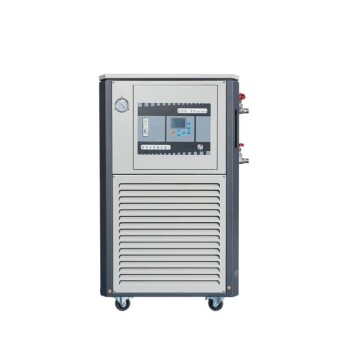
- High Temperature Constant Temperature Heating Circulator Water Bath Chiller Circulator for Reaction Bath
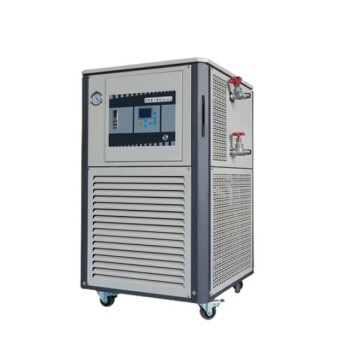
- 50L Chiller Water Bath Cooling Circulator Low Temperature Constant Temperature Reaction Bath
- 10L Chilling Circulator Cooling Water Bath Low Temperature Constant Temperature Reaction Bath
- 30L Chiller Water Bath Cooling Circulator Low Temperature Constant Temperature Reaction Bath
- 40L Chiller Water Bath Cooling Circulator Low Temperature Constant Temperature Reaction Bath
People Also Ask
- What is the necessity of a circulating water bath in chlorate production? Optimize Yield & Purity with Precision
- How do constant temperature circulators impact weight-loss immersion tests? Ensure Precision in Corrosion Analysis
- How does a constant temperature circulator support the leaching reaction of gold scrap? Optimize Gold Recovery Results
- Why is a constant temperature water bath used for precursor storage in CVD? Achieve Stable Nanocrystalline SiC Deposition
- Why is a high-precision constant temperature water bath necessary for anaerobic digestion? Ensure Success at 37±0.02°C