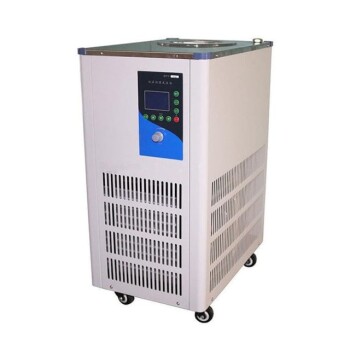
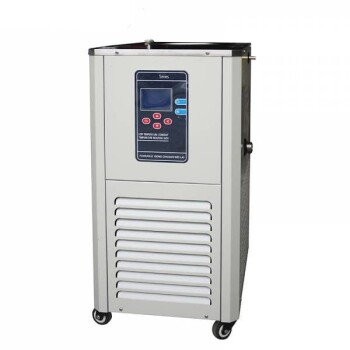
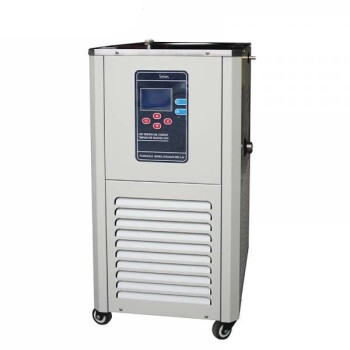
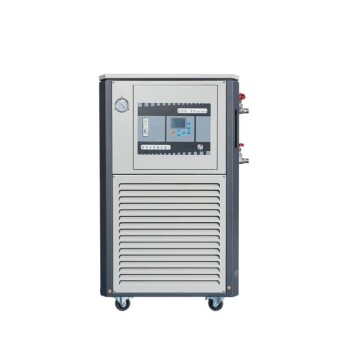
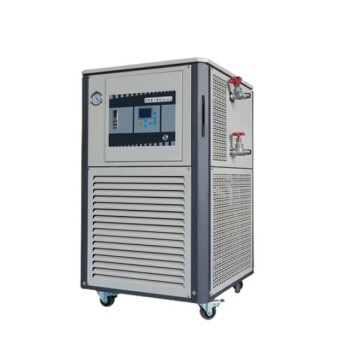
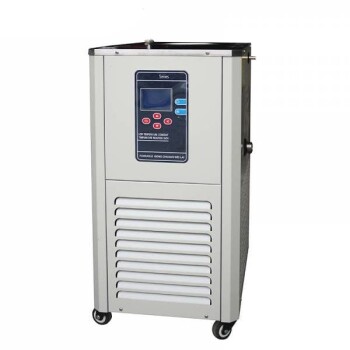
Precise thermal isolation is critical for experimental accuracy. A dedicated cooling circulation system is required to maintain the feeding pipe at a specifically low temperature, typically around 150 °C. This prevents the coal sample from undergoing premature pyrolysis while it is still in the transport line, ensuring the reaction occurs only when intended.
The cooling system guarantees that volatiles are released exclusively via instantaneous heating within the fluidized bed. This preserves the integrity of the experimental "Time Zero" and ensures accurate measurement of component concentrations.
Preventing Pre-Reaction Breakdown
Inhibiting Early Volatile Release
In a volatile-char reaction system, feed pipes often traverse zones near the reactor's high heat source. Without intervention, conductive or radiative heat would raise the sample's temperature before it enters the reactor.
The cooling circulation system actively clamps the pipe temperature at a safe threshold, such as 150 °C. This temperature is sufficient to transport the material but low enough to stop the chemical breakdown of coal.
Defining the Reaction Boundary
The scientific goal is to physically and thermally separate the transport phase from the reaction phase.
By suppressing temperature in the pipe, you ensure the sample remains chemically stable until it crosses the threshold into the reaction zone.
Establishing Experimental Consistency
Controlled Instantaneous Heating
Valid experiments often depend on subjecting the sample to a specific, rapid heating rate.
The cooling system facilitates instantaneous heating by ensuring the sample enters the fluidized bed cold. This creates a sharp thermal shock rather than a gradual, undefined warm-up.
Maintaining a Precise Time Baseline
Researchers rely on a distinct starting point to measure reaction kinetics.
Preventing pre-reaction guarantees that the chemical timeline starts exactly when the sample hits the fluidized bed. This consistency is vital for comparing data across different experimental runs.
Common Pitfalls to Avoid
The Risk of Inadequate Cooling
If the circulation system is underpowered or the temperature setpoint is too high, premature pyrolysis will occur.
This results in volatiles being lost inside the pipe rather than in the reactor. Consequently, the measured component concentrations will be artificially low, rendering the mass balance data invalid.
Complexity vs. Accuracy
Implementing a circulation system adds mechanical complexity and maintenance requirements to the reactor design.
However, omitting this system introduces uncontrolled variables regarding when and where the reaction actually begins. For high-precision volatile-char studies, the trade-off strongly favors the inclusion of cooling.
Ensuring Data Integrity in Your Setup
To ensure your data reflects the reaction kinetics and not transport artifacts, consider these priorities:
- If your primary focus is kinetic analysis: Verify the cooling system maintains the pipe well below the pyrolysis threshold to establish a distinct, accurate "Time Zero."
- If your primary focus is mass balance: Monitor pipe temperatures strictly to prevent the loss of volatiles in the feed line, which would skew concentration calculations.
Precise thermal control in the feeding system is the only way to distinguish true reaction data from transport artifacts.
Summary Table:
| Feature | Purpose in Feeding System | Impact on Experimental Data |
|---|---|---|
| Thermal Isolation | Maintains pipe temp around 150°C | Prevents premature volatile release |
| Instantaneous Heating | Ensures cold sample entry to fluidized bed | Creates sharp, defined thermal shock |
| Reaction Boundary | Separates transport from reaction zone | Establishes a precise "Time Zero" |
| Consistency | Eliminates uncontrolled pre-heating | Validates mass balance and kinetics |
Optimize Your Reaction Kinetics with KINTEK Precision
Don't let transport artifacts compromise your research integrity. KINTEK specializes in advanced laboratory solutions, including high-performance high-temperature furnaces, high-pressure reactors, and customized cooling solutions designed to maintain rigorous thermal boundaries. Whether you are conducting coal pyrolysis or complex chemical synthesis, our equipment ensures your experimental "Time Zero" is accurate and repeatable.
Ready to upgrade your laboratory setup? Contact our technical experts today to discover how our comprehensive range of furnaces, reactors, and thermal control systems can enhance your data precision.
References
- Changshuai Du, Penghua Qiu. Importance of volatile AAEM species to char reactivity during volatile–char interactions. DOI: 10.1039/c6ra27485d
This article is also based on technical information from Kintek Solution Knowledge Base .
Related Products
- 80L Chilling Circulator Cooling Water Circulator for Water Bath Cooling and Low Temperature Constant Temperature Reaction Bath
- 100L Chilling Circulator Cooling Water Circulator for Low Temperature Constant Temperature Reaction Bath Water Bath Cooling
- 5L Chilling Circulator Cooling Water Bath Circulator for Low Temperature Constant Temperature Reaction Bath
- 20L Chiller Water Bath Cooling Circulator Low Temperature Constant Temperature Reaction Bath
- 10L Chilling Circulator Cooling Water Bath Low Temperature Constant Temperature Reaction Bath
People Also Ask
- Why is a circulating water chiller required for Prussian Blue nanoparticles? Ensure Stability & Batch Reproducibility
- What function does a circulating cooling chiller perform during the gas adsorption isotherm testing of nanoporous carbon?
- What is the purpose of a cooling circulation water bath system in electrochemical experiments? Enhance Lab Precision
- What is the necessity of a circulating water bath in chlorate production? Optimize Yield & Purity with Precision
- For which types of substances are water baths and chillers considered ideal? Essential Care for Sensitive Samples