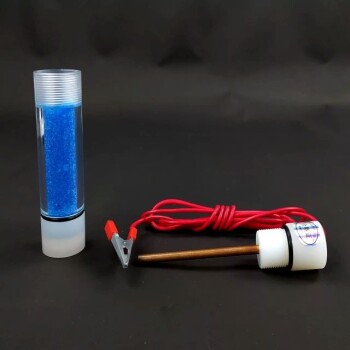
A Gas Diffusion Electrode (GDE) is the critical structural component that enables the Oxygen Reduction Reaction (ORR) by creating a stable three-phase interface. It solves the fundamental physical limitation of reactant delivery by allowing gaseous oxygen to reach the active electrode surface rapidly, ensuring the Electrochemical Oxygen Generator (EOG) operates efficiently even under high demand.
Standard submerged electrodes cannot supply oxygen fast enough to sustain the reduction reaction at high power. The GDE bridges this gap by maximizing mass transfer efficiency, mitigating concentration polarization, and allowing the generator to maintain high current densities without stalling.
The Mechanics of Efficient Mass Transfer
The primary challenge in an Electrochemical Oxygen Generator is bringing reactants together. The GDE is engineered to solve the specific physical hurdles of the Oxygen Reduction Reaction.
Creating the Three-Phase Interface
For the ORR to occur, three elements must meet simultaneously: the solid electrode catalyst, the liquid electrolyte, and the gaseous oxygen.
A GDE provides a porous structure that allows these distinct phases to interact. It acts as a bridge, managing the boundary where gas, liquid, and solid converge to facilitate the electrochemical reaction.
Overcoming Solubility Limits
Oxygen has low solubility in liquid electrolytes. Relying solely on dissolved oxygen to diffuse through the liquid to a standard electrode is far too slow for practical applications.
The GDE bypasses this bottleneck by delivering oxygen directly from the gas phase to the reaction site. This direct delivery system significantly enhances mass transfer efficiency compared to traditional submerged electrodes.
Performance Stability at High Output
Beyond simple connectivity, the GDE is essential for maintaining system stability when the generator is pushed to higher performance levels.
Mitigating Concentration Polarization
"Concentration polarization" occurs when the electrode consumes reactants faster than they can be replenished. This leads to a sharp drop in voltage and efficiency.
By ensuring a continuous, rapid supply of oxygen, the GDE prevents this depletion zone from forming. This keeps the reaction kinetics fast and the voltage stable.
Enabling High Current Densities
To generate oxygen at a useful commercial or industrial rate, the system must run at high current densities. This requires a massive flux of reactants to the catalyst surface.
The GDE is the only electrode architecture capable of sustaining these high rates. It ensures that the output rate of the oxygen generator is limited by the reaction kinetics, not by the physical lack of fuel.
Understanding the Engineering Challenges
While the GDE is essential for high performance, it introduces specific complexities that must be managed to ensure longevity.
The Risk of Electrode Flooding
The GDE relies on open pores to transport gas. If the liquid electrolyte permeates these pores too deeply (flooding), it blocks the gas supply.
This effectively destroys the three-phase interface, reverting the system to the inefficient performance of a standard submerged electrode.
Balancing Porosity and Conductivity
The electrode must be porous enough to let gas in, but conductive enough to move electrons efficiently.
Designing a GDE requires a precise trade-off between maximizing surface area for the reaction and maintaining structural and electrical integrity.
Making the Right Choice for Your Goal
When evaluating the design of an Electrochemical Oxygen Generator, the inclusion of a GDE dictates the system's potential capabilities.
- If your primary focus is High-Volume Output: A high-quality GDE is non-negotiable, as it is the only way to sustain the mass transfer rates required for high current density operations.
- If your primary focus is System Stability: Prioritize GDE designs with advanced hydrophobicity management to prevent concentration polarization and avoid pore flooding over long operational cycles.
The GDE transforms the ORR from a diffusion-limited crawl into a rapid, sustainable process capable of meeting industrial demands.
Summary Table:
| Feature | Standard Submerged Electrode | Gas Diffusion Electrode (GDE) |
|---|---|---|
| Reactant Delivery | Relies on dissolved oxygen (slow) | Direct gas-phase delivery (fast) |
| Interface Type | Two-phase (Solid/Liquid) | Three-phase (Solid/Liquid/Gas) |
| Mass Transfer | Limited by low O2 solubility | High efficiency mass transfer |
| Current Density | Low; prone to stalling | High; sustains commercial rates |
| Primary Risk | Concentration polarization | Pore flooding |
Elevate Your Electrochemical Research with KINTEK
Maximize the efficiency of your Electrochemical Oxygen Generators (EOG) and Oxygen Reduction Reactions (ORR) with KINTEK’s precision-engineered solutions. Whether you are optimizing electrolytic cells and electrodes, advancing battery research, or managing high-performance crushing and milling systems, KINTEK provides the high-quality laboratory equipment and consumables you need to succeed.
From high-temperature furnaces and vacuum systems to specialized PTFE products and ceramics, our portfolio is designed to meet the rigorous demands of industrial and laboratory applications.
Ready to overcome mass transfer bottlenecks?
Contact KINTEK Experts Today to discover how our advanced electrode technologies and laboratory tools can enhance your system stability and output.
References
- Yu Zhang, Yuen Wu. New perspective crosslinking electrochemistry and other research fields: beyond electrochemical reactors. DOI: 10.1039/d3sc06983d
This article is also based on technical information from Kintek Solution Knowledge Base .
Related Products
- Electrolytic Electrochemical Cell Gas Diffusion Liquid Flow Reaction Cell
- Glassy Carbon Electrochemical Electrode
- Reference Electrode Calomel Silver Chloride Mercury Sulfate for Laboratory Use
- Rotating Platinum Disk Electrode for Electrochemical Applications
- CF KF Flange Vacuum Electrode Feedthrough Lead Sealing Assembly for Vacuum Systems
People Also Ask
- How does the design of an electrochemical electrolytic cell influence the coating uniformity? Optimize Your Catalysts
- What is the correct shutdown and disassembly procedure after an experiment? Ensure Safety and Protect Your Equipment
- Why are electrolytic cells essential in titanium production? Powering Circular Efficiency and Cost Savings
- What is galvanic cell or electrolytic cell? Unlock the Secrets of Electrochemical Power
- What are the three essential components that comprise an electrolytic cell? Key Elements of Chemical Synthesis