High-efficiency cooling is critical because electrolysis generates significant heat concentrated directly at the electrode surface. Without rapid heat removal, this localized thermal energy creates severe temperature gradients between the electrode and the bulk fluid. This is particularly vital in reactions involving high current densities, where the risk of altering reaction outcomes due to thermal spikes is highest.
Core Insight: In electro-organic synthesis, temperature control is not merely a safety feature; it is a quality control mechanism. A high-efficiency cooling system prevents local overheating at the electrode interface, thereby preserving reaction selectivity, preventing organic decomposition, and ensuring the purity and specific particle size of the final product.
The Physics of Heat Generation in Electrolysis
Localized Heat Concentration
Unlike external heating, electrolysis does not warm the fluid uniformly. Heat is generated and concentrated specifically at the electrode surface.
This creates a "hot spot" right where the chemical transformation occurs. A high-efficiency circulation system is required to scour this heat away immediately, preventing a temperature spike at the critical reaction interface.
The Impact of Current Density
The necessity for cooling scales with production speed. Reactions involving high current densities output significantly more thermal energy.
Standard cooling methods often fail to dissipate this intense, localized energy quickly enough. Only high-efficiency circulation can match the rate of heat generation to maintain equilibrium.
Consequences of Poor Thermal Management
Altered Chemical Pathways
Temperature dictates chemical kinetics and selectivity. If the electrode surface overheats, it can trigger unwanted side reactions.
This alters the intended chemical reaction pathway. Instead of producing the target molecule, the system may produce byproducts, significantly lowering yield.
Thermal Decomposition
Organic materials are often thermally sensitive. Localized overheating can cause the thermal decomposition of organic matter.
This degrades the reactants before they react or destroys the product immediately after it forms. Cooling ensures the environment remains below the threshold for thermal degradation.
Impact on Product Quality
Controlling Particle Size
For applications like nanomaterial synthesis, temperature stability is non-negotiable. Variations in heat affect nucleation and crystal growth rates.
Precise temperature control ensures the particle size distribution remains consistent. Without it, the final material may suffer from irregular sizing, affecting its physical properties.
Ensuring Material Purity
Purity is a direct result of maintaining the optimal reaction environment. By keeping the electrodes and electrolyte within a tight temperature range, you minimize impurities.
High-efficiency cooling eliminates the thermal variables that lead to inconsistent product quality.
Understanding the Trade-offs
System Complexity and Cost
Implementing a high-efficiency circulation system adds engineering complexity to the flow reactor. It invariably increases the initial capital investment and requires more robust maintenance protocols than passive cooling solutions.
Energy Consumption
Active, high-efficiency cooling requires its own energy input. Engineers must calculate the energy balance to ensuring the cooling costs do not negate the efficiency gains from the electro-organic synthesis itself.
Making the Right Choice for Your Goal
To optimize your flow reactor setup, you must align your thermal management strategy with your specific synthesis parameters.
- If your primary focus is high purity: Prioritize cooling systems that target the electrode interface to prevent decomposition byproducts.
- If your primary focus is nanomaterial synthesis: Ensure your system offers precise, tight-tolerance temperature control to guarantee uniform particle size distribution.
Effective thermal management is the difference between a volatile experiment and a reproducible, high-quality production process.
Summary Table:
| Key Challenge | Impact of Inefficient Cooling | Benefit of High-Efficiency Cooling |
|---|---|---|
| Electrode Heat | Localized hot spots & thermal spikes | Immediate heat dissipation at the interface |
| Current Density | Uncontrolled thermal energy buildup | Maintained thermal equilibrium during scaling |
| Reaction Pathway | Side reactions and reduced selectivity | Precise kinetic control and high product yield |
| Material Stability | Thermal decomposition of organics | Protection of temperature-sensitive reactants |
| Product Quality | Irregular particle size distribution | Consistent nucleation and material purity |
Elevate Your Synthesis Precision with KINTEK
Thermal instability shouldn't compromise your research or production yields. At KINTEK, we specialize in providing advanced laboratory solutions tailored for the most demanding electrochemical applications. From high-performance cooling solutions (ULT freezers, cold traps, and freeze dryers) to specialized electrolytic cells and electrodes, we ensure your flow reactors maintain the perfect thermal profile.
Whether you are focusing on nanomaterial synthesis requiring strict particle size control or high-purity organic synthesis, our comprehensive portfolio—including high-temperature reactors, battery research tools, and PTFE consumables—is designed to meet your rigorous standards.
Ready to optimize your thermal management? Contact KINTEK today to discover how our high-efficiency cooling and laboratory equipment can enhance your process reliability and product quality.
References
- G. Malathi G. Malathi, M.I. Niyas Ahamed. Extensive Research and Evaluation of Electro-Organic Synthesis of Nanomaterials. DOI: 10.13005/ojc/380511
This article is also based on technical information from Kintek Solution Knowledge Base .
Related Products
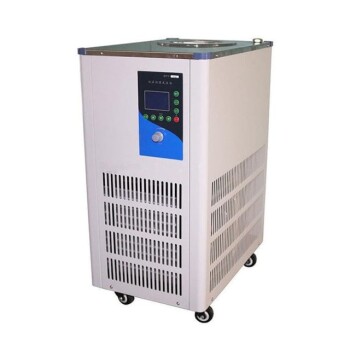
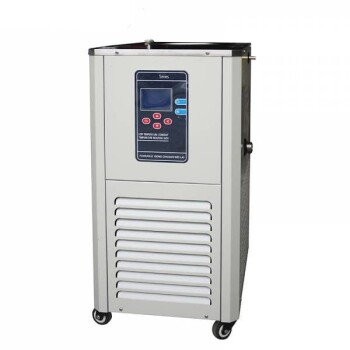
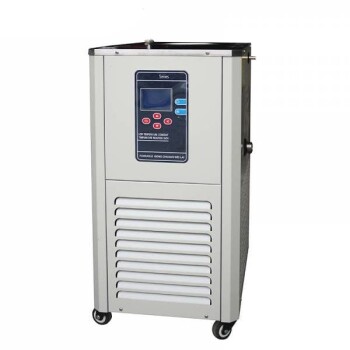
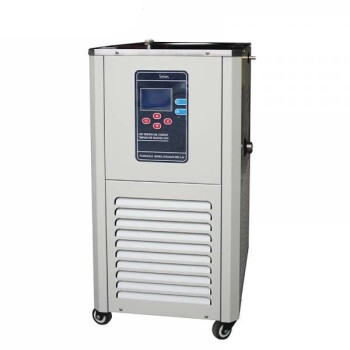
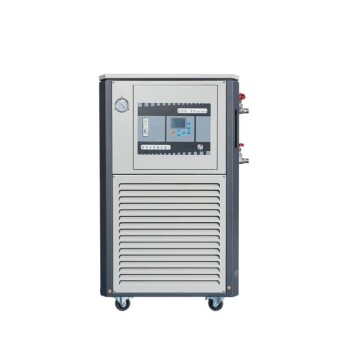
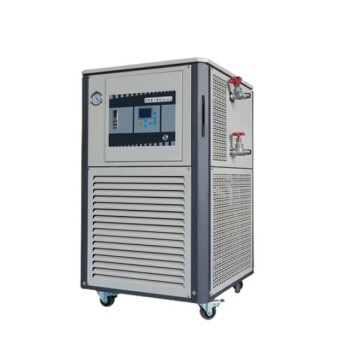
- 100L Chilling Circulator Cooling Water Circulator for Low Temperature Constant Temperature Reaction Bath Water Bath Cooling
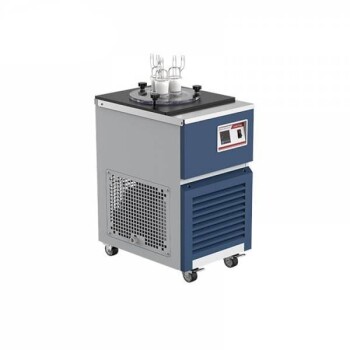
- 5L Chilling Circulator Cooling Water Bath Circulator for Low Temperature Constant Temperature Reaction Bath
- 80L Chilling Circulator Cooling Water Circulator for Water Bath Cooling and Low Temperature Constant Temperature Reaction Bath
- 10L Chilling Circulator Cooling Water Bath Low Temperature Constant Temperature Reaction Bath
- 40L Chiller Water Bath Cooling Circulator Low Temperature Constant Temperature Reaction Bath
People Also Ask
- What function does a circulating cooling chiller perform during the gas adsorption isotherm testing of nanoporous carbon?
- Why is a circulating water chiller required for Prussian Blue nanoparticles? Ensure Stability & Batch Reproducibility
- What is the purpose of a cooling circulation water bath system in electrochemical experiments? Enhance Lab Precision
- How does a constant temperature circulator support the leaching reaction of gold scrap? Optimize Gold Recovery Results
- How do constant temperature circulators impact weight-loss immersion tests? Ensure Precision in Corrosion Analysis