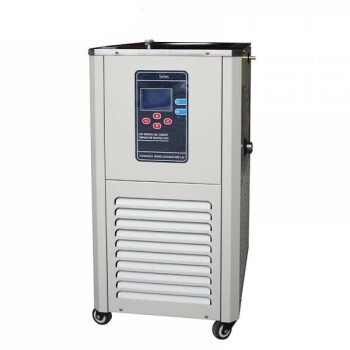
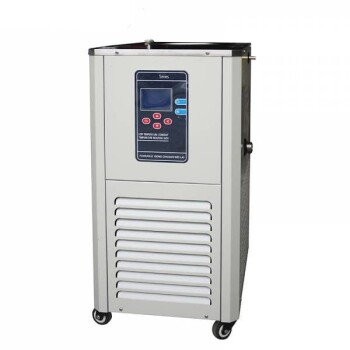
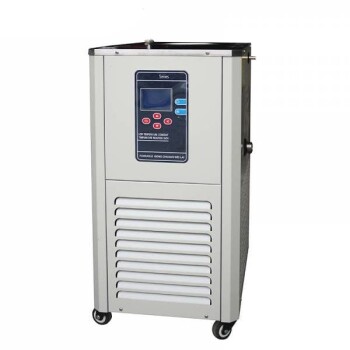
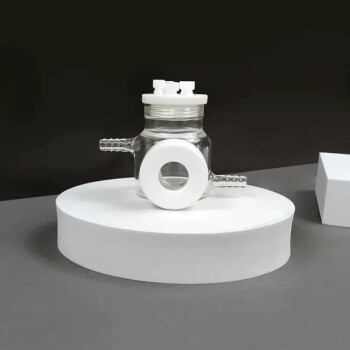
Precision is the defining factor in chemical oxidation quality. A high-precision constant temperature chemical bath reactor is required to maintain a strictly stable environment for reactive mixtures like sodium dichromate and sulfuric acid. This stability allows for the controlled oxidation needed to generate a specific nanoporous structure on stainless steel surfaces.
The reactor's ability to lock in precise temperature and immersion times is what enables the formation of a chromium-manganese-iron oxide layer, directly resulting in solar absorptance levels of up to 80%.
The Mechanics of Controlled Oxidation
Stabilizing the Chemical Mixture
To create a composite oxide absorption layer, you must utilize specific chemical mixtures, such as sodium dichromate and sulfuric acid.
These components require a highly stable thermal environment to function correctly. A high-precision reactor prevents temperature fluctuations that could destabilize the mixture or alter the reaction rate unpredictably.
Engineering the Surface Structure
The primary goal of this process is to generate a chromium-manganese-iron oxide layer on the stainless steel substrate.
This is not merely a coating; it is a chemical modification of the surface. The reactor facilitates controlled oxidation, which is necessary to sculpt a specific nanoporous structure rather than a chaotic or flat layer.
Translating Structure to Performance
Achieving High Absorptance
The physical geometry of the surface layer directly dictates its optical properties.
By accurately controlling the immersion time and reaction temperature, the reactor ensures the nanoporous structure is optimized for light capture. This precise control is the key to achieving initial solar absorptance levels of up to 80%.
The Risks of Imprecision
Structural Inconsistency
If the temperature within the bath fluctuates, the rate of oxidation becomes variable across the stainless steel surface.
This leads to uneven layer formation, preventing the development of the uniform nanoporous structure required for high performance.
Compromised Optical Efficiency
Without the specific nanoporous architecture, the material loses its ability to trap solar energy effectively.
A lack of precision results in an absorption layer that falls significantly below the 80% absorptance benchmark, rendering the process inefficient for solar applications.
Ensuring Process Reliability
If your primary focus is Surface Uniformity: Ensure the reactor maintains constant temperature to guarantee the even formation of the chromium-manganese-iron oxide layer across the entire substrate.
If your primary focus is Optical Performance: Strictly regulate immersion time to develop the specific nanoporous geometry required to hit 80% solar absorptance.
Precise thermal control is not just a feature; it is the fundamental requirement for engineering high-efficiency solar absorption surfaces.
Summary Table:
| Parameter | Influence on Composite Oxide Layer |
|---|---|
| Temperature Stability | Prevents mixture destabilization; ensures uniform nanoporous structure formation. |
| Immersion Time | Controls oxidation depth to achieve the target 80% solar absorptance level. |
| Chemical Environment | Facilitates controlled reaction between sodium dichromate and sulfuric acid. |
| Surface Geometry | Enables the engineering of chromium-manganese-iron oxide layers over flat surfaces. |
Elevate Your Advanced Material Research with KINTEK
Precision is the difference between a failed coating and an 80% efficient solar absorption layer. At KINTEK, we specialize in the high-performance laboratory equipment required for delicate chemical synthesis and surface engineering.
Whether you are developing solar absorption layers, conducting battery research, or performing complex chemical oxidation, our comprehensive range of high-precision constant temperature chemical bath reactors, electrolytic cells, and advanced heating solutions provides the stability your work demands. From high-temperature muffle furnaces to specialized ceramics and crucibles, we supply the tools that turn scientific theory into high-performance reality.
Ready to achieve superior surface uniformity and optical efficiency? Contact KINTEK today for a tailored solution and let our experts support your next breakthrough.
References
- M. Shiva Prasad, S. Sakthivel. Cost Efficient Receiver Tube Technology for Eco-Friendly Concentrated Solar Thermal Applications. DOI: 10.5281/zenodo.3300604
This article is also based on technical information from Kintek Solution Knowledge Base .
Related Products
- 10L Chilling Circulator Cooling Water Bath Low Temperature Constant Temperature Reaction Bath
- 5L Chilling Circulator Cooling Water Bath Circulator for Low Temperature Constant Temperature Reaction Bath
- 30L Chiller Water Bath Cooling Circulator Low Temperature Constant Temperature Reaction Bath
- High Temperature Constant Temperature Heating Circulator Water Bath Chiller Circulator for Reaction Bath
- Multifunctional Electrolytic Electrochemical Cell Water Bath Single Layer Double Layer
People Also Ask
- What is the necessity of a circulating water bath in chlorate production? Optimize Yield & Purity with Precision
- What is the role of low-temperature cooling baths in bio-oil collection? Maximize Yield Through Rapid Quenching
- What is the purpose of a cooling circulation water bath system in electrochemical experiments? Enhance Lab Precision
- Why is a circulating water chiller required for Prussian Blue nanoparticles? Ensure Stability & Batch Reproducibility
- What function does a circulating cooling chiller perform during the gas adsorption isotherm testing of nanoporous carbon?