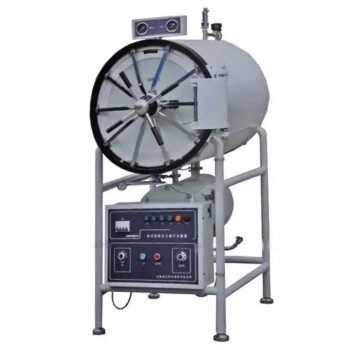
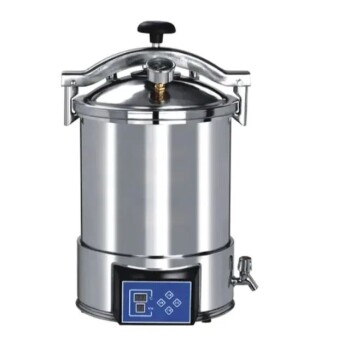
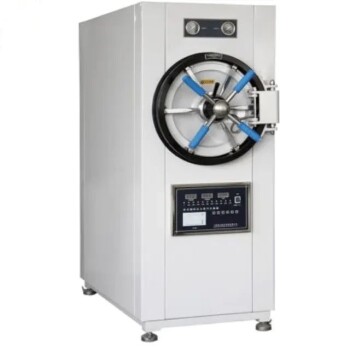
The high-pressure hydrothermal autoclave is essential because it creates a controlled, closed environment that enables subcritical water to act as a potent reaction medium.
This specific environment facilitates the hydrothermal carbonization (HTC) of walnut shells, triggering critical dehydration and decarboxylation reactions at relatively low temperatures. By maintaining high pressure, the autoclave forces water and chemical reagents into the dense lignocellulosic structure of the biomass, converting it into a stable "hydrochar" that is uniquely primed for subsequent activation into high-performance porous carbon.
Core Takeaway: The autoclave provides the necessary pressure to keep water in a liquid state above its boiling point, allowing it to penetrate and chemically restructure walnut shells into stable, functional-group-rich hydrochar. This step is the foundational requirement for creating porous carbon with superior physical and chemical properties.
The Mechanics of Subcritical Water
Operating Beyond the Boiling Point
In a standard open environment, water escapes as steam at 100°C, limiting its chemical reactivity. The closed high-pressure environment of an autoclave allows the temperature to exceed the boiling point while maintaining water in a liquid, subcritical state.
Water as a Reactive Medium
Under these conditions, subcritical water serves as both a solvent and a catalyst. It triggers dehydration and decarboxylation reactions, which are necessary to strip oxygen and hydrogen from the walnut shell biomass, effectively increasing the carbon concentration.
Thermal Degradation and Nucleation
The high pressure promotes the thermal degradation and polymerization of organic matter. This process is vital for the nucleation of carbon, allowing the raw material to transform into a solid carbonaceous precursor with stable properties.
Breaking Down the Lignocellulosic Matrix
Penetrating Dense Biomass
Walnut shells possess a complex, rigid lignocellulosic structure that is naturally resistant to decomposition. The high-pressure environment forces chemical reagents and water deep into the fibers, ensuring a uniform reaction that cannot be achieved at atmospheric pressure.
Degrading Lignin and Hemicellulose
The autoclave environment accelerates the hydrolysis of hemicellulose and the dissolution of lignin, which acts as the "glue" holding the biomass together. Breaking these bonds is critical for exposing the cellulose components for further processing.
Disrupting Crystalline Regions
High pressure helps disrupt the crystalline regions of cellulose. By breaking down these highly ordered structures, the autoclave increases the overall reactivity of the biomass, making it significantly easier to activate and turn into a porous structure later.
Preparing for High-Performance Activation
Enrichment of Functional Groups
Hydrothermal pre-treatment results in a hydrochar that is rich in oxygen-containing functional groups. These groups serve as active sites during the subsequent activation process, leading to a more efficient development of pore networks.
Inducing Morphological Order
The autoclave environment can promote the self-assembly of carbon precursors. This is particularly important if the goal is to create ordered mesoporous structures or specific spherical morphologies that enhance the final material's surface area.
Improving Chemical Stability
By converting raw walnut shells into hydrothermal carbon, the process creates a material with more stable physical and chemical properties. This stability ensures that the material responds predictably to high-temperature activation, reducing the risk of structural collapse.
Understanding the Trade-offs
Energy Intensity and Batch Limits
While highly effective, hydrothermal autoclaves are typically batch-processing tools. This can limit throughput compared to continuous processing methods and requires significant energy to maintain high temperatures and pressures over extended reaction times.
Equipment Maintenance and Safety
Operating at high pressures (often exceeding 4 bar) requires specialized, corrosion-resistant equipment, such as PTFE-lined stainless steel reactors. Failure to maintain seals or liners can lead to inconsistent results or equipment failure due to the acidic nature of the biomass degradation products.
Process Sensitivity
The final quality of the porous carbon is highly sensitive to the residence time and pressure within the autoclave. Small deviations in temperature can lead to incomplete carbonization or the excessive loss of volatile matter, which may diminish the final pore volume.
How to Apply This to Your Project
Recommendations for Material Development
- If your primary focus is maximizing surface area: Ensure the autoclave pre-treatment is sufficient to fully degrade lignin, as this exposes the maximum number of sites for pore creation during activation.
- If your primary focus is surface chemistry: Use lower hydrothermal temperatures (around 200°C) to preserve a higher density of functional groups on the hydrochar surface.
- If your primary focus is structural regularity: Utilize the autoclave to promote the self-assembly of precursors around template agents, ensuring a more ordered mesoporous channel structure.
- If your primary focus is processing efficiency: Optimize the pressure settings to accelerate reagent penetration, which can potentially reduce the required reaction time for dense walnut shells.
By mastering the high-pressure hydrothermal environment, you transform raw agricultural waste into a sophisticated, high-value carbon precursor ready for advanced engineering applications.
Summary Table:
| Key Process Aspect | Autoclave Function | Benefit to Final Porous Carbon |
|---|---|---|
| Subcritical Water | Maintains liquid state above 100°C | Potent medium for dehydration & decarboxylation |
| Matrix Penetration | Forces reagents into dense lignocellulose | Ensures uniform reaction and efficient lignin degradation |
| Chemical Priming | Enriches oxygen-containing functional groups | Creates more active sites for high-surface-area activation |
| Structural Stability | Promotes carbon nucleation & self-assembly | Prevents structural collapse during high-temp processing |
Elevate Your Carbon Research with KINTEK Precision
Transforming agricultural waste into high-performance materials requires precision and reliability. KINTEK specializes in advanced laboratory equipment designed to meet the rigorous demands of hydrothermal carbonization and material synthesis.
Whether you are optimizing walnut shell pre-treatment or developing next-generation energy storage, our high-performance high-temperature high-pressure reactors and autoclaves provide the controlled environments necessary for superior hydrochar production. Our comprehensive portfolio also includes:
- High-Temperature Furnaces: Muffle, tube, and vacuum furnaces for precise activation.
- Material Preparation: Crushing, milling systems, and hydraulic presses for pelletizing.
- Consumables: Corrosion-resistant PTFE products, ceramics, and crucibles.
Contact a KINTEK expert today to discover how our specialized tools can enhance your lab's efficiency and ensure reproducible, high-quality results for your research projects.
References
- Fikret Müge Alptekin, Melih Soner Çeliktaş. <i>Miscanthus</i>-Derived Energy Storage System Material Production. DOI: 10.1021/acsomega.3c00024
This article is also based on technical information from Kintek Solution Knowledge Base .
Related Products
- High Pressure Laboratory Autoclave Reactor for Hydrothermal Synthesis
- Mini SS High Pressure Autoclave Reactor for Laboratory Use
- Stainless High Pressure Autoclave Reactor Laboratory Pressure Reactor
- Laboratory High Pressure Horizontal Autoclave Steam Sterilizer for Lab Use
- Customizable High Pressure Reactors for Advanced Scientific and Industrial Applications
People Also Ask
- What role does a high-pressure reactor (autoclave) play in the synthesis of NiCuFe-LDH? Master Hydrothermal Growth
- What Role Does a High-Pressure Reactor or Autoclave Play in HA Catalyst Synthesis? Achieve High Surface Area Materials
- What equipment is required for hydrothermal synthesis of Ga0.25Zn4.67S5.08? Optimize Your Semiconductor Production
- What is the function of a high-pressure reactor in the hydrothermal synthesis of boehmite? Expert Process Insights
- What role does an autoclave play in the synthesis of MnO2 nanofibers? Mastering Hydrothermal Growth