A high-pressure laboratory reactor is the definitive tool for corrosion research because it is the only equipment capable of safely replicating the extreme physical and chemical conditions found in deep-sea and subterranean oilfields. By generating controlled pressures (up to 8 MPa) and elevated temperatures (such as 80 °C), these reactors force mixed gases like carbon dioxide into solution, creating a realistic corrosive environment that standard atmospheric testing cannot reproduce.
Core Takeaway: Reliable service assessment of materials like stainless steel requires testing under actual downhole partial pressures. High-pressure reactors bridge the gap between theoretical modeling and field reality, revealing how pressure accelerates pitting and alters corrosion product formation.
Replicating the Downhole Environment
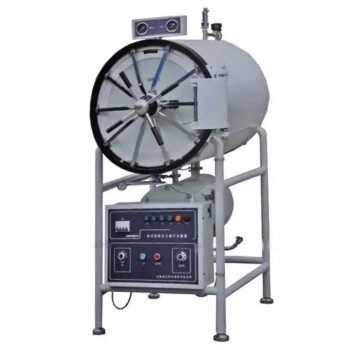
To understand material failure in oilfields, researchers must move beyond standard beaker tests. The high-pressure reactor, often called an autoclave, serves as a simulator for the complex thermodynamics of formation water.
Precise Control of Temperature and Pressure
The reactor allows for the simultaneous application of high temperatures and pressures. Primary simulation parameters often target 80 °C and pressures up to 8 MPa.
This combination is critical because temperature and pressure are interdependent in corrosion kinetics. They dictate the phase behavior of fluids and the mechanical stress exerted on the material surface.
Management of Mixed Gas Atmospheres
Oilfield environments rarely consist of pure water; they are rich in dissolved gases. The reactor accommodates mixed gas environments, including synthetic air and carbon dioxide ($CO_2$).
Under high pressure, the partial pressure of $CO_2$ increases significantly. This drives more gas into the liquid phase, drastically altering the pH and chemical aggressiveness of the formation water.
Simulation of Deep-Sea Conditions
Beyond subterranean formations, these reactors simulate extreme deep-sea conditions. The equipment ensures that the interaction between the metal surface and the corrosive media mimics the hydrostatic pressures found at significant ocean depths.
Accelerating and Observing Corrosion Mechanisms
The primary value of these reactors lies in their ability to accelerate and isolate specific corrosion phenomena that occur over long periods in the field.
Acceleration of Pitting Depth
Pressure does not just increase the general corrosion rate; it changes the type of corrosion. High-pressure environments have been observed to accelerate the depth of pitting.
Pitting is a localized and dangerous form of corrosion. By simulating this acceleration, researchers can predict how quickly a pipe wall might be penetrated in actual service.
Altered Product Formation
The chemical composition and physical structure of corrosion products (rust or scale) change under pressure.
The reactor allows researchers to observe how these products form on stainless steel surfaces. Understanding whether a protective oxide layer forms—or fails—under 8 MPa is vital for assessing material longevity.
Understanding the Trade-offs
While high-pressure reactors are essential for accuracy, they introduce specific complexities that researchers must manage.
Complexity of Sealing and Safety
Unlike atmospheric testing, high-pressure experiments require rigorous safety protocols. The reactor must possess reliable sealing structures to contain mixed gases and corrosive fluids at high temperatures.
Any failure in the seal not only compromises the experiment by altering the pressure but also poses a safety risk. This requires the use of high-strength, corrosion-resistant alloys for the reactor body itself.
Static vs. Dynamic Limitations
Standard high-pressure reactors typically provide a static environment. While excellent for simulating formation water chemistry, they may eliminate hydrodynamic interference.
This means the setup isolates chemical corrosion from flow-induced erosion. While beneficial for studying fundamental kinetics, it may not fully capture the erosion-corrosion effects seen in high-velocity pipelines unless specifically equipped with circulating capabilities.
Making the Right Choice for Your Goal
When designing a corrosion testing protocol for oilfield applications, align your equipment use with your specific data requirements.
- If your primary focus is Material Qualification: Prioritize reactors that can sustain the specific partial pressures of $CO_2$ relevant to your target reservoir to ensure the stainless steel grade (e.g., 13Cr) is appropriate.
- If your primary focus is Pitting Analysis: Ensure the reactor can maintain steady-state high pressure (8 MPa+) over extended durations to observe the full evolution of pitting depth.
- If your primary focus is Chemical Kinetics: Use the reactor to isolate temperature and pressure variables to understand how they independently drive the formation of corrosion products.
A high-pressure reactor is not just a vessel; it is a time machine that reveals the future degradation of your infrastructure before it happens.
Summary Table:
| Feature | Standard Atmospheric Test | High-Pressure Reactor (Autoclave) |
|---|---|---|
| Pressure Capability | Ambient (0.1 MPa) | Up to 8 MPa and beyond |
| Gas Dissolution | Limited solubility | Forced CO2/H2S saturation |
| Environment | Beaker-level simulation | Deep-sea & subterranean reality |
| Corrosion Focus | General corrosion rates | Pitting depth & scale formation |
| Safety Features | Open/Basic | High-strength alloys & sealing |
| Key Outcome | Theoretical modeling | Realistic service life assessment |
Elevate Your Corrosion Research with KINTEK Precision
Don't let atmospheric testing limit your results. KINTEK specializes in high-performance laboratory equipment, offering industry-leading high-temperature high-pressure reactors and autoclaves designed specifically for oilfield simulation and material stress testing.
Whether you are analyzing stainless steel longevity or CO2-induced pitting, our reactors provide the stability and safety required for extreme environments. Beyond reactors, we support your entire workflow with:
- Crushing, milling, and sieving systems for material preparation.
- Hydraulic presses for pelletizing and isostatic testing.
- Advanced cooling solutions and high-temperature furnaces.
Ready to bridge the gap between the lab and the field? Contact our technical experts today to find the perfect reactor configuration for your research goals.
References
- Jorge Luiz Cardoso, Marcelo José Gomes da Silva. Corrosion Behavior of Austenitic Stainless Steels in CO2-Saturated Synthetic Oil Field Formation Water. DOI: 10.1590/1980-5373-mr-2018-0334
This article is also based on technical information from Kintek Solution Knowledge Base .
Related Products
- Customizable Laboratory High Temperature High Pressure Reactors for Diverse Scientific Applications
- Stainless High Pressure Autoclave Reactor Laboratory Pressure Reactor
- High Pressure Laboratory Autoclave Reactor for Hydrothermal Synthesis
- Mini SS High Pressure Autoclave Reactor for Laboratory Use
- Customizable High Pressure Reactors for Advanced Scientific and Industrial Applications
People Also Ask
- How do high-pressure and high-temperature reactors ensure the effective treatment of lignocellulosic wastewater in WAO?
- What equipment is required for high-pressure high-temperature reactions? Master Extreme Chemistry Safely
- How do you control high pressure in a reactor? A Guide to Safe & Stable Operation
- How does initial oxygen pressure affect the wet oxidation of pharmaceutical sludge? Master Your Oxidation Depth
- Why is argon better than nitrogen for inert atmosphere? Ensure Absolute Reactivity & Stability