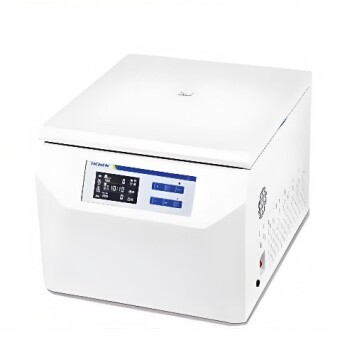
A high-pressure reactor, or autoclave, is indispensable because it creates a controlled hydrothermal environment that exceeds the standard boiling point of solvents, enabling the synthesis of unique copper nanostructures. This pressurized setting allows for slow, ordered crystal growth and the precise regulation of phase composition, resulting in high-purity electrocatalysts with specific morphologies that are impossible to achieve at atmospheric pressure.
Core Takeaway: High-pressure reactors provide the extreme thermodynamic conditions necessary to accelerate precursor dissolution and control nucleation, which is fundamental for engineering the high-surface-area copper catalysts required for efficient CO2 reduction.
Overcoming the Boiling Point Barrier
Elevating Solvent Activity
Standard synthesis is limited by the atmospheric boiling point of water or ethylene glycol. In a sealed autoclave, solvents remain liquid at temperatures far exceeding these limits, significantly increasing the solubility and activity of metal precursors.
Enhancing Molecular Diffusion
The high-pressure environment drastically increases molecular collision frequency and diffusion capabilities. This allows reactants to interact more vigorously, facilitating chemical transformations and coordination between metal complexes that would otherwise remain inert.
Precision Engineering of Nanostructures
Controlled Nucleation and Growth
The pressurized hydrothermal process ensures uniform nucleation across the reaction medium or on substrates like carbon cloth. This controlled environment allows for the in-situ growth of nanosheet arrays or core-shell structures with a high degree of structural integrity.
Morphological Tailoring for Catalysis
By adjusting parameters like temperature and pressure within the reactor, researchers can dictate the specific morphology of the copper catalyst. These precise shapes—such as mesoporous structures—provide the high specific surface area necessary for superior electrochemical performance.
Achieving Phase Purity and Stability
High-pressure conditions allow for the precise regulation of phase composition. This ensures that the resulting copper-based catalysts possess the exact crystal phases required to improve selectivity when converting CO2 into valuable fuels like CO or CH4.
Understanding the Trade-offs
Safety and Equipment Complexity
Working with high-pressure reactors introduces significant safety risks and requires robust, high-strength sealing structures to prevent failure. This complexity increases the initial cost and maintenance requirements compared to open-vessel synthesis.
The "Black Box" Challenge
Because reactions occur inside a sealed, high-pressure vessel, real-time monitoring of the synthesis is technically difficult. Researchers often rely on post-reaction analysis, which can make the initial optimization of reaction times and temperatures a trial-and-error process.
Scalability Constraints
While autoclaves are excellent for lab-scale precision, scaling up hydrothermal synthesis for industrial production presents engineering hurdles. Maintaining uniform temperature and pressure gradients across much larger volumes is significantly more difficult than in small-batch reactors.
How to Apply This to Your Project
Making the Right Choice for Your Goal
To successfully leverage a high-pressure reactor for copper-based electrocatalysts, align your approach with your specific research or production objectives:
- If your primary focus is Selective CO2 Reduction: Utilize the autoclave to fine-tune the phase composition and morphology, as these parameters directly dictate whether the catalyst produces CO, CH4, or other hydrocarbons.
- If your primary focus is Catalyst Durability: Use the pressurized environment to facilitate "thorough penetration" and coordination between metal atoms and substrates, ensuring a more stable bond during high-current-density operation.
- If your primary focus is Material Reproducibility: Precisely document the temperature, reaction time, and precursor concentration within the reactor to ensure the high reproducibility of mesoporous structures and surface functional groups.
By mastering the high-pressure environment, you gain the ability to engineer copper catalysts with the atomic-level precision required for the next generation of electrochemical energy conversion.
Summary Table:
| Feature | Impact on Hydrothermal Synthesis | Benefit for Copper Electrocatalysts |
|---|---|---|
| Elevated Solubility | Exceeds standard solvent boiling points | Accelerates precursor dissolution and reactivity |
| Enhanced Diffusion | Increases molecular collision frequency | Facilitates complex chemical transformations |
| Controlled Nucleation | Ensures uniform growth on substrates | Creates high-surface-area nanosheet arrays |
| Phase Regulation | Precise control of thermodynamic conditions | Ensures high purity and specific crystal phases |
| Morphology Tailoring | Dictates mesoporous and core-shell structures | Optimizes selectivity for CO2 reduction (CO, CH4) |
Elevate Your Catalyst Research with KINTEK Precision
Are you looking to master the hydrothermal synthesis of next-generation electrocatalysts? KINTEK specializes in providing researchers with high-performance laboratory equipment designed for extreme precision. Our high-temperature high-pressure reactors and autoclaves are engineered to deliver the stable, controlled environments necessary for engineering copper nanostructures with atomic-level accuracy.
Beyond synthesis reactors, KINTEK offers a comprehensive portfolio including:
- Material Processing: Crushing and milling systems, sieving equipment, and hydraulic presses.
- Thermal Solutions: Muffle, vacuum, and CVD furnaces, plus advanced cooling solutions like ULT freezers.
- Lab Essentials: Electrolytic cells, battery research tools, and high-quality ceramic or PTFE consumables.
Don't let equipment limitations hinder your breakthrough. Contact KINTEK today to consult with our experts and find the ideal solution for your laboratory’s unique requirements.
References
- V. S. K. Yadav, Anand Kumar. Understanding the progress and challenges in the fields of thermo-catalysis and electro-catalysis for the CO2 conversion to fuels. DOI: 10.1007/s42247-023-00606-9
This article is also based on technical information from Kintek Solution Knowledge Base .
Related Products
- Customizable Laboratory High Temperature High Pressure Reactors for Diverse Scientific Applications
- Customizable High Pressure Reactors for Advanced Scientific and Industrial Applications
- Stainless High Pressure Autoclave Reactor Laboratory Pressure Reactor
- Mini SS High Pressure Autoclave Reactor for Laboratory Use
- High Pressure Laboratory Autoclave Reactor for Hydrothermal Synthesis
People Also Ask
- How do high-pressure and high-temperature reactors ensure the effective treatment of lignocellulosic wastewater in WAO?
- What equipment is required for high-pressure high-temperature reactions? Master Extreme Chemistry Safely
- How do you control high pressure in a reactor? A Guide to Safe & Stable Operation
- Why is argon better than nitrogen for inert atmosphere? Ensure Absolute Reactivity & Stability
- How does initial oxygen pressure affect the wet oxidation of pharmaceutical sludge? Master Your Oxidation Depth