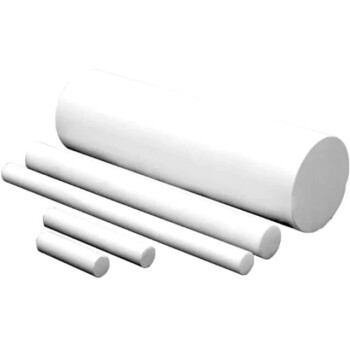
High-purity graphite rods are universally selected as auxiliary electrodes because they function as a highly conductive yet chemically invisible component in the testing circuit. They allow the necessary current to flow through the electrochemical cell without dissolving, reacting, or contaminating the sensitive titanium alloy specimen.
The role of the auxiliary electrode is to complete the circuit, not to participate in the reaction. High-purity graphite offers the ideal balance of electrical performance and chemical stability, ensuring that the data you collect reflects only the corrosion behavior of the titanium, unaffected by external variables.
The Critical Role of Inertness
Stability in Aggressive Media
Titanium alloys are often tested in harsh environments, including acidic, alkaline, or sodium chloride solutions.
High-purity graphite is chemically inert, meaning it does not react with these aggressive electrolytes. Unlike metal electrodes that might corrode alongside the specimen, graphite remains stable regardless of the solution's pH.
Preventing Ionic Contamination
If an auxiliary electrode dissolves even slightly, it releases "heterologous ions" into the solution.
These foreign ions can deposit onto the titanium alloy or alter the chemistry of the electrolyte. Graphite prevents this interference, ensuring the environment remains pure throughout the test.
Electrical Performance Factors
Excellent Conductivity
For an electrochemical test to be valid, the current must flow unimpeded between the working electrode (the titanium) and the auxiliary electrode.
Graphite possesses excellent electrical conductivity, allowing it to facilitate this transfer efficiently. This ensures that the voltage applied is used to drive the corrosion reaction rather than overcoming resistance in the electrode itself.
Stable Current Transmission
Because graphite does not participate in redox reactions, its surface properties do not change significantly during the test.
This stability prevents fluctuations in the circuit. It guarantees stable current transmission, which is essential for generating reproducible and accurate corrosion data.
Understanding the Trade-offs
The Requirement for High Purity
It is critical to distinguish between generic graphite and high-purity graphite.
Standard graphite may contain binders or impurities that can leach into the solution. To achieve the inertness described above, you must verify the grade of the rod; otherwise, you risk introducing the very contamination you are trying to avoid.
Physical Durability
While chemically robust, graphite is a brittle material compared to metallic alternatives like platinum.
Care must be taken during setup to avoid mechanical breakage. However, for the specific purpose of chemical isolation in titanium testing, its chemical benefits far outweigh this physical limitation.
Ensuring Test Integrity
To maximize the accuracy of your titanium alloy corrosion tests, consider the following:
- If your primary focus is Data Accuracy: Ensure you are using certified high-purity graphite to prevent heterologous ions from skewing your results.
- If your primary focus is Cost-Effectiveness: Graphite serves as a highly effective, lower-cost alternative to noble metals like platinum, provided the purity standard is met.
By using a high-purity graphite rod, you effectively isolate the titanium specimen, ensuring that every change observed is a result of the alloy's behavior, not an experimental artifact.
Summary Table:
| Feature | Benefit for Titanium Corrosion Testing |
|---|---|
| Chemical Inertness | Prevents electrode dissolution and reaction in aggressive media. |
| High Purity | Eliminates ionic contamination from binders or impurities. |
| Excellent Conductivity | Ensures unimpeded current flow for accurate electrochemical data. |
| Surface Stability | Maintains stable current transmission without altering surface properties. |
| Cost-Efficiency | Offers a high-performance, economical alternative to platinum. |
Elevate Your Electrochemical Research with KINTEK
Precision in corrosion testing starts with the quality of your components. KINTEK specializes in high-performance laboratory solutions, providing the high-purity graphite rods, electrolytic cells, and electrodes necessary to ensure your data is accurate and reproducible.
Whether you are analyzing titanium alloys or developing next-generation energy materials, our comprehensive range of laboratory equipment and consumables—from high-temperature furnaces and autoclaves to battery research tools—is designed to meet the most rigorous scientific standards.
Don't let impurities compromise your results. Contact KINTEK today to source premium consumables and equipment tailored to your specific lab requirements.
References
- Polina V. Abramova, Андрей Владимирович Коршунов. ВЛИЯНИЕ ДЕФОРМАЦИОННО-ТЕРМИЧЕСКОЙ ОБРАБОТКИ (a+b)-СПЛАВОВ ТИТАНА ВТ6 И ВТ22 НА ИХ КОРРОЗИОННУЮ СТОЙКОСТЬ. DOI: 10.18799/24131830/2023/4/4124
This article is also based on technical information from Kintek Solution Knowledge Base .
Related Products
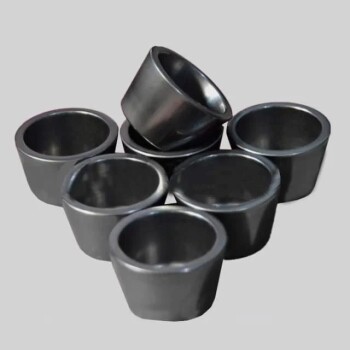
- High Purity Pure Graphite Crucible for Electron Beam Evaporation
- High Purity Pure Graphite Crucible for Evaporation
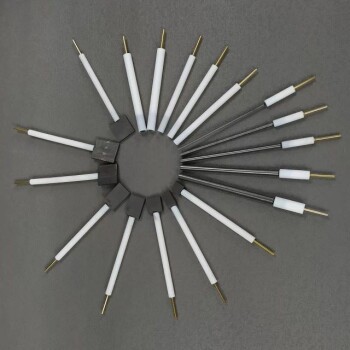
- Graphite Disc Rod and Sheet Electrode Electrochemical Graphite Electrode
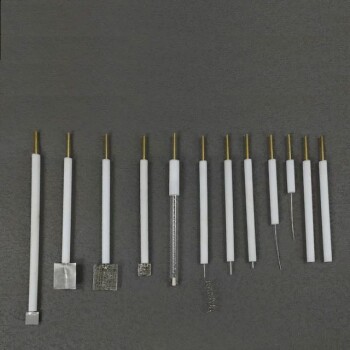
- Platinum Auxiliary Electrode for Laboratory Use
- High Purity Gold Platinum Copper Iron Metal Sheets
People Also Ask
- What is the container that holds the metal source material called in e-beam evaporation? Ensure Purity and Quality in Your Thin-Film Deposition
- What role do high-purity graphite crucibles play in molten salt corrosion research? Ensure Reactor-Grade Precision
- Why is a high-purity graphite crucible ideal for nitrogen-doped graphene at 1500 °C? Maximize Purity and Stability
- What dual roles do high-purity graphite crucibles play? Expert Insights into Fluoride Salt Testing
- What role does a high-purity graphite crucible play in CaO-MgO-Al2O3-SiO2 system equilibrium experiments? Maximize Accuracy