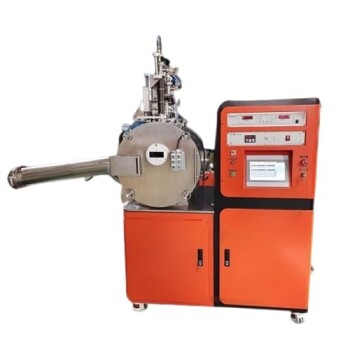
High-performance ruthenium thin film deposition strictly demands a high or ultra-high vacuum (UHVCVD) environment to prevent chemical degradation. Specifically, maintaining chamber pressures below 10^-8 mbar is necessary to effectively eliminate residual oxygen and hydrocarbons. Without this pristine environment, it is impossible to achieve the high purity required for functional microelectronic applications.
Core Takeaway The vacuum level is not merely an operational setting; it is a critical quality control gate. By removing specific contaminants, a UHVCVD environment enables epitaxial growth, which is the structural foundation for achieving the low resistivity and high electrical conductivity essential for electrode materials.
The Battle Against Contamination
Eliminating Residual Oxygen
The primary enemy of high-quality ruthenium deposition is oxygen. Even trace amounts of residual oxygen within the chamber can react with the depositing film.
A vacuum system operating below 10^-8 mbar ensures that oxygen levels are too low to significantly disrupt the deposition process. This prevents the formation of unwanted oxides that degrade the material.
Removing Hydrocarbons
Hydrocarbons are the second major contaminant addressed by high vacuum systems. These organic compounds can introduce carbon impurities into the film.
By evacuating the chamber to ultra-high vacuum levels, you strip away these potential contaminants. This ensures the source material deposits cleanly onto the substrate without chemical interference.
The Impact on Film Quality
Enabling Epitaxial Growth
Epitaxial growth refers to the orderly, crystalline alignment of the film with the substrate. This structural perfection is difficult to achieve in a "dirty" environment.
The absence of oxygen and hydrocarbon contamination allows the ruthenium atoms to arrange themselves precisely. This results in a highly ordered crystal structure rather than a disordered, amorphous layer.
Achieving Low Resistivity
For electrode materials in microelectronics, electrical conductivity is the defining performance metric. Contaminants act as obstacles to electron flow, increasing resistance.
By ensuring high purity through a strict vacuum environment, the resulting films exhibit significantly lower resistivity. This direct link between vacuum quality and electrical performance is why UHVCVD is non-negotiable for high-end devices.
Understanding the Trade-offs
The Cost of Purity
Reaching pressures below 10^-8 mbar requires sophisticated pumping systems and meticulous chamber maintenance. This adds complexity and time to the manufacturing process compared to lower-vacuum alternatives.
The Consequence of Compromise
However, the trade-off of bypassing this requirement is a drastic drop in device efficiency. If the vacuum pressure is insufficient, the resulting film will likely suffer from high resistance and poor structural integrity, rendering it unsuitable for advanced microelectronics.
Making the Right Choice for Your Goal
To ensure your deposition process meets the necessary standards, evaluate your objectives against the vacuum capabilities:
- If your primary focus is Maximum Conductivity: You must prioritize a system capable of sustaining pressures below 10^-8 mbar to guarantee low resistivity.
- If your primary focus is Structural Integrity: You must eliminate hydrocarbons and oxygen to allow for true epitaxial growth of the ruthenium crystal.
Ultimately, the quality of your vacuum dictates the quality of your conductor.
Summary Table:
| Feature | Requirement | Impact on Ruthenium Film |
|---|---|---|
| Vacuum Level | < 10^-8 mbar | Prevents chemical degradation and impurity uptake |
| Oxygen Control | Near-zero residual O2 | Eliminates oxide formation to maintain material purity |
| Hydrocarbon Removal | Ultra-low trace levels | Prevents carbon contamination for cleaner deposition |
| Crystal Structure | Epitaxial Growth | Enables precise crystalline alignment for high performance |
| Electrical Property | Low Resistivity | Maximizes conductivity essential for microelectronics |
Elevate Your Thin Film Precision with KINTEK
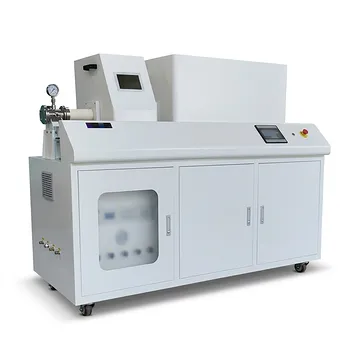
Achieving the structural perfection required for epitaxial ruthenium growth demands uncompromising vacuum technology. KINTEK specializes in advanced laboratory solutions, providing the high-performance CVD, PECVD, and vacuum furnace systems necessary to reach pressures below 10^-8 mbar.
Whether you are developing next-generation electrodes or conducting cutting-edge semiconductor research, our comprehensive portfolio—ranging from high-temperature reactors and crushing systems to PTFE consumables and cooling solutions—ensures your lab is equipped for success.
Ready to optimize your deposition process for maximum conductivity? Contact our technical experts today to discover how KINTEK’s precision equipment can transform your research outcomes.
References
- Ruchi Gaur, Burak Atakan. Ruthenium complexes as precursors for chemical vapor-deposition (CVD). DOI: 10.1039/c4ra04701j
This article is also based on technical information from Kintek Solution Knowledge Base .
Related Products
- HFCVD Machine System Equipment for Drawing Die Nano-Diamond Coating
- Customer Made Versatile CVD Tube Furnace Chemical Vapor Deposition Chamber System Equipment
- Multi Heating Zones CVD Tube Furnace Machine Chemical Vapor Deposition Chamber System Equipment
- Chemical Vapor Deposition CVD Equipment System Chamber Slide PECVD Tube Furnace with Liquid Gasifier PECVD Machine
- Ultra-High Vacuum Flange Aviation Plug Glass Sintered Airtight Circular Connector for KF ISO CF
People Also Ask
- What is the full form of HFCVD? A Guide to Hot Filament Chemical Vapor Deposition
- What are the disadvantages and challenges of the HFCVD method? Overcome Growth Limits and Filament Issues
- What is the function of tungsten filaments in HFCVD? Powering Diamond Film Synthesis with Thermal Excitation
- Why is Chemical Vapor Deposition (CVD) equipment uniquely suited for constructing hierarchical superhydrophobic structures?
- What is the chemical vapor deposition growth process? Build Superior Thin Films from the Atom Up