Knowledge Why is a high-vacuum pumping system necessary during the gas-phase hydrogenation of Zr1Nb alloys? Ensure Material Purity
Author avatar

Tech Team · Kintek Solution

Updated 1 day ago

Why is a high-vacuum pumping system necessary during the gas-phase hydrogenation of Zr1Nb alloys? Ensure Material Purity


The primary role of a high-vacuum pumping system is to guarantee chemical purity. In the gas-phase hydrogenation of Zr1Nb alloys, the system must lower the reaction chamber pressure to approximately 0.013 Pa. This ensures the complete removal of residual air and impurity gases that would otherwise react with the metal at high temperatures.

A clean vacuum environment is the prerequisite for material integrity. By eliminating background gases, the system prevents surface oxidation and nitration, ensuring hydrogen can diffuse precisely into the metal lattice to reach specific targets like 0.09 wt. %.

Preventing Material Degradation

Eliminating Residual Air

The immediate goal of the pumping system is to evacuate the chamber to a deep vacuum level of 0.013 Pa.

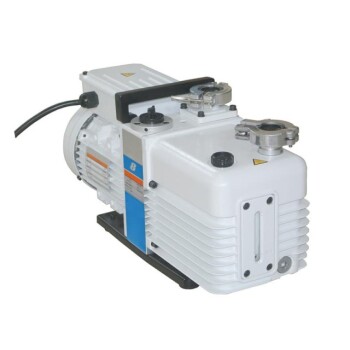
This is typically achieved using high-performance molecular pump sets.

Without this level of evacuation, residual air remains in the chamber, acting as a contaminant source during the heating phase.

Stopping Oxidation and Nitration

Zirconium alloys are sensitive to reactive gases at the high temperatures required for hydrogenation.

If oxygen or nitrogen is present, the alloy will undergo oxidation or nitration.

The high-vacuum system removes these elements, ensuring the metal surface remains metallic and receptive to hydrogen.

Ensuring Precise Hydrogen Uptake

Facilitating Lattice Diffusion

The ultimate goal of the process is to embed hydrogen atoms into the metal lattice.

A clean, oxide-free surface allows hydrogen to diffuse uniformly into the material.

If the vacuum is insufficient, surface contaminants can block this diffusion path.

Achieving Target Composition

The process often aims for a very specific hydrogen content, such as 0.09 wt. %.

Interference from impurity gases makes it difficult to predict or control how much hydrogen the alloy absorbs.

A high-vacuum environment isolates the variables, allowing for precise control over the final chemical composition.

Operational Considerations and Trade-offs

Equipment Complexity

Achieving a pressure of 0.013 Pa requires sophisticated hardware, such as molecular pumps.

This increases the complexity of the setup compared to standard roughing pumps.

However, simple pumps cannot achieve the partial pressure reduction required to prevent contamination.

Cycle Time vs. Quality

Reaching high vacuum extends the preparation time before the actual hydrogenation can begin.

Skipping this step to save time is a false economy.

Inadequate vacuum leads to flawed materials that fail to meet the necessary mechanical or chemical standards.

Ensuring Process Success

To achieve the desired material properties in Zr1Nb alloys, consider the following focuses:

  • If your primary focus is Material Purity: Ensure your molecular pump sets can reliably achieve and maintain 0.013 Pa to completely prevent oxidation and nitration.
  • If your primary focus is Process Precision: Rely on the high-vacuum environment to eliminate variables, allowing you to hit exact targets like 0.09 wt. % hydrogen content.

The high-vacuum system is the critical control point that transforms a potential chemical failure into a precise metallurgical modification.

Summary Table:

Feature Requirement Impact on Zr1Nb Hydrogenation
Vacuum Level 0.013 Pa Removes residual air to prevent oxidation and nitration.
Equipment Molecular Pump Sets Achieves the deep vacuum necessary for high-purity environments.
Surface Integrity Oxide-free Metallic State Facilitates uniform hydrogen diffusion into the metal lattice.
Composition Control Precise wt. % (e.g., 0.09%) Eliminates gas interference for exact metallurgical modification.

Optimize Your Advanced Material Research with KINTEK

Precision in Zr1Nb alloy hydrogenation starts with a superior vacuum environment. At KINTEK, we specialize in the high-performance laboratory equipment necessary to achieve rigorous process standards. Whether you are conducting sensitive gas-phase reactions or advanced metallurgy, our portfolio offers the reliability you need:

  • High-Temperature Furnaces: Including Vacuum, CVD, and Atmosphere furnaces designed for precise thermal control.
  • High-Pressure Reactors & Autoclaves: Engineered for safe and accurate hydrogenation processes.
  • Analytical Solutions: From crushing and milling systems to battery research tools and cooling solutions.

Don't compromise on material integrity. Let KINTEK provide the high-vacuum and high-temperature solutions your laboratory demands.

Contact our technical experts today to enhance your lab's efficiency!

References

  1. E.S. Savchuk, М.М. Pylypenko. EFFECT OF HYDROGENATION ON CREEP AND STRUCTURE EVOLUTION OF NANOCRYSTALLINE Zr1Nb ALLOY. DOI: 10.46813/2023-144-064

This article is also based on technical information from Kintek Solution Knowledge Base .

Related Products

People Also Ask

Related Products

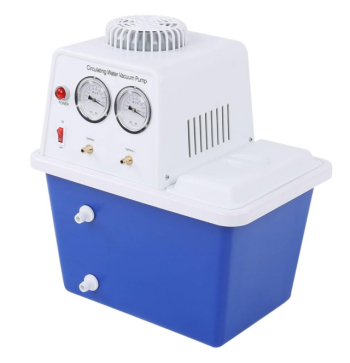
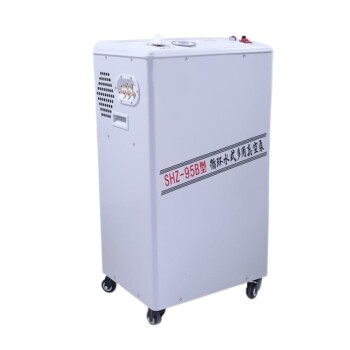
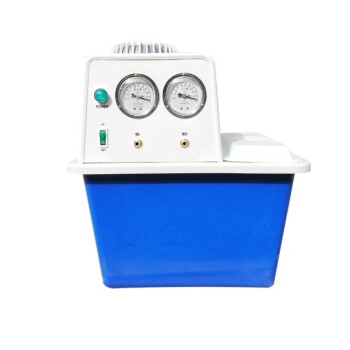
Circulating Water Vacuum Pump for Laboratory and Industrial Use

Circulating Water Vacuum Pump for Laboratory and Industrial Use

Efficient circulating water vacuum pump for labs - oil-free, corrosion-resistant, quiet operation. Multiple models available. Get yours now!

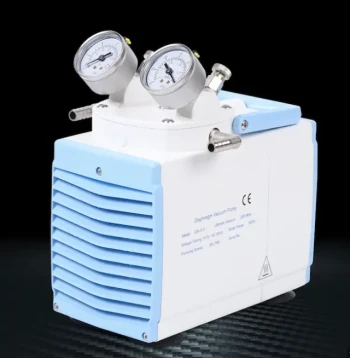
Oil Free Diaphragm Vacuum Pump for Laboratory and Industrial Use

Oil Free Diaphragm Vacuum Pump for Laboratory and Industrial Use

Oil-free diaphragm vacuum pump for labs: clean, reliable, chemical-resistant. Ideal for filtration, SPE, and rotary evaporation. Maintenance-free operation.

Vacuum Hot Press Furnace Machine for Lamination and Heating

Vacuum Hot Press Furnace Machine for Lamination and Heating

Experience clean and precise lamination with Vacuum Lamination Press. Perfect for wafer bonding, thin-film transformations, and LCP lamination. Order now!

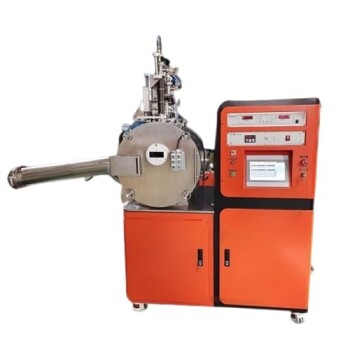
Small Vacuum Heat Treat and Tungsten Wire Sintering Furnace

Small Vacuum Heat Treat and Tungsten Wire Sintering Furnace

The small vacuum tungsten wire sintering furnace is a compact experimental vacuum furnace specially designed for universities and scientific research institutes. The furnace features a CNC welded shell and vacuum piping to ensure leak-free operation. Quick-connect electrical connections facilitate relocation and debugging, and the standard electrical control cabinet is safe and convenient to operate.

Vacuum Cold Trap Chiller Indirect Cold Trap Chiller

Vacuum Cold Trap Chiller Indirect Cold Trap Chiller

Boost vacuum system efficiency and prolong pump life with our Indirect Cold Trap. Built-in chilling system with no need for fluid or dry ice. Compact design and easy to use.

Warm Isostatic Press WIP Workstation 300Mpa for High Pressure Applications

Warm Isostatic Press WIP Workstation 300Mpa for High Pressure Applications

Discover Warm Isostatic Pressing (WIP) - A cutting-edge technology that enables uniform pressure to shape and press powdered products at a precise temperature. Ideal for complex parts and components in manufacturing.

Ultra-High Temperature Graphite Vacuum Graphitization Furnace

Ultra-High Temperature Graphite Vacuum Graphitization Furnace

The ultra-high temperature graphitization furnace utilizes medium frequency induction heating in a vacuum or inert gas environment. The induction coil generates an alternating magnetic field, inducing eddy currents in the graphite crucible, which heats up and radiates heat to the workpiece, bringing it to the desired temperature. This furnace is primarily used for graphitization and sintering of carbon materials, carbon fiber materials, and other composite materials.

Horizontal High Temperature Graphite Vacuum Graphitization Furnace

Horizontal High Temperature Graphite Vacuum Graphitization Furnace

Horizontal Graphitization Furnace: This type of furnace is designed with the heating elements placed horizontally, allowing for uniform heating of the sample. It's well-suited for graphitizing large or bulky samples that require precise temperature control and uniformity.

Vertical High Temperature Graphite Vacuum Graphitization Furnace

Vertical High Temperature Graphite Vacuum Graphitization Furnace

Vertical high temperature graphitization furnace for carbonization and graphitization of carbon materials up to 3100℃.Suitable for shaped graphitization of carbon fiber filaments and other materials sintered in a carbon environment.Applications in metallurgy, electronics, and aerospace for producing high-quality graphite products like electrodes and crucibles.

Vacuum Heat Treat Furnace with Ceramic Fiber Liner

Vacuum Heat Treat Furnace with Ceramic Fiber Liner

Vacuum furnace with polycrystalline ceramic fiber insulation liner for excellent heat insulation and uniform temperature field. Choose from 1200℃ or 1700℃ max. working temperature with high vacuum performance and precise temperature control.

Graphite Vacuum Furnace Bottom Discharge Graphitization Furnace for Carbon Materials

Graphite Vacuum Furnace Bottom Discharge Graphitization Furnace for Carbon Materials

Bottom-out graphitization furnace for carbon materials, ultra-high temperature furnace up to 3100°C, suitable for graphitization and sintering of carbon rods and carbon blocks. Vertical design, bottom discharging, convenient feeding and discharging, high temperature uniformity, low energy consumption, good stability, hydraulic lifting system, convenient loading and unloading.

Vacuum Cold Trap Direct Cold Trap Chiller

Vacuum Cold Trap Direct Cold Trap Chiller

Improve vacuum system efficiency and extend pump life with our Direct Cold Trap. No chilling fluid required, compact design with swivel casters. Stainless steel and glass options available.

Dental Porcelain Zirconia Sintering Ceramic Vacuum Press Furnace

Dental Porcelain Zirconia Sintering Ceramic Vacuum Press Furnace

Get precise dental results with Dental Vacuum Press Furnace. Automatic temperature calibration, low noise tray, and touch screen operation. Order now!

Zirconia Ceramic Gasket Insulating Engineering Advanced Fine Ceramics

Zirconia Ceramic Gasket Insulating Engineering Advanced Fine Ceramics

Zirconia insulating ceramic gasket has high melting point, high resistivity, low thermal expansion coefficient and other properties, making it an important high temperature resistant material, ceramic insulating material and ceramic sunscreen material.

CVD Diamond Domes for Industrial and Scientific Applications

CVD Diamond Domes for Industrial and Scientific Applications

Discover CVD diamond domes, the ultimate solution for high-performance loudspeakers. Made with DC Arc Plasma Jet technology, these domes deliver exceptional sound quality, durability, and power handling.

Automatic Laboratory Hydraulic Pellet Press Machine for Lab Use

Automatic Laboratory Hydraulic Pellet Press Machine for Lab Use

Experience efficient sample preparation with our Automatic Lab Press Machine. Ideal for material research, pharmacy, ceramics, and more. Features a compact size and hydraulic press functionality with heating plates. Available in various sizes.

Graphite Vacuum Furnace High Thermal Conductivity Film Graphitization Furnace

Graphite Vacuum Furnace High Thermal Conductivity Film Graphitization Furnace

The high thermal conductivity film graphitization furnace has uniform temperature, low energy consumption and can operate continuously.


Leave Your Message