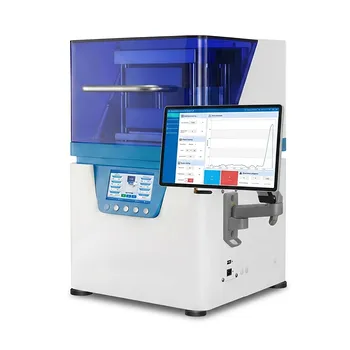
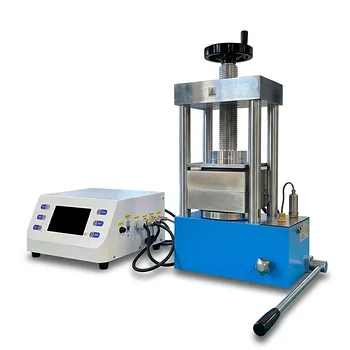
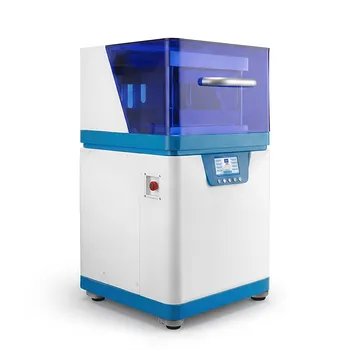
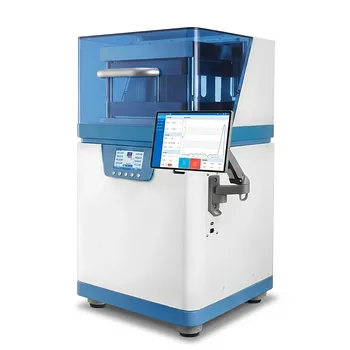
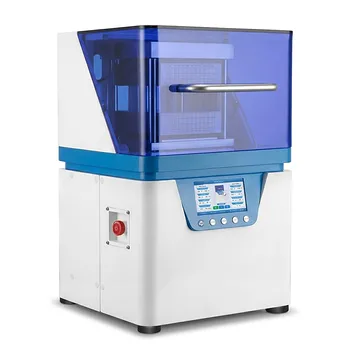
The laboratory hydraulic press is the primary tool for direct dry-powder pressing. It enables the fabrication of binder-free Reduced Graphene Oxide (RGO) electrodes by applying precise, stable pressure—typically between 1.0 and 1.5 tons—to mechanically secure RGO powder into the pores of current collectors like nickel mesh. This process effectively replaces chemical adhesives with mechanical force, eliminating the electrical resistance and solvent residues that often compromise electrode performance.
Core Takeaway: By using a hydraulic press to achieve high-density mechanical molding, researchers can bypass non-conductive binders, significantly reducing interfacial resistance and maximizing the intrinsic capacitance of RGO materials.
Eliminating Chemical and Ohmic Interference
Removing Non-Conductive Binders
Traditional electrode fabrication relies on polymer binders (like PTFE or PVDF) to hold active materials together. However, these binders are electronically insulating and act as "dead weight" that increases the internal resistance of the electrode.
A hydraulic press allows for direct dry-powder pressing, which physically anchors the RGO to the current collector. This creates a binder-free architecture where every part of the electrode contributes to charge storage without the interference of non-conductive plastics.
Avoiding Solvent Contamination
Wet-processing methods require solvents to create a slurry, which must then be evaporated. This often leaves behind trace solvent residues that can trigger side reactions or degrade the material over time.
The hydraulic press facilitates a purely mechanical approach, ensuring that the chemical purity of the RGO is maintained. This leads to more reliable and repeatable electrochemical data, especially during long-term cycling tests.
Optimizing the Electrode-Collector Interface
Enhancing Interfacial Contact
The efficiency of a supercapacitor depends on how easily electrons can move between the RGO and the current collector (e.g., nickel foam or mesh). High pressure forces the RGO particles into the micro-pores of the collector, creating a seamless physical bond.
This mechanical "interlock" reduces interfacial resistance, ensuring that electron transport is not bottlenecked at the junction. Improved contact directly translates to better rate performance and higher power density.
Uniform Current Distribution
A hydraulic press provides uniform vertical pressure across the entire surface of the electrode. This consistency prevents "hot spots" of high resistance that occur with uneven manual packing.
Uniform compaction ensures that the current is distributed evenly throughout the RGO layer. This is critical for preventing localized material degradation and ensuring the observed gas evolution or capacitance represents the material's intrinsic properties.
Improving Structural and Volumetric Density
Increasing Tap Density and Volumetric Energy
Loose RGO powder has a very low tap density, which takes up significant volume for very little energy storage. The hydraulic press compacts the powder into a dense, flat, and standardized disc or film.
By eliminating micro-cracks and voids within the "green body" of the electrode, the press increases the volumetric energy density. This allows for the development of "thick" electrodes that maintain high area capacities (exceeding 6 mAh/cm²) without increasing the physical footprint of the device.
Mechanical Stability Under Load
Binder-free electrodes are often prone to shedding their active material during the expansion and contraction of charge-discharge cycles. The high physical pressure of a hydraulic press ensures a tight internal structure that resists mechanical failure.
This structural integrity is essential for high-current applications. It keeps the RGO particles securely bonded to each other and the current collector, even under the stress of rapid ion intercalation.
Understanding the Trade-offs and Pitfalls
The Risk of Over-Pressing
While high pressure is necessary for contact, excessive force (beyond the recommended 1.5 tons for some collectors) can deform or crush the current collector. If the pores of a nickel foam are flattened entirely, the electrolyte cannot penetrate the structure, which actually reduces the accessible surface area.
Balancing Porosity and Density
There is an inherent trade-off between high density and ion accessibility. A press that is too powerful may create an electrode so dense that the electrolyte struggle to reach the innermost RGO layers, leading to a decrease in mass-specific capacitance despite the improved conductivity.
How to Apply This to Your Fabrication Process
Recommendations for Optimal Results
The following guidelines help tailor the use of the hydraulic press to specific research objectives:
- If your primary focus is maximum conductivity: Utilize the higher end of the pressure range (1.5 tons) to ensure the lowest possible contact resistance between the RGO and the nickel mesh.
- If your primary focus is high-rate capability: Opt for a moderate pressure (1.0 ton) and a longer hold time to ensure mechanical stability without sacrificing the porosity needed for rapid ion transport.
- If your primary focus is volumetric energy density: Use a precision stainless steel mold to press dry material into self-supporting films, focusing on eliminating all internal voids to maximize tap density.
The laboratory hydraulic press is the bridge between loose powder and a high-performance, integrated electrode system.
Summary Table:
| Key Benefit | Impact on RGO Electrode Performance |
|---|---|
| Binder-Free Pressing | Eliminates non-conductive "dead weight" and reduces internal resistance. |
| Mechanical Interlock | Creates seamless contact with current collectors, lowering interfacial resistance. |
| Uniform Compaction | Ensures even current distribution and prevents localized material degradation. |
| High Tap Density | Increases volumetric energy density by eliminating voids and micro-cracks. |
| Pure Dry Processing | Avoids solvent residues that cause side reactions during electrochemical tests. |
Elevate Your Electrode Research with KINTEK Precision
Maximize the intrinsic capacitance of your materials with KINTEK’s specialized laboratory hydraulic presses. Whether you need standard pellet presses, hot presses, or isostatic systems, our equipment provides the precise, stable pressure required to fabricate high-performance, binder-free RGO electrodes.
At KINTEK, we support the full spectrum of materials science with a comprehensive portfolio, including:
- High-Temperature Furnaces: Muffle, vacuum, CVD, and PECVD systems for RGO reduction.
- Sample Preparation: Crushing, milling, and sieving equipment for uniform powder quality.
- Advanced Reactors: High-temperature high-pressure reactors and autoclaves.
- Battery Tools: Electrolytic cells, electrodes, and specialized consumables like PTFE and ceramics.
Ready to achieve superior interfacial contact and repeatable research data? Contact our technical experts today to find the ideal pressing solution for your laboratory’s unique requirements.
References
- Srinivas Gadipelli, Dan J. L. Brett. Understanding and Optimizing Capacitance Performance in Reduced Graphene‐Oxide Based Supercapacitors. DOI: 10.1002/smtd.202201557
This article is also based on technical information from Kintek Solution Knowledge Base .
Related Products
- Automatic Laboratory Hydraulic Press for XRF & KBR Pellet Press
- Fully Automatic Heated Hydraulic Lab Press for Materials Sintering and Sample Preparation
- Laboratory Hydraulic Press Split Electric Lab Pellet Press
- Automatic Laboratory Hydraulic Pellet Press Machine for Lab Use
- Laboratory Hydraulic Pellet Press for XRF KBR FTIR Lab Applications
People Also Ask
- What is the significance of applying 200 MPa of pressure with a laboratory hydraulic pellet press for composite ceramics?
- What is the role of a laboratory hydraulic pellet press and stainless steel molds in the fabrication of RuO2/NbC anodes?
- What is the necessity of using a laboratory hydraulic pellet press in the preparation of biomass fuel pellets? Guide
- How does a laboratory hydraulic pellet press contribute to SiCw/2024 aluminum composite preforms? Optimize Densification
- What role does a laboratory hydraulic pellet press play in fly ash utilization? Enhancing Adsorption and Flow Control