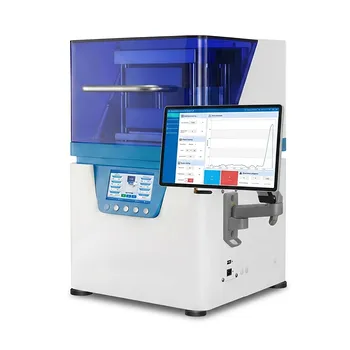
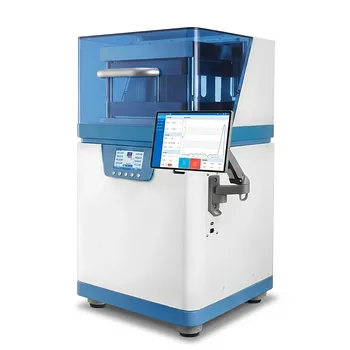
A laboratory hydraulic press is the primary tool for converting loose catalyst powders into standardized, dense pellets or granules. This transformation is critical because it ensures a consistent sample surface for analytical techniques like XRD and XPS, which maximizes signal intensity and data accuracy. Beyond spectroscopy, the press provides the mechanical integrity needed to control particle size for reactor testing, effectively eliminating variables like pressure drop and gas bypassing.
The central role of a hydraulic press in catalyst research is to eliminate the physical inconsistency of loose powders through uniform static pressure. By creating dense "green bodies," researchers ensure reproducible analytical signals and predictable fluid dynamics during experimental evaluations.
Enhancing Analytical Precision and Signal Quality
Optimizing X-ray Spectroscopy (XRD and XPS)
A hydraulic press applies high static pressure to create flat, dense pellets with a consistent surface height. This uniformity is vital for X-ray Diffraction (XRD) and X-ray Photoelectron Spectroscopy (XPS), as it ensures the sample sits at the correct focal point. Accurate surface alignment maximizes signal intensity and prevents data shifts that could lead to incorrect chemical or structural identifications.
Facilitating Infrared (IR) Spectroscopy
For techniques like FTIR, the press is used to blend catalyst powders with potassium bromide (KBr) to create transparent pellets. This high-pressure molding process improves light transmission, allowing for the clear identification of specific vibrational shifts. For example, it can confirm the successful embedding of ions within a zeolite framework by enhancing the clarity of framework vibrations.
Engineering Physical Uniformity for Reactor Evaluation
Controlling Particle Size and Porosity
The press creates "green bodies" with specific mechanical strength that can be subsequently crushed and sieved to reach a target mesh size (e.g., 60-80 mesh). This process eliminates uneven pore distribution within the bulk powder. By ensuring a consistent density, researchers can achieve high reproducibility in physical property testing and reactor loading.
Mitigating Pressure Drops and Channeling
In fixed-bed reactors, using pressed and sieved particles rather than raw powder prevents gas bypassing or short-circuiting. This physical standardization ensures that reactant gases maintain uniform contact with the catalyst’s active sites. Proper pelletization is the foundation for obtaining accurate kinetic data and preventing erratic pressure fluctuations during the reaction.
Understanding the Trade-offs and Risks
Structural Alteration and Over-compaction
While high pressure is necessary for pellet integrity, excessive tonnage can lead to pore collapse or the crushing of the catalyst's internal microstructure. This can reduce the available surface area, potentially skewing the results of characterization tests. Researchers must find the "stable and adjustable" pressure range that ensures mechanical interlocking without damaging the active framework.
The Need for Binders
Some catalyst powders lack the natural cohesiveness to form a stable pellet under pressure alone. In these cases, a binder may be required to achieve sufficient mechanical strength. However, the introduction of a binder can interfere with chemical analysis or block active sites, requiring a careful balance between physical stability and chemical purity.
How to Apply This to Your Research
Selecting the Right Pressing Strategy
Your approach to pelletizing should be dictated by the specific requirements of your downstream analysis.
- If your primary focus is Surface Characterization (XPS/XRD): Prioritize surface flatness and high density to ensure the most accurate signal-to-noise ratio and peak positioning.
- If your primary focus is Kinetic Reactor Testing: Focus on achieving a specific mechanical strength that allows for crushing and sieving into uniform granules without generating excessive fines.
- If your primary focus is Molecular Structure (IR): Use the press to create thin, transparent KBr-diluted pellets to maximize light throughput and spectral clarity.
By mastering the application of uniform static pressure, researchers transform unpredictable powders into the standardized physical formats required for rigorous scientific discovery.
Summary Table:
| Application | Purpose of Pelletizing | Key Scientific Benefit |
|---|---|---|
| XRD & XPS | Creates flat, dense surfaces | Maximizes signal intensity & peak accuracy |
| FTIR Spectroscopy | Creates KBr-diluted transparent pellets | Improves light transmission for clear structural IDs |
| Reactor Testing | Standardizes particle size (mesh) | Prevents gas bypassing & erratic pressure drops |
| Physical Testing | Uniformity of "green bodies" | Ensures reproducible density & porosity measurements |
Elevate Your Catalyst Research with KINTEK Precision
Consistency is the foundation of scientific discovery. KINTEK specializes in high-performance laboratory equipment designed to transform your raw powders into standardized, high-quality samples. Whether you are optimizing signal-to-noise ratios for spectroscopy or engineering particles for reactor evaluations, our robust range of manual, automated, and isostatic hydraulic presses ensures the mechanical integrity your research demands.
Beyond pelletizing, KINTEK offers a comprehensive ecosystem for material science, including:
- High-Temperature Furnaces & Reactors: For rigorous catalyst activation and testing.
- Crushing & Milling Systems: To achieve precise target mesh sizes post-pressing.
- Essential Consumables: High-purity ceramics, crucibles, and KBr for FTIR.
Don't let physical inconsistency compromise your analytical data. Contact KINTEK today to discover how our laboratory presses and specialized research tools can enhance your lab's efficiency and results.
References
- Long Chen, Jianjun Wang. Investigating the Structural Evolution and Catalytic Activity of c-Co/Co3Mo Electrocatalysts for Alkaline Hydrogen Evolution Reaction. DOI: 10.3390/molecules28196986
This article is also based on technical information from Kintek Solution Knowledge Base .
Related Products
- Laboratory Hydraulic Press Lab Pellet Press Machine for Glove Box
- Laboratory Hydraulic Press Split Electric Lab Pellet Press
- Fully Automatic Heated Hydraulic Lab Press for Materials Sintering and Sample Preparation
- Laboratory Hydraulic Press Lab Pellet Press for Button Battery
- Automatic Laboratory Hydraulic Press for XRF & KBR Pellet Press
People Also Ask
- How do laboratory hydraulic presses contribute to zero-gap electrolyzers? Optimize Performance & Safety
- Why is a laboratory hydraulic press necessary for ZrO2/Cr2O3 interface analysis? Optimize Sample Density and Accuracy
- How do a precision laboratory hydraulic press and specialized molds contribute to the fabrication of spherical ceramic samples? Achieving High-Density Material Precision
- What is the role of a laboratory hydraulic press in the preparation of rare earth denitrification catalysts?
- How does pressure control of a laboratory hydraulic press affect W-Ti alloys? Optimize Grain Structure & Density