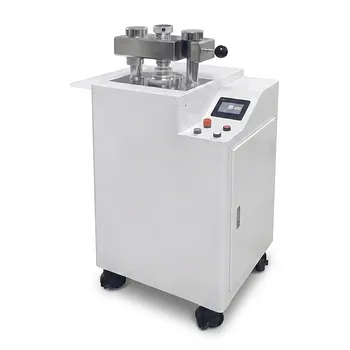
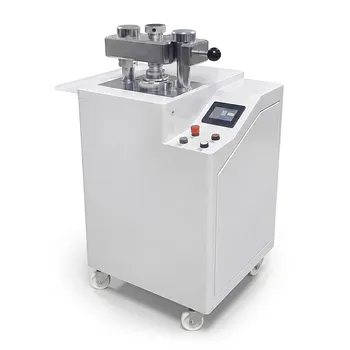
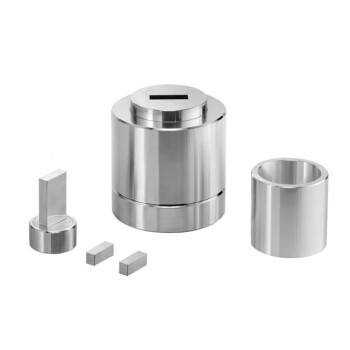
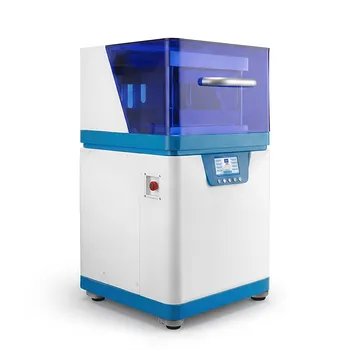
The use of a laboratory hydraulic press is a critical preparation step to transform fine Fe-Ce-Ti catalyst powder into a mechanically stable form that can withstand the rigors of a testing environment. By compressing the powder into dense pellets, researchers can then crush and sieve them to a specific particle size, which is essential for ensuring uniform gas flow, preventing pressure imbalances, and obtaining accurate kinetic data during activity testing.
Core Takeaway: Pelletizing Fe-Ce-Ti catalyst powder is necessary to bridge the gap between raw material synthesis and practical reactor evaluation, ensuring the catalyst remains physically intact and chemically accessible under high-velocity gas flows.
Enhancing Structural Integrity and Flow Dynamics
Preventing Material Loss and Pulverization
Raw Fe-Ce-Ti catalyst powder is often too fine to be used directly in a fixed-bed reactor. Pelletization increases the material's mechanical strength, allowing the catalyst to resist the physical force of simulated flue gas without pulverizing into dust.
Without this added strength, fine particles can be carried away by the gas flow into downstream analytical systems. This not only results in material loss but can also damage sensitive sensors and compromise the integrity of the testing equipment.
Managing Pressure Drops and Bed Channeling
Uniformly compressed pellets, once crushed and sieved to a specific range (such as 300–425 μm or 60–80 mesh), ensure a stable packing density. This consistency is vital for maintaining a stable pressure across the reaction bed during operation.
If raw powder were used, the high resistance to gas flow would create a significant back pressure within the reactor. Proper pelletization prevents "channeling"—where gas bypasses the catalyst through paths of least resistance—ensuring that the reaction gas penetrates the catalyst layer uniformly.
Optimizing Kinetic Accuracy and Characterization
Ensuring Uniform Gas-Solid Contact
The primary goal of activity testing is to gather accurate kinetic data regarding the catalyst's performance. By creating particles of a defined size through the press-and-sieve method, researchers maximize the solid-solid contact interface and optimize the distribution of active sites.
This process ensures that reactant gases, such as methane or oxygen, maintain full and uniform contact with the catalyst surface. This physical foundation is necessary to ensure that the observed activity reflects the catalyst's chemistry rather than mass transfer limitations.
Improving Analytical Signal Precision
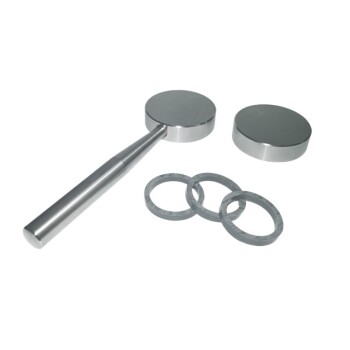
Beyond reactor testing, a hydraulic press is essential for material characterization techniques like XRD (X-ray Diffraction) and XPS (X-ray Photoelectron Spectroscopy). Compressing the powder into a flat, dense pellet ensures a consistent sample surface height.
This uniformity maximizes signal intensity and minimizes data noise. For specialized tests like infrared spectroscopy, using a press to create transparent pellets with KBr powder allows for the clear identification of specific vibrational shifts, confirming the successful embedding of ions within the framework.
Understanding the Trade-offs
While high-pressure compression is beneficial, it must be carefully controlled—typically up to 40 MPa. Excessive pressure can lead to "over-compaction," which may reduce the internal porosity of the Fe-Ce-Ti catalyst and restrict gas access to internal active sites.
Conversely, insufficient pressure results in "green bodies" that lack the structural integrity to survive the sieving process. Striking the right balance is essential to ensure the catalyst is mechanically robust without sacrificing the surface area required for high catalytic activity.
Applying These Principles to Your Catalyst Evaluation
Evaluating a catalyst requires a balance between physical form and chemical function. To ensure your Fe-Ce-Ti catalyst provides reliable data, consider the following goals:
- If your primary focus is reactor kinetic accuracy: Use the hydraulic press to create pellets that can be sieved to a narrow particle size range to eliminate gas bypassing and pressure drops.
- If your primary focus is material characterization (XRD/XPS): Ensure the press applies uniform static pressure to create a perfectly flat surface, which is critical for maximizing signal intensity.
- If your primary focus is long-term stability testing: Prioritize the mechanical strength of the pellets to prevent the catalyst from pulverizing under the continuous stress of simulated flue gas flow.
Standardizing your pelletization process ensures that your experimental results are a true reflection of your catalyst's chemical potential.
Summary Table:
| Key Benefit | Impact on Catalyst Testing | Optimization Parameter |
|---|---|---|
| Structural Integrity | Prevents material loss and equipment damage from dust | Mechanical strength to resist gas flow |
| Flow Dynamics | Eliminates channeling and high back-pressure | Consistent sieve size (e.g., 300–425 μm) |
| Kinetic Accuracy | Ensures uniform gas-solid contact for reliable data | Solid-solid interface optimization |
| Characterization | Maximizes signal intensity for XRD and XPS analysis | Uniform sample height and surface density |
Elevate Your Catalyst Research with KINTEK Precision
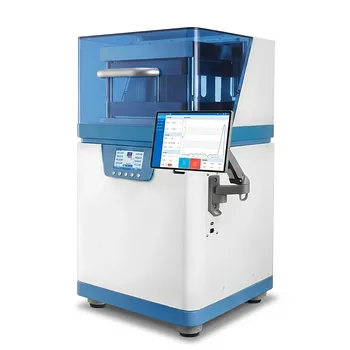
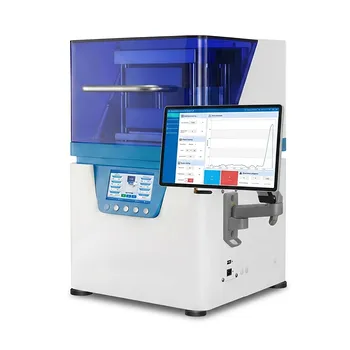
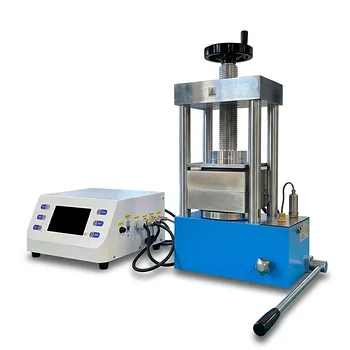
Achieving accurate kinetic data starts with superior sample preparation. KINTEK specializes in high-performance laboratory equipment, offering a robust range of manual and automatic hydraulic presses (pellet, hot, and isostatic) designed to create perfectly uniform catalyst pellets.
Whether you are testing Fe-Ce-Ti catalysts for flue gas applications or performing advanced material characterization, our equipment ensures:
- Mechanical Stability: Prevent pulverization and material loss during high-velocity gas flows.
- Operational Consistency: Eliminate pressure drops and channeling for precise reactor evaluation.
- High-Quality Characterization: Produce flat, dense pellets for maximized XRD and XPS signal intensity.
From crushing and milling systems to high-temperature furnaces and specialized ceramics, KINTEK provides the comprehensive tools needed to bridge the gap between material synthesis and practical application.
Ready to standardize your pelletization process? Contact KINTEK today to find the ideal hydraulic press solution for your laboratory!
References
- Huijuan Yu, Qiang Ma. Simultaneous catalytic oxidation of Hg<sup>0</sup> and AsH<sub>3</sub> over Fe–Ce co-doped TiO<sub>2</sub> catalyst under low temperature and reducing atmosphere. DOI: 10.1039/d2ra07376e
This article is also based on technical information from Kintek Solution Knowledge Base .
Related Products
- Laboratory Hydraulic Pellet Press for XRF KBR FTIR Lab Applications
- Automatic Laboratory Hydraulic Pellet Press Machine for Lab Use
- Automatic Fluorescent Pellet Press for XRF Sample Preparation
- kbr pellet press 2t
- Automatic XRF Pellet Press 40 Ton Hydraulic Sample Preparation Press for Fluorescent Spectroscopy Analysis
People Also Ask
- What is the role of a laboratory hydraulic pellet press and stainless steel molds in the fabrication of RuO2/NbC anodes?
- How does a laboratory hydraulic pellet press contribute to SiCw/2024 aluminum composite preforms? Optimize Densification
- What is the necessity of using a laboratory hydraulic pellet press in the preparation of biomass fuel pellets? Guide
- What is the significance of applying 200 MPa of pressure with a laboratory hydraulic pellet press for composite ceramics?
- What key role does a laboratory pellet press play in FTIR analysis? Master KBr Sample Preparation Excellence