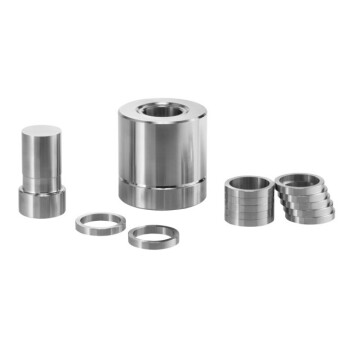
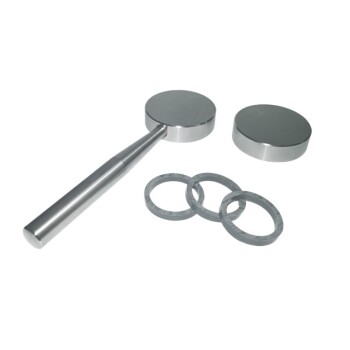
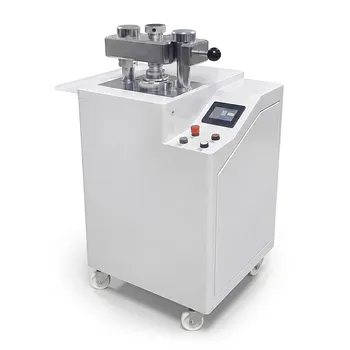
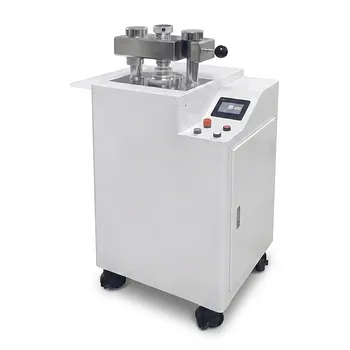
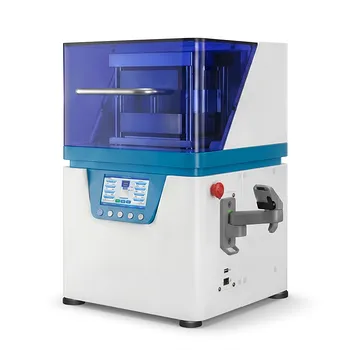
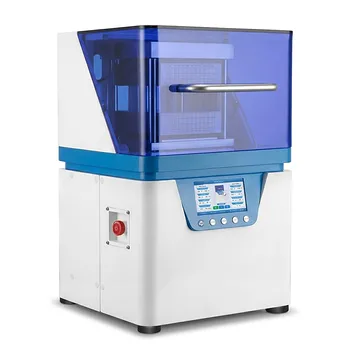
A laboratory pellet press or rolling mill acts as a precision densification tool for electrode sheets. These devices compact coated and dried electrode materials to a specific thickness and porosity—often targeting a precise level such as 34%—to optimize the physical architecture of the battery or capacitor. This process directly increases volumetric energy density, reduces internal resistance, and ensures the active material remains securely bonded to the current collector during electrochemical cycling.
Core Takeaway: The primary function of pressing or rolling is to transform a loose, porous coating into a dense, high-performance electrode by optimizing particle-to-particle contact and substrate adhesion, which is essential for maximizing energy storage and long-term stability.
Enhancing Electrochemical Performance
Optimizing Porosity and Volumetric Energy Density
A rolling mill allows researchers to accurately control the thickness of the electrode layer. By reducing the volume of the coating while maintaining the same mass of active material, the device significantly increases the volumetric energy density of the cell.
Facilitating Efficient Electrolyte Wetting
While compaction reduces void space, it also structures the remaining pores. Proper pressure levels ensure that the porosity is ideal for electrolyte penetration, balancing high density with the wetting efficiency required for fast ion transport.
Improving Rate Performance
Compaction brings active material particles and conductive additives into closer proximity. This reduces the distance electrons must travel, optimizing electronic conduction paths and allowing the electrode to handle higher current densities during charging and discharging.
Improving Structural and Mechanical Integrity
Strengthening Substrate Adhesion
High-pressure rolling or pressing ensures tighter contact between the active material layer and the current collector (typically aluminum or copper foil). This mechanical bond is vital for preventing the active layer from delaminating or peeling during the physical stresses of battery assembly.
Preventing Material Loss and Shedding
The compaction process increases the packing density and mechanical strength of the composite material. This prevents "powder loss," where active material particles become detached from the electrode during long-term cycling, which would otherwise lead to rapid capacity fade.
Eliminating Internal Micropores
In specialized applications, such as self-standing electrodes or solid-state films, a press is used to eliminate internal micropores. This creates a continuous, dense phase that improves the structural stability and ionic transport efficiency of the material.
Understanding the Trade-offs
The Danger of Over-Compaction
Applying excessive pressure can lead to "over-calendering," which crushes the active material particles or collapses the pore network entirely. If porosity drops too low, the electrolyte cannot penetrate the electrode, leading to high ionic resistance and poor battery performance.
Non-Uniform Pressure Distribution
Manual pellet presses or poorly calibrated rolling mills can apply uneven pressure across the electrode surface. This results in local current hotspots and uneven aging, which can shorten the lifespan of the resulting energy storage device.
Mechanical Stress on the Current Collector
Excessive rolling force can stretch or deform the thin metal foil used as the current collector. This can cause the electrode to curl or tear, making it difficult to stack or wind the components during the final cell assembly process.
Selecting the Right Equipment for Your Goal
How to Apply This to Your Project
Choose your compaction method based on the specific architecture of your electrode and the desired throughput of your research.
- If your primary focus is consistent electrode density for standardized testing: Use a precision electric rolling mill to ensure uniform thickness and porosity across long strips of coated foil.
- If your primary focus is small-scale material discovery or disk samples: A manual or hydraulic pellet press is ideal for applying specific, repeatable vertical loads to individual electrode disks.
- If your primary focus is solid-state electrolyte development: Utilize a hot rolling press to simultaneously apply heat and pressure, which is necessary to densify brittle ceramic or polymer films.
By precisely controlling the compaction of your electrode sheets, you bridge the gap between raw chemical potential and a reliable, high-performance energy storage device.
Summary Table:
| Equipment Type | Primary Function | Ideal Application |
|---|---|---|
| Rolling Mill | Continuous densification & thickness control | Standardized electrode strips & pilot scale |
| Pellet Press | Precise vertical load application | Disk samples & small-scale material discovery |
| Hot Press | Simultaneous heat and pressure application | Solid-state electrolytes & ceramic films |
| Vacuum Press | Densification without air entrapment | Specialized air-sensitive battery chemistries |
Optimize Your Battery Research with KINTEK Precision
Achieving the perfect electrode architecture requires more than just chemistry—it requires precision engineering. KINTEK specializes in high-performance laboratory equipment designed to bridge the gap between material discovery and high-energy-density devices.
Whether you need an electric rolling mill for uniform electrode strips, a hydraulic pellet press for disk samples, or specialized hot presses for solid-state electrolyte development, our tools are engineered for consistency and reliability. Beyond compaction, our portfolio includes high-temperature furnaces, battery research tools, and high-pressure reactors to support every stage of your workflow.
Ready to enhance your lab's efficiency and material performance? Contact us today to consult with our experts and find the ideal solution for your electrode post-treatment needs!
References
- Patricio Cofré, Mario Grágeda. Life Cycle Analysis of a Green Solvothermal Synthesis of LFP Nanoplates for Enhanced LIBs in Chile. DOI: 10.3390/nano13091486
This article is also based on technical information from Kintek Solution Knowledge Base .
Related Products
- Laboratory Hydraulic Pellet Press for XRF KBR FTIR Lab Applications
- Automatic Laboratory Hydraulic Pellet Press Machine for Lab Use
- Laboratory Manual Hydraulic Pellet Press for Lab Use
- Laboratory Manual Hydraulic Pellet Press for Lab Use
- Automatic Laboratory Hydraulic Press for XRF & KBR Pellet Press
People Also Ask
- What is the role of a laboratory hydraulic pellet press and stainless steel molds in the fabrication of RuO2/NbC anodes?
- How does a laboratory hydraulic pellet press contribute to SiCw/2024 aluminum composite preforms? Optimize Densification
- What is the necessity of using a laboratory hydraulic pellet press in the preparation of biomass fuel pellets? Guide
- What is the significance of applying 200 MPa of pressure with a laboratory hydraulic pellet press for composite ceramics?
- What key role does a laboratory pellet press play in FTIR analysis? Master KBr Sample Preparation Excellence