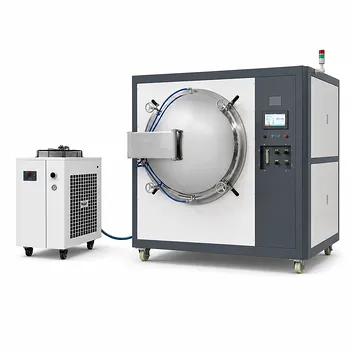
The use of a laboratory vacuum oven is non-negotiable for drying tetraaniline (TANI) oligomers due to the material's specific chemical sensitivities. This equipment allows you to rapidly remove residual water and solvents at a gentle temperature (typically 50 °C) by significantly reducing ambient pressure. Most critically, the vacuum environment eliminates oxygen from the chamber, preventing the oxygen-sensitive oligomers from oxidizing or degrading, thereby ensuring high structural purity and synthesis yields.
Core Takeaway Sensitive organic materials like TANI are vulnerable to both high heat and atmospheric oxygen. A vacuum oven solves both problems simultaneously: it lowers the boiling point of solvents for cooler drying and removes air to prevent oxidative degradation, preserving the chemical integrity of your final product.
Preserving Chemical Integrity
Preventing Oxidative Degradation
The primary danger during the drying phase of TANI synthesis is exposure to oxygen. Tetraaniline oligomers are chemically sensitive; exposure to air, especially when combined with heat, can lead to rapid oxidation.
The Role of the Vacuum
By operating under reduced pressure, the vacuum oven creates an anaerobic (oxygen-free) environment. This effectively isolates the oligomers from atmospheric oxygen, ensuring that the material does not degrade chemically while drying.
Efficiency at Lower Temperatures
Lowering Solvent Boiling Points
Standard drying methods rely on heat to evaporate solvents, which can be dangerous for thermally unstable materials. A vacuum oven leverages physics to solve this: reducing pressure significantly lowers the boiling point of liquids.
Gentle Thermal Processing
This pressure reduction allows you to remove residual water and solvents rapidly at much lower temperatures, such as 50 °C. You achieve efficient drying without subjecting the TANI oligomers to the high thermal stress that would be required at standard atmospheric pressure.
Ensuring Product Quality
Maximizing Synthesis Yield
Because the process minimizes degradation, you lose less product to chemical breakdown. The result is a higher overall yield of usable tetraaniline.
Maintaining Structural Purity
The combination of low heat and low oxygen ensures the molecular structure of the oligomer remains intact. This purity is essential for the material to function correctly in downstream applications, such as in conductive composites or electrochemical devices.
Operational Considerations and Trade-offs
Equipment Dependency
Unlike simple gravity convection ovens, vacuum drying requires a reliable vacuum pump and airtight seals. The process is dependent on the maintenance of these mechanical components to sustain the low-pressure environment.
Batch Processing Limitations
Vacuum drying is typically a batch process rather than a continuous one. You must carefully seal the chamber and evacuate the air before heating begins, which may introduce slight operational overhead compared to continuous drying methods.
Making the Right Choice for Your Synthesis
To maximize the quality of your tetraaniline oligomers, align your drying parameters with your specific goals:
- If your primary focus is Structural Purity: Prioritize a deep vacuum setting to ensure the complete removal of oxygen, preventing any oxidative changes to the sensitive oligomers.
- If your primary focus is Process Efficiency: Leverage the reduced pressure to drive off solvents rapidly at 50 °C, significantly shortening drying times without risking thermal decomposition.
By strictly controlling both pressure and temperature, you transform the drying phase from a potential point of failure into a step that guarantees the stability and performance of your final material.
Summary Table:
| Feature | Benefit for TANI Synthesis | Impact on Final Product |
|---|---|---|
| Vacuum Environment | Removes atmospheric oxygen | Prevents oxidative degradation |
| Reduced Pressure | Lowers solvent boiling points | Allows rapid drying at only 50 °C |
| Gentle Heating | Minimizes thermal stress | Preserves chemical & structural integrity |
| Anaerobic Drying | Isolates sensitive oligomers | Maximizes synthesis yield and purity |
Elevate Your Synthesis Precision with KINTEK
Don't compromise the integrity of your sensitive organic materials. KINTEK specializes in advanced laboratory solutions designed for high-stakes research. Our high-performance vacuum ovens provide the precise pressure control and thermal stability required to dry tetraaniline (TANI) oligomers without the risk of oxidation or thermal breakdown.
Whether you are focusing on conductive composites or electrochemical devices, our comprehensive portfolio—ranging from vacuum and atmosphere furnaces to high-pressure reactors and PTFE consumables—ensures your lab is equipped for success.
Ready to optimize your drying process and maximize your yields? Contact our technical experts today to find the perfect equipment for your lab!
References
- Nikhil Dhore, Aruna Palanisamy. Studies on Biobased Non-Isocyanate Polyurethane Coatings with Potential Corrosion Resistance. DOI: 10.3390/suschem4010008
This article is also based on technical information from Kintek Solution Knowledge Base .
Related Products
- 56L Vertical Laboratory Vacuum Drying Oven
- 23L Laboratory Vacuum Drying Oven
- Dental Porcelain Zirconia Sintering Ceramic Vacuum Press Furnace
- Vacuum Heat Treat Sintering Brazing Furnace
- Ultra-High Temperature Graphite Vacuum Graphitization Furnace
People Also Ask
- Why is a laboratory vacuum drying oven recommended for rice straw residues? Protect Your Biomass Integrity
- What role does a laboratory vacuum drying oven play in the preparation of modified multi-walled carbon nanotubes?
- What is the importance of using a laboratory vacuum drying oven? Preserving Slow-Release Microcapsule Integrity
- Why is a Laboratory Vacuum Drying Oven recommended for PBAT microspheres? Protect Sensitive Polymer Integrity
- What role does a laboratory vacuum drying oven play in processing nanoparticle powder samples? Protect Sample Integrity