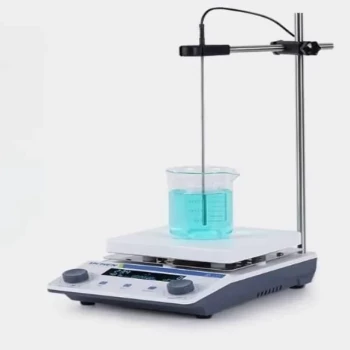
Reliable magnetic stirring is non-negotiable for safely synthesizing graphene oxide via the modified Hummer’s method. It provides the continuous kinetic energy required to mix graphite powder with viscous oxidizing agents, ensuring the reaction remains stable and uniform over durations that can last up to 24 hours.
The magnetic stirrer acts as the primary regulator of both chemical kinetics and thermal safety. By maintaining a homogenous mixture, it prevents dangerous localized overheating and ensures every graphite layer receives a consistent degree of oxidation.
Driving Chemical Uniformity
Facilitating Reactant Contact
The core challenge in the modified Hummer’s method is the physical state of the reactants. You are attempting to oxidize solid carbon powder (graphite) using liquid oxidizing agents like sulfuric acid and potassium permanganate.
Without active intervention, the powder may settle or clump. The magnetic stirrer ensures thorough contact between the carbon and the oxidizers, forcing the reactants to mix rather than separate.
Achieving Molecular-Level Consistency
To produce high-quality graphene oxide, the oxidation must be uniform across the material.
Continuous agitation promotes molecular-level mixing. This ensures that the chemical environment is identical throughout the beaker, preventing scenarios where some graphite flakes are heavily oxidized while others remain pristine.
Managing Thermodynamics and Safety
Dissipating Exothermic Heat
The oxidation reaction in the modified Hummer’s method is highly exothermic, meaning it releases significant amounts of heat.
If the solution is static, this heat accumulates in specific pockets, creating "hot spots." A magnetic stirrer distributes this heat evenly throughout the solution, allowing it to be effectively dissipated by the surrounding ice bath or temperature control system.
Preventing Runaway Reactions
Temperature control is not just about quality; it is a critical safety requirement.
Localized overheating can trigger runaway reactions, where the temperature spikes uncontrollably. Stable stirring eliminates these thermal gradients, keeping the reaction temperature precise (often around 0°C in initial stages) and ensuring the safety of the laboratory environment.
Controlling Reaction Kinetics
Sustaining Long-Duration Reactions
The oxidation process is not instantaneous; it often requires a reaction period of up to 24 hours.
Manual agitation is inconsistent and unsustainable for this timeframe. A magnetic stirrer provides continuous, uniform kinetic energy without fatigue, ensuring that the reaction conditions at hour 20 are just as rigorous as they were at hour 1.
Regulating Oxidation Levels
The degree of oxidation determines the final properties of the graphene oxide.
By maintaining constant motion, the stirrer promotes a highly consistent degree of oxidation between the graphite layers. This leads to a final product with abundant, evenly distributed oxygen-containing functional groups.
The Risks of Inadequate Agitation
While the magnetic stirrer is a standard tool, its improper use acts as a critical failure point in this synthesis.
Inconsistent Stirring Speed: If the stirring speed fluctuates or is too slow, sedimentation occurs. This leads to non-uniform oxidation, resulting in a low-quality precursor that may not exfoliate properly into graphene oxide sheets later.
Thermal Lag: If the stirring stops even briefly during the exothermic addition of potassium permanganate, the temperature can rise faster than the cooling bath can compensate. This thermal lag compromises the structural integrity of the carbon lattice and poses immediate safety hazards.
Making the Right Choice for Your Goal
When setting up your synthesis apparatus, prioritize the stability and precision of your stirring mechanism based on your specific objectives:
- If your primary focus is Safety: Ensure your stirrer has a high torque rating to maintain constant speed as the solution viscosity changes, preventing heat accumulation.
- If your primary focus is Product Quality: Use a stirrer with precise RPM control to ensure the kinetic energy input is identical across different batches, guaranteeing reproducible oxidation levels.
Ultimately, the magnetic stirrer is not just a mixing tool; it is the active governor of reaction safety and material homogeneity.
Summary Table:
| Feature | Role in Graphene Oxide Synthesis | Impact on Outcome |
|---|---|---|
| Chemical Mixing | Ensures contact between graphite and oxidizers | Homogeneous oxidation levels |
| Thermal Management | Dissipates exothermic heat to prevent hot spots | Prevents runaway reactions & ensures safety |
| Kinetic Control | Provides continuous energy for 24+ hour cycles | Repeatable material quality & batch consistency |
| Viscosity Handling | Prevents sedimentation in viscous acid mixtures | High-quality exfoliation of GO sheets |
Elevate Your Material Synthesis with Precision Equipment
Achieving consistent graphene oxide results requires rigorous control over kinetics and thermodynamics. KINTEK specializes in high-performance laboratory equipment designed to meet the demands of advanced chemical synthesis. From high-torque magnetic stirrers and cooling solutions to our specialized high-temperature high-pressure reactors and autoclaves, we provide the tools necessary for safe, reproducible research.
Whether you are focusing on battery research, ceramics, or chemical processing, our comprehensive range—including crushing and milling systems, PTFE consumables, and ULT freezers—ensures your lab operates at peak efficiency.
Ready to optimize your synthesis workflow? Contact KINTEK today for expert solutions!
References
- Asim Ali Yaqoob, Ahmad Moid AlAmmari. Cellulose Derived Graphene/Polyaniline Nanocomposite Anode for Energy Generation and Bioremediation of Toxic Metals via Benthic Microbial Fuel Cells. DOI: 10.3390/polym13010135
This article is also based on technical information from Kintek Solution Knowledge Base .
Related Products
- Laboratory Small Constant Temperature Heated Magnetic Stirrer Heater and Stirrer
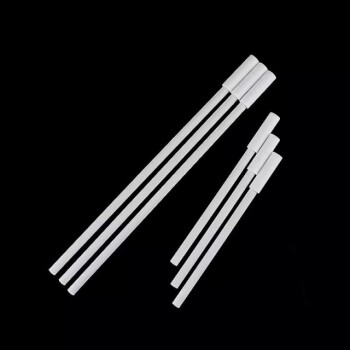
- Custom PTFE Teflon Parts Manufacturer for Magnetic Stirring Bar
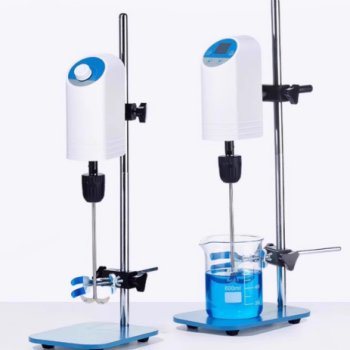
- High Performance Laboratory Stirrers for Diverse Applications
- Three-dimensional electromagnetic sieving instrument
- Custom PTFE Teflon Parts Manufacturer for PTFE Stirring Bar Recovery Rod
People Also Ask
- What role does a magnetic stirrer with heating play in ZnO nanoparticle synthesis? Precision Control for Quality Results
- What role does a constant temperature heating magnetic stirrer play in MFC-HAp synthesis? Achieve Material Homogeneity
- What is the function of a laboratory magnetic stirrer in Ni–Cr–P electrodeposition? Optimize Ion Transport & Coating
- Why is a laboratory magnetic stirrer required for benzoic acid esters? Boost Reaction Speed & Yield with High RPM
- What role does a laboratory magnetic stirrer play in TiO2 and TiO2-Ag sol preparation? Master Chemical Kinetics