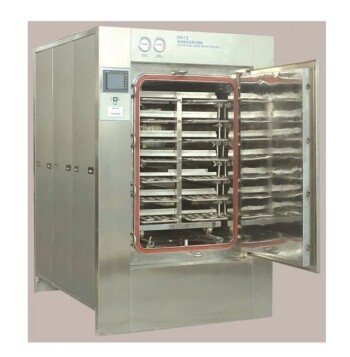
To evaluate fructose conversion in subcritical water, a micro-autoclave or closed reactor is strictly necessary because it maintains a sealed, high-pressure environment capable of withstanding temperatures exceeding 150°C. Without this specialized containment, the aqueous solution would boil and evaporate, making it impossible to sustain the liquid phase required for subcritical water conditions.
Core Takeaway Achieving subcritical water conditions requires heating water beyond its boiling point while keeping it in a liquid state. A closed micro-reactor is the only vessel that prevents solvent loss under these conditions while offering the rapid heat transfer and precise control needed for accurate performance data.
The Physics of the Reaction Environment
Sustaining Subcritical Conditions
The primary function of the closed reactor is to prevent the evaporation of reaction solvents. Fructose conversion in this context requires "subcritical water"—liquid water heated above 100°C but below its critical point.
In an open vessel, water heated to 150°C would simply turn to steam and escape. The sealed reactor traps the vapor, generating the internal pressure necessary to keep the water in a liquid phase despite the high temperature.
Managing High Pressure
Standard laboratory glassware cannot handle the pressure generated by superheated water. The micro-autoclave is specifically engineered to withstand the high-pressure environment created by aqueous solutions at these elevated temperatures. This ensures the physical integrity of the experiment and the safety of the operator.
Advantages of Micro-Scale Design
Rapid Heat Transfer
The "micro" aspect of the design is not just about size; it is about thermodynamics. Small reactor volumes allow for rapid heat transfer.
This ensures that the reaction mixture reaches the target temperature quickly and cools down just as fast. This is critical for defining the exact start and stop times of the reaction, which is essential for accurate kinetic data.
Precise Temperature Control
Because of the efficient heat transfer, the system allows for precise temperature control. Fluctuations in temperature can significantly alter the conversion rate of fructose or the selectivity of the byproducts. The micro-autoclave minimizes these variables, ensuring the data reflects the chemistry, not equipment lag.
Operational Efficiency
High-Throughput Potential
The compact nature of these reactors enables multiple sets of catalytic performance tests to be conducted in parallel.
Efficiency in Data Collection
By running several micro-autoclaves simultaneously, researchers can screen different temperatures, times, or catalysts in a single run. This dramatically increases the efficiency of the experimental process compared to using larger, single-batch reactors.
Understanding the Trade-offs
The "Closed System" Limitation
While the sealed nature of the reactor is its greatest strength, it also presents a limitation. Because the system must remain closed to maintain pressure, it is generally difficult to add reagents or take samples during the reaction without disturbing the thermodynamic conditions.
Sample Volume Constraints
The micro-scale design optimizes heat transfer but inherently limits the volume of product generated. These reactors are ideal for establishing performance metrics and gathering data, but they are not suitable for producing large quantities of converted material for downstream applications.
Making the Right Choice for Your Goal
To maximize the utility of a micro-autoclave for your fructose conversion projects, align your experimental design with the equipment's strengths.
- If your primary focus is Kinetic Accuracy: Prioritize the micro-scale design features to ensure rapid heating and cooling, eliminating thermal lag from your data.
- If your primary focus is Process Screening: Leverage the compact size to run multiple parallel tests, allowing you to quickly identify the optimal temperature and time parameters.
Success in subcritical water research depends on pairing precise thermal control with a vessel robust enough to contain the necessary pressure.
Summary Table:
| Feature | Importance in Fructose Conversion |
|---|---|
| Sealed Environment | Prevents solvent evaporation; maintains liquid phase at T > 100°C. |
| Pressure Resistance | Safely contains high-pressure vapor generated at subcritical temperatures. |
| Micro-Scale Design | Enables rapid heat transfer for accurate kinetic data and timing. |
| Temperature Precision | Minimizes fluctuations to ensure high selectivity and conversion rates. |
| High-Throughput | Compact size allows for multiple parallel tests and faster screening. |
Optimize Your Subcritical Research with KINTEK Precision
Elevate your laboratory's experimental accuracy with KINTEK’s premium high-temperature high-pressure reactors and autoclaves. Specifically designed for the rigorous demands of subcritical water research and fructose conversion, our equipment ensures precise thermodynamic control and unmatched safety.
Why choose KINTEK?
- Comprehensive Portfolio: From micro-autoclaves to rotary and vacuum furnaces, we provide the tools necessary for advanced material science.
- Expertly Engineered: Our reactors handle extreme pressures and temperatures, offering the rapid heat transfer required for reliable kinetic data.
- End-to-End Solutions: We supply everything from high-pressure vessels to essential consumables like ceramics and crucibles.
Ready to scale your research efficiency? Contact us today to consult with our experts and find the perfect reactor for your application.
References
- Thatiane Veríssimo dos Santos, Mário R. Meneghetti. Influence of Synthesis Methodology on the Properties and Catalytic Performance of Tin, Niobium, and Tin-Niobium Oxides in Fructose Conversion. DOI: 10.3390/catal13020285
This article is also based on technical information from Kintek Solution Knowledge Base .
Related Products
- Mini SS High Pressure Autoclave Reactor for Laboratory Use
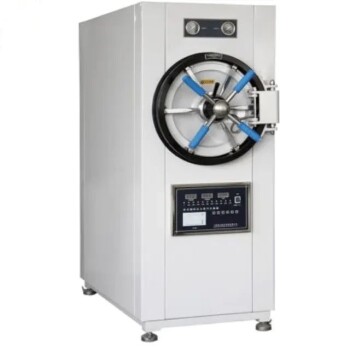
- Laboratory Horizontal Autoclave Steam Sterilizer Lab Microcomputer Sterilizer
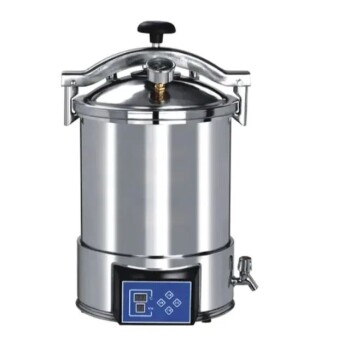
- Portable Digital Display Automatic Laboratory Sterilizer Lab Autoclave for Sterilization Pressure
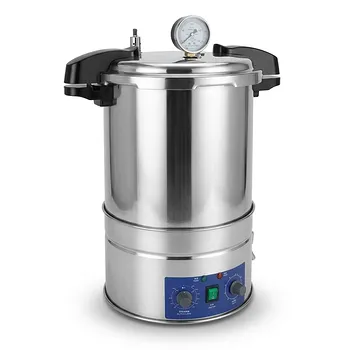
- Portable High Pressure Laboratory Autoclave Steam Sterilizer for Lab Use
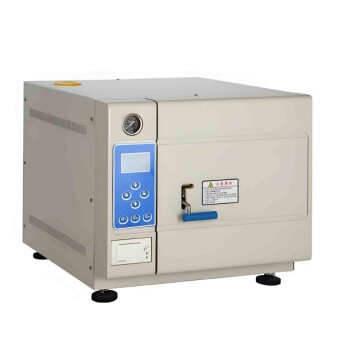
- Desktop Fast Laboratory Autoclave Sterilizer 35L 50L 90L for Lab Use
People Also Ask
- Why use high-pressure reactors for molecular sieve synthesis? Unlock Superior Crystallinity and Framework Control
- What is the function of a high-pressure reactor autoclave? Enhancing Cu/N Co-Doped Carbon Catalyst Synthesis
- What are the advantages of using a high-pressure reactor like an autoclave? Maximize Liquefaction Speed & Yield
- Why are high-pressure reactors or autoclaves necessary for the synthesis of new functional materials? Unlock Precision.
- How are high-pressure reactors used to prepare metaphosphate electrocatalysts? Master In-Situ Precursor Growth