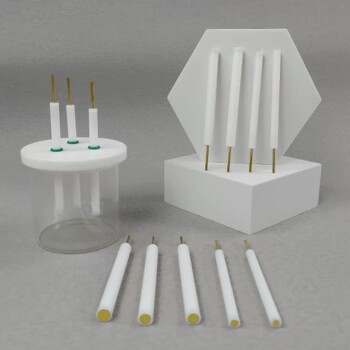
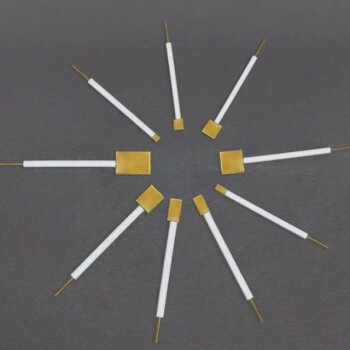
The necessity of a platinum wire counter electrode in Electrochemical Impedance Spectroscopy (EIS) stems from its ability to provide a stable, non-interfering baseline for your measurements. Its primary function is to transmit current through the electrolyte to complete the circuit without reacting with the solution or the 8620 steel sample, ensuring that the electrical data you capture is accurate and unpolluted.
The core value of platinum lies in its inertness; it ensures that the impedance signals you measure originate exclusively from the borided layer or corrosion film on the 8620 steel, rather than from reactions at the counter electrode.
The Role of Platinum in Signal Fidelity
Completing the Electrochemical Circuit
In any EIS experiment involving 8620 steel, current must flow through the system to generate data. The platinum wire serves as the bridge for this transmission.
It is responsible for transmitting current through the electrolyte. This effectively completes the electrical circuit, allowing the potentiostat to apply potential and measure the current response.
High Chemical Inertness
The reliability of your data depends on the stability of your equipment. Platinum is selected because it possesses high chemical inertness.
Because it is chemically stable, platinum does not participate in the electrochemical reactions occurring in the cell. This prevents the counter electrode from dissolving or altering the composition of the electrolyte during the test.
Minimizing Polarization Resistance
To measure the impedance of the steel accurately, the counter electrode must not create a "bottleneck" for the current. Platinum is characterized by excellent electrical conductivity.
Furthermore, it exhibits minimal polarization resistance. This ensures that the counter electrode does not impede charge transfer, allowing the system to focus on the resistance and capacitance of the working electrode (the steel).
Ensuring Data Accuracy
Isolating the Steel's Response
The primary challenge in EIS is distinguishing the sample's behavior from experimental noise. If the counter electrode were to react, it would generate its own impedance signal.
By using platinum, you eliminate this variable. It ensures that the measured impedance signals originate entirely from the target surface—specifically the borided layer or the corrosion product film on the 8620 steel.
Preventing False Corrosion Data
If a less inert material were used, it could introduce corrosion products into the solution. These byproducts could settle on the 8620 steel, artificially altering its corrosion rate.
Platinum remains passive, ensuring that the corrosion phenomena observed are inherent to the steel and its specific treatment, not artifacts of the test setup.
Understanding the Trade-offs
Cost vs. Performance
While platinum is the technical standard for these experiments, it is a precious metal. The primary downside is the initial cost of the wire compared to materials like graphite or stainless steel.
However, in the context of 8620 steel analysis, this cost is a necessary trade-off for data validity. Cheaper alternatives often lack the requisite inertness, leading to data that is difficult or impossible to interpret correctly.
Making the Right Choice for Your Goal
To ensure your EIS data on 8620 steel is publication-ready and technically sound, consider the following focus areas:
- If your primary focus is characterizing the Borided Layer: Platinum is non-negotiable to ensure high-frequency impedance data reflects the layer's properties, not the electrode's resistance.
- If your primary focus is Corrosion Product Analysis: Use platinum to guarantee that the chemical composition of the corrosion film is not altered by dissolved ions from the counter electrode.
Using a platinum counter electrode is the only way to guarantee that your impedance spectrum is a true fingerprint of the 8620 steel surface.
Summary Table:
| Feature | Platinum Wire Benefit | Impact on EIS Measurement |
|---|---|---|
| Chemical Stability | High inertness; no reaction with electrolyte | Eliminates noise from electrode dissolution |
| Conductivity | Excellent electrical transmission | Minimizes polarization resistance bottlenecks |
| Surface Integrity | Passive behavior | Ensures signals reflect only the steel's borided layer |
| Data Reliability | No byproduct contamination | Prevents false corrosion rate readings |
Elevate Your Electrochemical Research with KINTEK Precision
Don't let subpar electrodes compromise your 8620 steel characterization. KINTEK provides high-purity platinum electrodes and specialized electrolytic cells designed to deliver the signal fidelity required for advanced Electrochemical Impedance Spectroscopy (EIS).
As a leader in laboratory equipment, we offer a complete suite of tools—from high-temperature reactors for steel treatment to battery research consumables and precision hydraulic presses. Our expertise ensures your lab is equipped with durable, inert, and high-performance materials that translate into publication-ready results.
Ready to upgrade your experimental setup? Contact KINTEK today to source the perfect electrodes and consumables for your specific research needs.
References
- Ezazul Haque Sabuz, Ishraq Shabib. Improving the Mechanical and Electrochemical Performance of Additively Manufactured 8620 Low Alloy Steel via Boriding. DOI: 10.3390/cmd4040032
This article is also based on technical information from Kintek Solution Knowledge Base .
Related Products
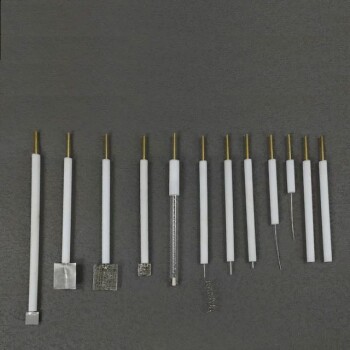
- Platinum Auxiliary Electrode for Laboratory Use
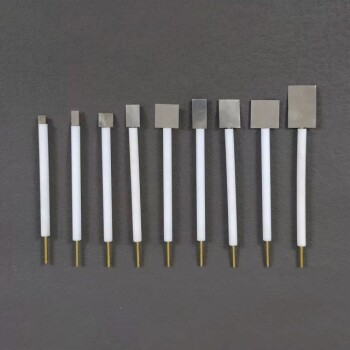
- Platinum Sheet Electrode for Laboratory and Industrial Applications
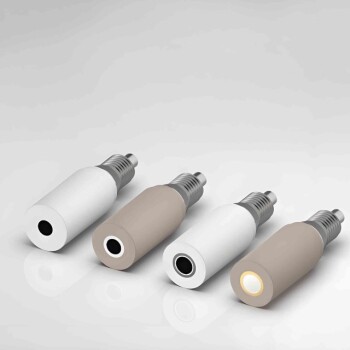
- Rotating Platinum Disk Electrode for Electrochemical Applications
- Platinum Sheet Electrode for Battery Lab Applications
- RRDE rotating disk (ring disk) electrode / compatible with PINE, Japanese ALS, Swiss Metrohm glassy carbon platinum
People Also Ask
- What is the function of a platinum electrode as an auxiliary electrode? Ensure Precise Nickel Coating Corrosion Testing
- Why is platinum typically selected as the auxiliary electrode for electrochemical testing of oxazoline inhibitors?
- What does the auxiliary electrode do? Ensuring Accurate Electrochemical Measurements
- What are the roles of Pt counter and reference electrodes in nitrided steel testing? Optimize Your Electrochemical Data
- What are the advantages of using a platinum counter electrode? Ensure Purity in Photocatalytic Coating Deposition