Knowledge Why Use a PTFE-Lined Autoclave for Mg-Li Coating Synthesis? Ensure Purity and Structural Integrity in Hydrothermal Prep
Author avatar

Tech Team · Kintek Solution

Updated 3 weeks ago

Why Use a PTFE-Lined Autoclave for Mg-Li Coating Synthesis? Ensure Purity and Structural Integrity in Hydrothermal Prep


The necessity of a PTFE-lined stainless steel autoclave lies in its ability to separate mechanical containment from chemical isolation. The stainless steel outer shell provides the structural strength to withstand the high pressure generated by steam during heating, while the internal Polytetrafluoroethylene (PTFE) liner creates a chemically inert barrier. This liner is critical for Magnesium-Lithium (Mg-Li) synthesis because it prevents the highly active alloy from reacting with the vessel walls and ensures the final coating remains free of metallic ion contamination.

Hydrothermal synthesis requires a pressurized environment that is chemically neutral. The stainless steel shell handles the physical stress of the reaction, while the PTFE liner isolates the highly reactive Mg-Li alloy, preventing side reactions and preserving the purity of the resulting hydroxide coatings.

The Mechanical Foundation: Stainless Steel

Containing Autogenous Pressure

Hydrothermal synthesis involves heating aqueous solutions in a closed system, often above the boiling point of water.

This process generates significant internal steam pressure (autogenous pressure) that would rupture weaker materials.

Structural Integrity

The stainless steel outer shell acts as the pressure vessel.

It provides the necessary mechanical strength to safely contain these high-pressure conditions without deforming or failing.

The Chemical Shield: PTFE Liner

Isolating Reactive Alloys

Magnesium-Lithium alloys are chemically "highly active."

If exposed directly to the stainless steel walls, the alloy would likely undergo unwanted side reactions, altering the chemical composition of the final product.

The PTFE liner utilizes its superior chemical inertness to effectively insulate the alloy from the metal vessel.

Preventing Ion Contamination

For high-quality conversion coatings, purity is paramount.

The PTFE liner ensures that the reaction medium never touches the steel body, preventing iron or other metallic ions from leaching into the solution.

This isolation guarantees the high purity of the generated magnesium hydroxide and lithium hydroxide coatings.

Understanding the Trade-offs

Temperature Limitations

While PTFE is excellent for chemical resistance, it has thermal ceilings.

It is generally effective for hydrothermal environments between 120°C and 160°C, but may soften or deform at significantly higher temperatures (approaching 200°C+).

Pressure transmission

The liner is not a pressure vessel itself; it relies entirely on the fit within the steel shell.

If the gap between the liner and the shell is too large, the liner may expand and warp under pressure, potentially leading to leaks or liner failure.

Making the Right Choice for Your Goal

To ensure successful synthesis of Mg-Li coatings, consider the following regarding your equipment:

  • If your primary focus is Safety: Verify that the stainless steel shell is rated for the specific autogenous pressure generated at your target reaction temperature.
  • If your primary focus is Purity: Inspect the PTFE liner regularly for scratches or deformation to ensure the barrier between the active alloy and the steel wall remains compromised.

The correct autoclave configuration allows you to harness high pressure for crystal growth without sacrificing the chemical integrity of your materials.

Summary Table:

Feature Stainless Steel Shell PTFE (Teflon) Liner
Primary Role Mechanical structural strength Chemical isolation & inertness
Function Withstands autogenous steam pressure Prevents alloy-wall side reactions
Benefit Prevents vessel rupture/deformation Eliminates metallic ion contamination
Operating Range High pressure & temperature Typically 120°C - 160°C (Max 200°C)
Material Interaction Potential for leaching/corrosion Non-reactive with Mg-Li alloys

Elevate Your Material Research with KINTEK Precision

For the successful hydrothermal synthesis of advanced Mg-Li alloy coatings, compromise is not an option. KINTEK specializes in providing the high-performance laboratory equipment required for rigorous scientific standards. Our premium range of high-temperature high-pressure reactors and autoclaves—featuring precision-engineered PTFE products and liners—ensures your research achieves maximum purity and safety.

Whether you are developing next-generation battery technologies or high-purity conversion coatings, KINTEK offers a comprehensive portfolio including:

  • Advanced Reaction Vessels: Muffle, tube, and vacuum furnaces for precise heat treatment.
  • Preparation & Analysis: Crushing, milling, and hydraulic presses for material consistency.
  • Specialized Consumables: High-quality ceramics, crucibles, and electrochemical tools.

Ready to optimize your synthesis process? Contact KINTEK today to consult with our experts on the perfect autoclave configuration for your laboratory.

References

  1. Dan Song, Jinghua Jiang. Dual-Layer Corrosion-Resistant Conversion Coatings on Mg-9Li Alloy via Hydrothermal Synthesis in Deionized Water. DOI: 10.3390/met11091396

This article is also based on technical information from Kintek Solution Knowledge Base .

Related Products

People Also Ask

Related Products

High Pressure Laboratory Autoclave Reactor for Hydrothermal Synthesis

High Pressure Laboratory Autoclave Reactor for Hydrothermal Synthesis

Discover the applications of Hydrothermal Synthesis Reactor - a small, corrosion-resistant reactor for chemical labs. Achieve rapid digestion of insoluble substances in a safe and reliable way. Learn more now.

Stainless High Pressure Autoclave Reactor Laboratory Pressure Reactor

Stainless High Pressure Autoclave Reactor Laboratory Pressure Reactor

Discover the versatility of Stainless High Pressure Reactor - a safe and reliable solution for direct and indirect heating. Built with stainless steel, it can withstand high temperatures and pressures. Learn more now.

Mini SS High Pressure Autoclave Reactor for Laboratory Use

Mini SS High Pressure Autoclave Reactor for Laboratory Use

Mini SS High Pressure Reactor - Ideal for medicine, chemical, and scientific research industries. Programmed heating temp and stirring speed, up to 22Mpa pressure.

Customizable Laboratory High Temperature High Pressure Reactors for Diverse Scientific Applications

Customizable Laboratory High Temperature High Pressure Reactors for Diverse Scientific Applications

High-pressure lab reactor for precise hydrothermal synthesis. Durable SU304L/316L, PTFE liner, PID control. Customizable volume & materials. Contact us!

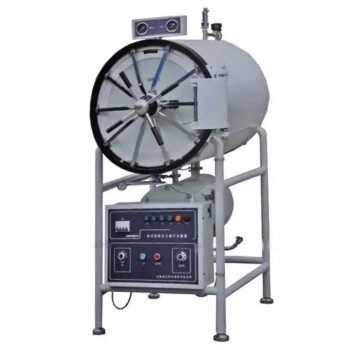
Laboratory High Pressure Horizontal Autoclave Steam Sterilizer for Lab Use

Laboratory High Pressure Horizontal Autoclave Steam Sterilizer for Lab Use

The horizontal autoclave steam sterilizer adopts the gravity displacement method to remove the cold air in the inner chamber, so that the inner steam and cold air content is less, and the sterilization is more reliable.

Desktop Fast Laboratory Autoclave Sterilizer 35L 50L 90L for Lab Use

Desktop Fast Laboratory Autoclave Sterilizer 35L 50L 90L for Lab Use

The desktop fast steam sterilizer is a compact and reliable device used for rapid sterilization of medical, pharmaceutical, and research items. It efficiently sterilizes surgical instruments, glassware, medicines, and resistant materials, making it suitable for various applications.

Visual High-Pressure Reactor for In-Situ Observation

Visual High-Pressure Reactor for In-Situ Observation

The visual high-pressure reactor uses transparent sapphire or quartz glass, maintaining high strength and optical clarity under extreme conditions for real-time reaction observation.

Heated Hydraulic Press Machine with Heated Plates Split Manual Laboratory Hot Press

Heated Hydraulic Press Machine with Heated Plates Split Manual Laboratory Hot Press

Efficiently prepare your samples with our Split Manual Heated Lab Press. With a pressure range up to 40T and heating plates up to 300°C, it's perfect for various industries.

Custom PTFE Teflon Parts Manufacturer for PTFE Buchner Funnel and Triangular Funnel

Custom PTFE Teflon Parts Manufacturer for PTFE Buchner Funnel and Triangular Funnel

The PTFE funnel is a piece of laboratory equipment used primarily for filtration processes, particularly in the separation of solid and liquid phases in a mixture. This setup allows for efficient and rapid filtration, making it indispensable in various chemical and biological applications.

Square Bidirectional Pressure Mold for Lab Use

Square Bidirectional Pressure Mold for Lab Use

Discover precision in molding with our Square Bidirectional Pressure Mold. Ideal for creating diverse shapes and sizes, from squares to hexagons, under high pressure and uniform heating. Perfect for advanced material processing.

Custom PTFE Teflon Parts Manufacturer for Magnetic Stirring Bar

Custom PTFE Teflon Parts Manufacturer for Magnetic Stirring Bar

The PTFE magnetic stirring bar, made from high-quality PTFE, offers exceptional resistance to acids, alkalis, and organic solvents, coupled with high-temperature stability and low friction. Ideal for laboratory use, these stirring bars are compatible with standard flask ports, ensuring stability and safety during operations.

Custom PTFE Teflon Parts Manufacturer for PTFE Mesh F4 Sieve

Custom PTFE Teflon Parts Manufacturer for PTFE Mesh F4 Sieve

PTFE mesh sieve is a specialized test sieve designed for particle analysis in various industries, featuring a non-metallic mesh woven from PTFE filament. This synthetic mesh is ideal for applications where metal contamination is a concern . PTFE sieves are crucial for maintaining the integrity of samples in sensitive environments, ensuring accurate and reliable results in particle size distribution analysis.

Custom PTFE Teflon Parts Manufacturer Grinding Bowl

Custom PTFE Teflon Parts Manufacturer Grinding Bowl

PTFE is renowned for its exceptional chemical resistance, thermal stability, and low friction properties, making it a versatile material in various industries. The PTFE grinding bowl, specifically, finds applications where these properties are crucial.

Round Bidirectional Press Mold for Lab

Round Bidirectional Press Mold for Lab

The round bidirectional press mold is a specialized tool used in high-pressure molding processes, particularly for creating intricate shapes from metal powders.

Platinum Sheet Electrode for Laboratory and Industrial Applications

Platinum Sheet Electrode for Laboratory and Industrial Applications

Elevate your experiments with our Platinum Sheet Electrode. Crafted with quality materials, our safe and durable models can be tailored to fit your needs.

Optical Water Bath Electrolytic Electrochemical Cell

Optical Water Bath Electrolytic Electrochemical Cell

Upgrade your electrolytic experiments with our Optical Water Bath. With controllable temperature and excellent corrosion resistance, it's customizable for your specific needs. Discover our complete specifications today.

915MHz MPCVD Diamond Machine Microwave Plasma Chemical Vapor Deposition System Reactor

915MHz MPCVD Diamond Machine Microwave Plasma Chemical Vapor Deposition System Reactor

915MHz MPCVD Diamond Machine and its multi-crystal effective growth, the maximum area can reach 8 inches, the maximum effective growth area of single crystal can reach 5 inches. This equipment is mainly used for the production of large-size polycrystalline diamond films, the growth of long single crystal diamonds, the low-temperature growth of high-quality graphene, and other materials that require energy provided by microwave plasma for growth.

Double Layer Five-Port Water Bath Electrolytic Electrochemical Cell

Double Layer Five-Port Water Bath Electrolytic Electrochemical Cell

Experience optimal performance with our Water Bath Electrolytic Cell. Our double-layer, five-port design boasts corrosion resistance and longevity. Customizable to fit your specific needs. View specs now.

Laboratory Jaw Crusher

Laboratory Jaw Crusher

Discover the small jaw crusher for efficient, flexible, and affordable crushing in labs and small mines. Ideal for coal, ores, and rocks. Learn more now!

Electric Lab Cold Isostatic Press CIP Machine for Cold Isostatic Pressing

Electric Lab Cold Isostatic Press CIP Machine for Cold Isostatic Pressing

Produce dense, uniform parts with improved mechanical properties with our Electric Lab Cold Isostatic Press. Widely used in material research, pharmacy, and electronic industries. Efficient, compact, and vacuum-compatible.


Leave Your Message